











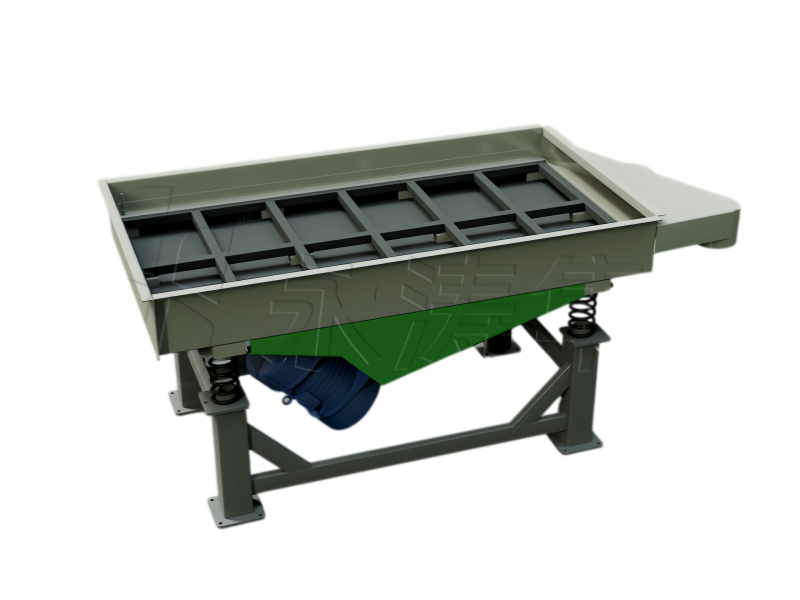


The Yushunxin Vibrating Screener separates crushed solar panel and lithium battery materials into controlled particle sizes. It removes oversized pieces and releases fine black powder or silicon-rich material. Nel frattempo, it prepares each fraction for further separation. We configure mesh size, screen layers, vibration force, capacità, and dust control for each project. Available options match e-waste recycling lines from 500 kg/h to multi-ton industrial production.
How Can the Screening Stage Protect Final Recovery Quality?
01 · Screening StageA stable recovery line needs controlled particle groups before final separation. The vibrating screener creates these groups after crushing, macinazione, essiccazione, o trattamento termico. It then directs each fraction toward the correct recovery stage. Perciò, downstream equipment receives steadier loads and produces cleaner saleable materials.
Prepare PV Residue for Multi-Stage Recovery
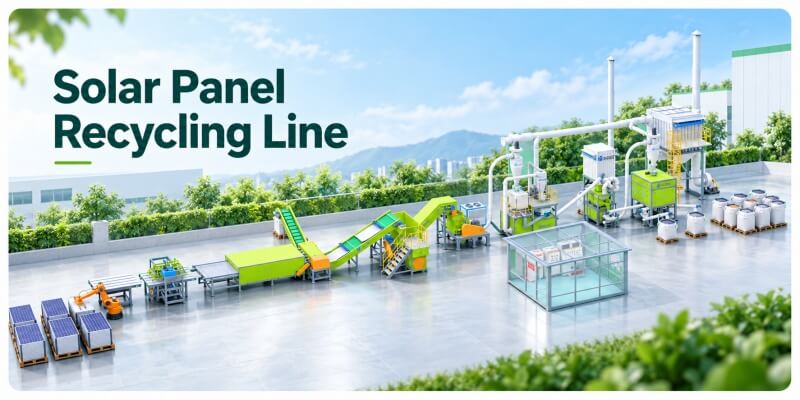
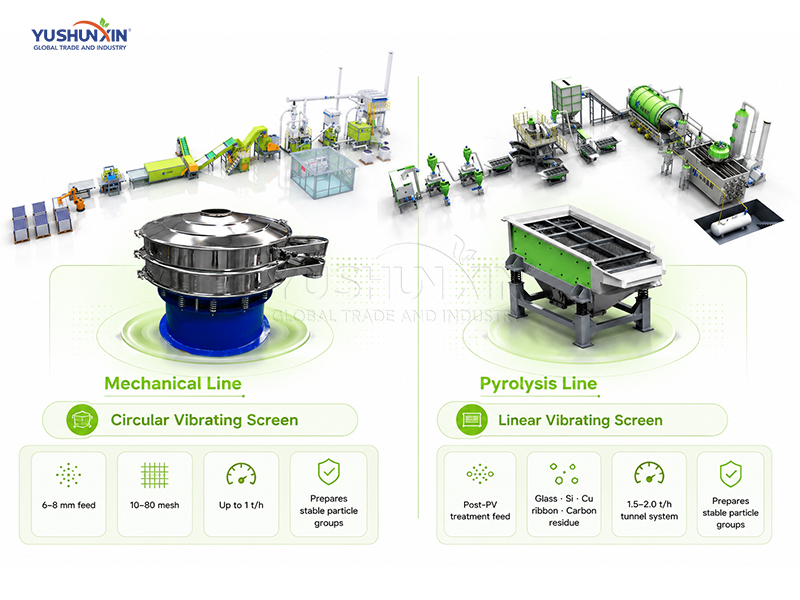
Dopo PV treatment, the feed may contain glass, silicio, nastri di rame, residuo carbonioso, and remaining polymers. Dual vibration motors move this mixture evenly across the screen surface. Nel frattempo, selected openings divide the material into several discharge streams. Each stream then enters a more suitable recovery route. Mechanical PV lines may reduce material to 6-8 mm before further grinding. Some lines then process material to 10-80 maglia. A standard mechanical line can reach 1 t/h. Continuous tunnel systems may reach 1.5-2.0 t/h. Perciò, screen area must match the complete solar panel recycling plant. The screener does not complete final purification. Invece, it prepares stable particle groups for precision separation.
Recover Black Mass Without Losing Metal Value
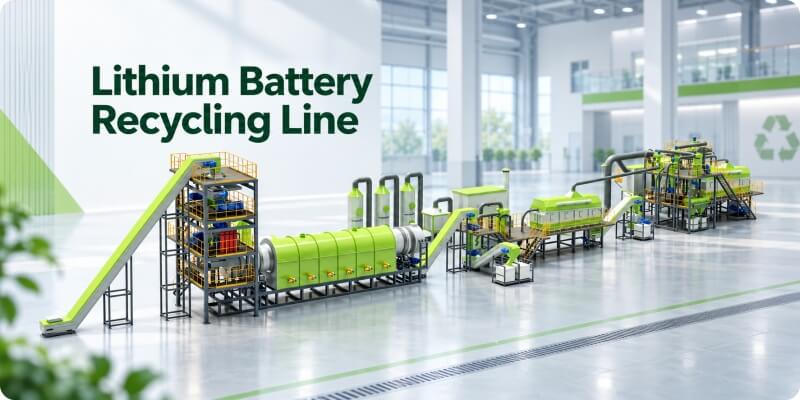
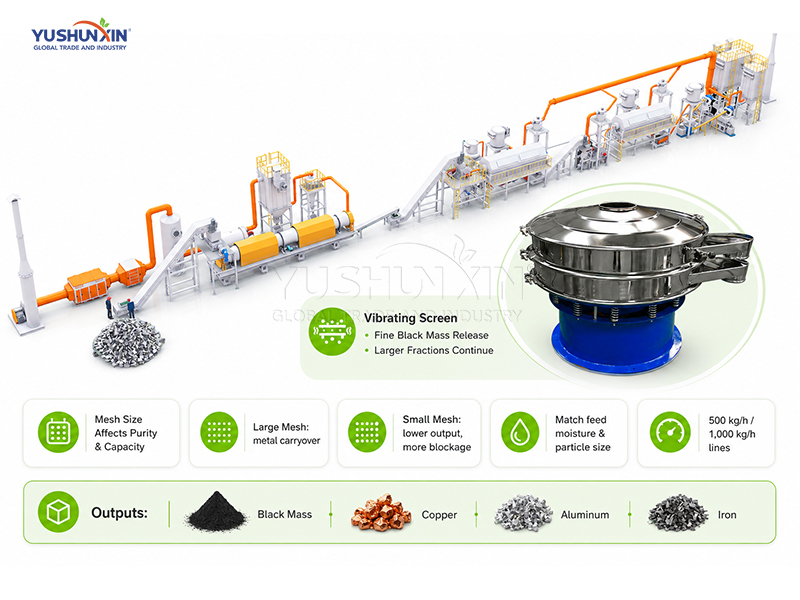
After controlled crushing and drying, battery material contains black mass, rame, alluminio, separator film, and casing fragments. The screen releases fine black mass through the selected mesh. Nel frattempo, larger fractions continue toward secondary crushing or copper-aluminum separation. Mesh selection directly affects both purity and capacity. Large openings may carry metal fragments into the black mass. Tuttavia, smaller openings may restrict output and increase screen blockage. Yushunxin therefore confirms particle distribution, umidità, and target purity before final configuration. The screening system can match 500 kg/h e 1,000 kg/h lithium Battery Recycling Plants. These lines recover black mass, rame, alluminio, and iron materials. Final screen capacity still depends on feed condition and required cut size.
Keep Downstream Separators Inside Their Working Range
Consistent particle size protects every downstream separator. Airflow equipment needs predictable suspension behavior. Gravity separators need stable settling paths. Electrostatic separators need controlled charging conditions. Eddy-current systems need repeatable particle trajectories. Wide size variation can reduce product purity and disturb hourly loading. Perciò, IL vibrating screener works as a process-control node. It protects the complete separation route, rather than one isolated machine. For higher recovery targets, connect it with a gravity separator for e-waste recycling.
How Can the Screening Module Maintain Stable Output in Continuous E-Waste Lines?
02 · PurezzaContinuous e-waste processing places changing loads on the screening system. Sharp glass, metal foil, fine powder, and light films behave differently. Perciò, the machine combines controlled vibration, wear-resistant screens, sealed transfer, and accessible maintenance. These features protect capacity and product consistency during extended production.
Twin Drives
Control Material Travel
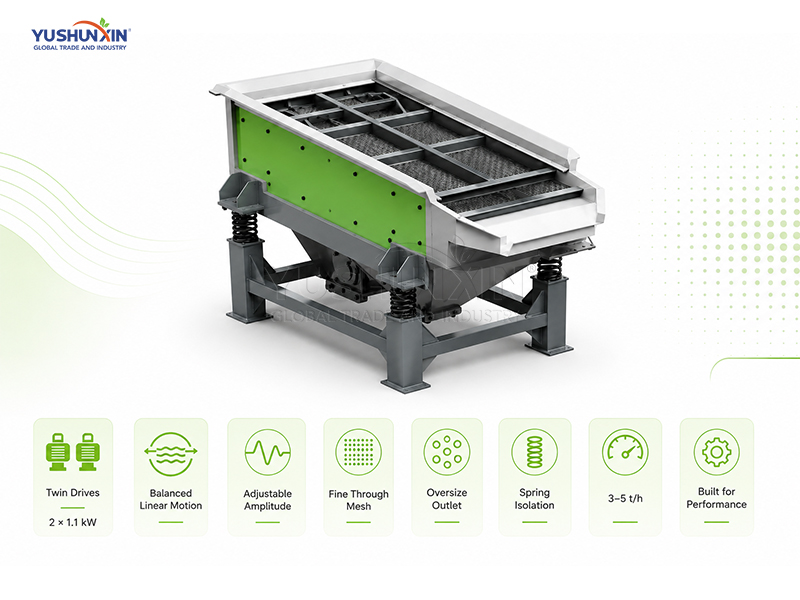
Twin Drives create stable linear vibration across the screen. Adjustable amplitude and speed control screening time, particle movement and processing capacity.
Modular Screen
Surfaces Create Fractions
Modular Screen Surfaces use different mesh layers to produce controlled particle sizes. Wear-resistant designs and anti-blocking structures improve separation stability.
Sealed Material Transfer
Supports Dust Control
Sealed Material Transfer reduces powder leakage through closed covers and dust interfaces. Negative-pressure dust collection improves safety and material handling.
Service Access
Preserves Capacity
Service Access allows easier cleaning, inspection and screen replacement. Maintenance space, spare parts and protection systems reduce downtime during long operation.
How Can Yushunxin Configure the Vibrating Screener for Your Recovery Line?
03 · ConfigurazioneScreener selection starts with feedstock, not machine size. Solar panel residue and lithium battery materials behave differently during screening. Perciò, Yushunxin matches screen area, mesh size, deck number, vibration settings, and dust control to each project.
Solar Panel Routes Require Different Screening Designs
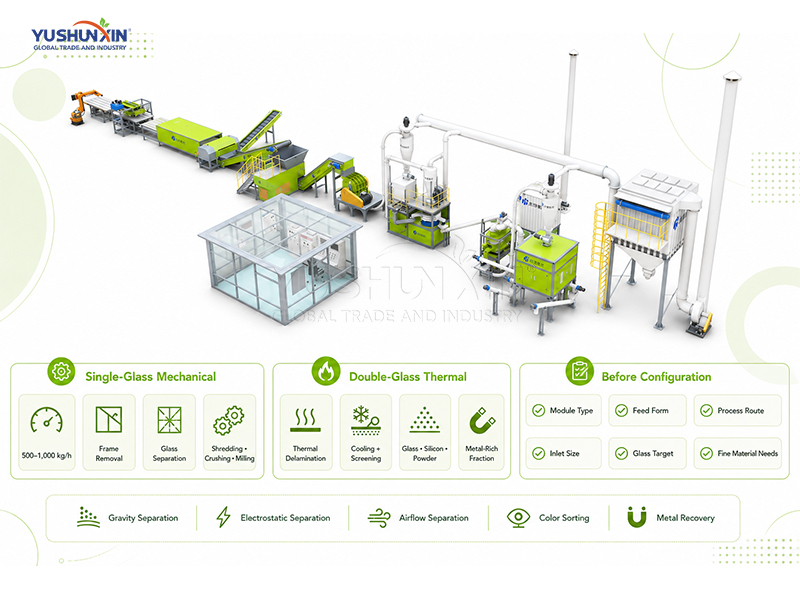
Single-glass mechanical lines usually handle 500-1,000 kg/h. Their process includes rimozione del telaio, separazione del vetro, triturazione, schiacciamento, fresatura, screening, separazione per gravità, e separazione elettrostatica. Double-glass projects often use thermal delamination before screening. Dopo il raffreddamento, the screener separates glass, silicon pieces, fine powder, and metal-rich material. Airflow separation, ordinamento dei colori, and metal recovery then process each fraction. Perciò, Yushunxin confirms module type, feed form, percorso del processo, inlet size, glass target, and fine-material requirements before configuration.
Battery Feedstock Determines the Screen Structure
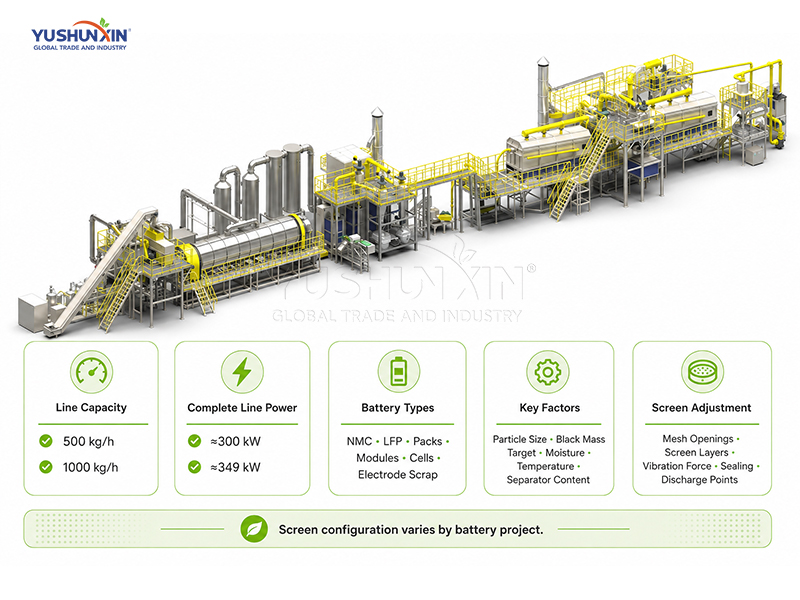
Lithium battery lines commonly process 500 O 1,000 kg/h. Typical complete lines require about 300 kW or 349 kW. Tuttavia, these figures describe the whole line, not the individual screener. NMC, LFP, pacchi, moduli, cellule, and electrode scrap require different screening conditions. Screen design also depends on particle size, black mass targets, umidità, temperatura, and separator content. Perciò, Yushunxin adjusts mesh openings, screen layers, vibration force, sigillatura, and discharge points for each battery project.
Vaglio vibrante industriale per linee di riciclaggio di rifiuti elettronici
The upstream crusher does not determine screener capacity alone. Material properties and downstream equipment also control stable production.
| Selection Factor | Configuration Effect |
| Distribuzione delle particelle | Defines mesh size and deck number |
| Bulk density | Changes hourly screen loading |
| Fine powder ratio | Affects efficiency and dust volume |
| Contenuto di umidità | Increases screen-blocking risk |
| Required cut size | Changes screen area and retention time |
| Upstream fluctuations | Defines buffer hopper capacity |
| Downstream capacity | Prevents material accumulation |
| Daily operating hours | Defines motor and structural duty |
Riepilogo
Yushunxin can provide a complete vibrating screener solution for solar panel and lithium battery recycling projects. We match feedstock, cut sizes, capacità, controllo delle polveri, and downstream equipment before confirming the design. Inoltre, our engineers can integrate crushing, separazione del flusso d'aria, separazione per gravità, separazione elettrostatica, and material collection into one production line. Per ulteriore pianificazione, we can provide you with Soluzione per lo smaltimento della pirolisi dei pannelli solari per progetti di riciclaggio dei rifiuti fotovoltaici, recupero della massa nera per il riciclaggio delle batterie al litio. Contact our team with material samples and capacity targets for a project-specific proposal.
Dalle tue esigenze
all'impatto reale


