



















As photovoltaic manufacturing expands, production scrap is becoming a resource stream inside PV industrial parks. Broken cells, wafer scrap, rejected modules and laminated offcuts all contain recoverable silver, silicio, bicchiere, rame e alluminio. Tuttavia, their value depends on proper classification and equipment matching. This article focuses on how PV manufacturing parks can build an industrial recovery line through scrap sorting, mechanical separation, pirolisi, silver extraction and environmental treatment.
How Can PV Parks Turn Daily Manufacturing Scrap Into An Internal Recovery Loop?
01 · Recovery LoopPV manufacturing parks create scrap every day across several workshops. Perciò, recovery planning should start inside the park, not after external disposal. Cell breakage, wafer scrap, rejected modules, glass damage and warranty returns all carry recoverable value. A centralized recovery line can connect these scattered materials into one controlled system. Poi, the park can reduce storage pressure, improve material return and support EHS approval.
Map Scrap Sources Across Production
Solar scrap comes from multiple stages, including cells, wafers, nastri, and failed modules. Source classification helps create a centralized recovery route and reduce storage and disposal costs.
Build A Park-Level Recovery System
A factory recycling line can reduce external disposal and recover valuable materials such as glass, alluminio, silicio, rame, and silver. The goal is closed-loop resource management, not simple waste removal.
Design Equipment Around Scrap Flow
Equipment selection should match scrap type and daily volume. Cell scrap, single-glass modules, and mixed laminated waste require different routes, from mechanical separation to pyrolysis and refining.
How Do PV Parks Sort Scrap Before Line Configuration?
02 · SoluzionePV manufacturing parks should sort scrap before choosing equipment. Cell scrap, wafer fragments, laminated offcuts, single glass modules and double glass modules follow different recovery routes. Perciò, the first decision should not start from capacity. It should start from material structure, contenuto d'argento, glass condition and lamination type.
Laminated Scrap Needs Pyrolysis Before Separation
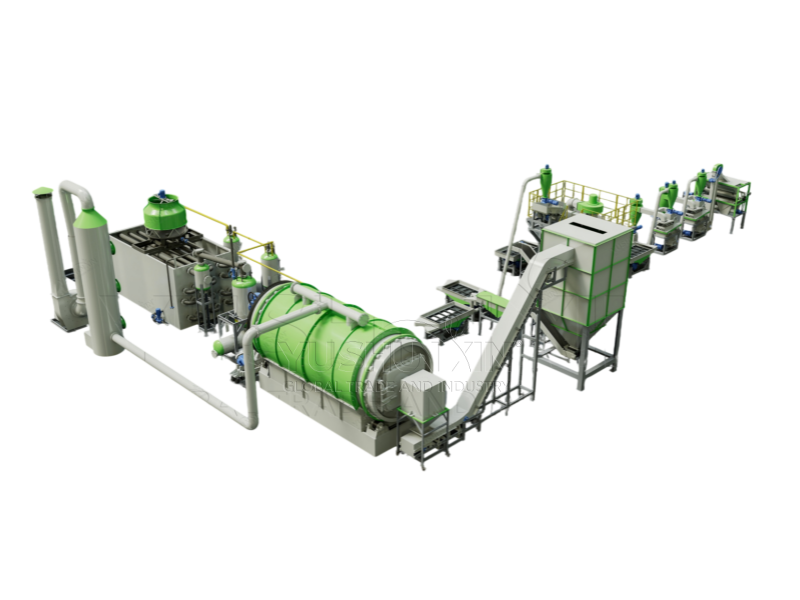
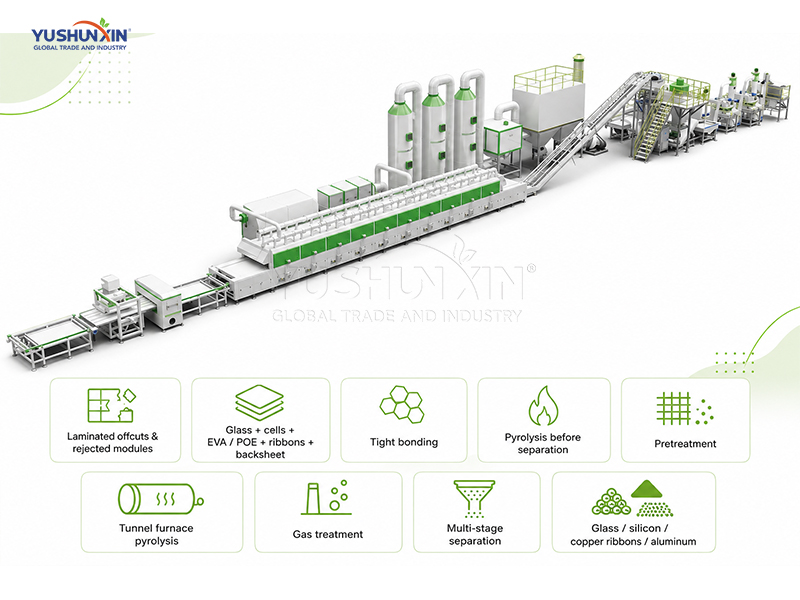
Laminated offcuts and rejected modules contain glass, cellule, EVA or POE, ribbons and backsheet layers. These layers bond tightly during production. Perciò, valuable separation must start with pyrolysis. PV parks can choose mechanical peeling, pyrolysis delamination or crushing separation. The right route depends on scrap condition. Clean single glass scrap may use mechanical separation. Tuttavia, heavily laminated or mixed scrap often needs pyrolysis method. A complete plant can include pretreatment, forno a tunnel pirolisi, trattamento del gas e separazione multistadio. Dopo la pirolisi, bicchiere, silicio, copper ribbons and aluminum can enter different collection streams.
Single Glass And Double Glass Scrap Need Separate Routes
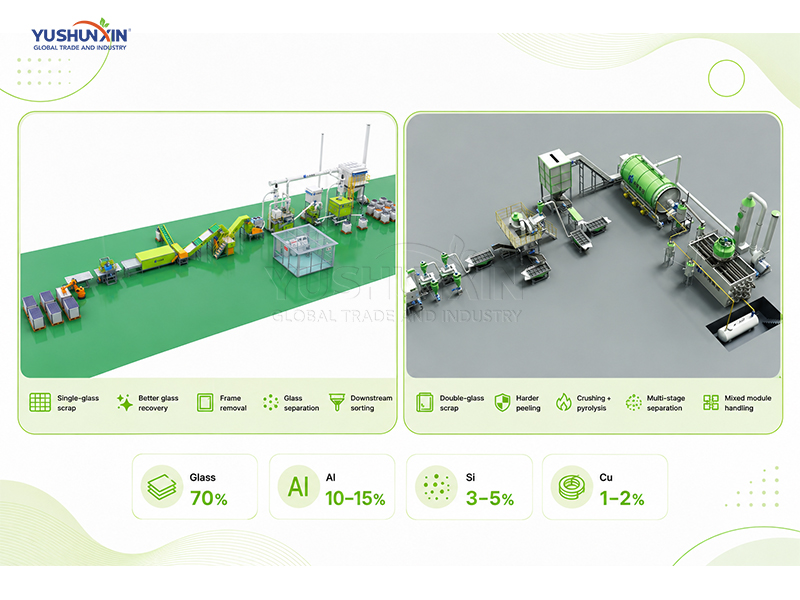
Single glass module scrap usually has better glass recovery potential. If the glass surface stays complete, the line can focus on rimozione del telaio, separazione del vetro e lo smistamento a valle. This route helps retain more bulk material value. Double glass scrap creates a different challenge. Two glass layers sandwich the cells and encapsulant. Perciò, direct peeling becomes harder. In molti progetti, schiacciamento, pyrolysis and multi-stage separation work better. Material ratio also supports system planning. In common PV modules, glass may account for about 70%. Aluminum may account for 10%–15%. Silicon may account for 3%–5%. Copper may account for 1%–2%. Perciò, scrap classification directly affects equipment choice and ROI.
Cell Scrap Requires Powder Control And Silver Recovery
Solar cell scrap usually includes broken cells, wafer fragments, electrode silver paste and small ribbon residues. These materials already carry concentrated recovery value. Perciò, rough crushing alone cannot support a high-value project.The line should use crushing, macinazione, screening and powder classification. Poi, silver-rich powder can enter wet recovery or refining. This route helps parks separate silicon powder, metal-rich material and low-value residue. For cell manufacturers, this step matters more than volume reduction. Silver may only account for about 0.05%–0.1% in normal modules. Tuttavia, it often decides the profit logic. COSÌ, cell-rich scrap needs finer separation and a clear recupero dell'argento path.
How Can PV Parks Match Each Scrap With The Right Recovery Line??
02 · Each ScrapHigh-value PV parks need equipment matching, not a single machine answer. Perciò, the solution should start from scrap structure, daily volume and target outputs. Single glass modules, mixed laminated scrap and cell-rich powder need different recovery lines. Poi, each line should connect capacity, disposizione, separation method and final material value.
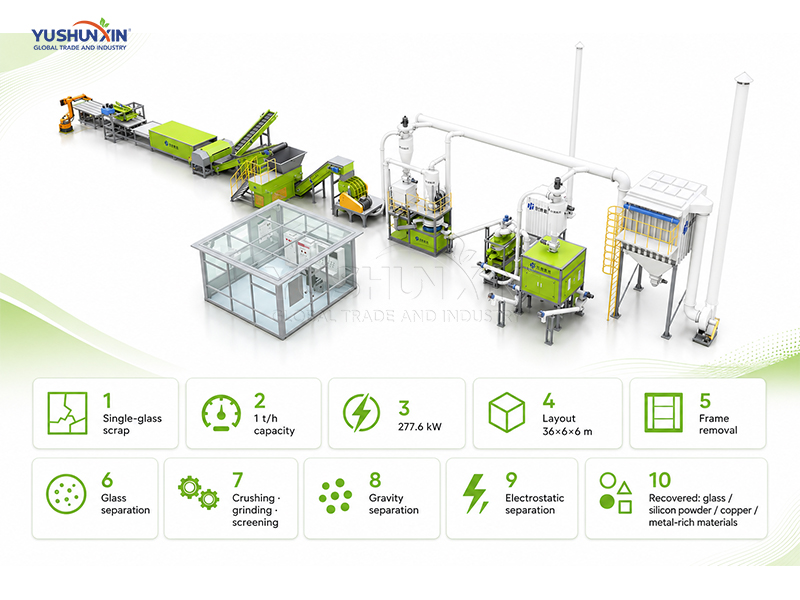
Single Glass Scrap Uses A 1 t/h
Mechanical Separation Line
For stable single glass module scrap, UN linea di riciclaggio meccanico del fotovoltaico works better. It suits rejected modules, broken panels and regular factory offcuts. The process starts with aluminum frame removal and glass separation. Poi, the material enters crushing, hammer breaking, grinding and screening. Dopo di che, gravity separation and electrostatic separation recover valuable fractions. YSX-1000 can process about 1 t/h of single glass modules. Its total power reaches 277.6 kW. The required layout is about 36×6×6 m. This line can recover glass, polvere di silicio, copper and metal-rich materials.
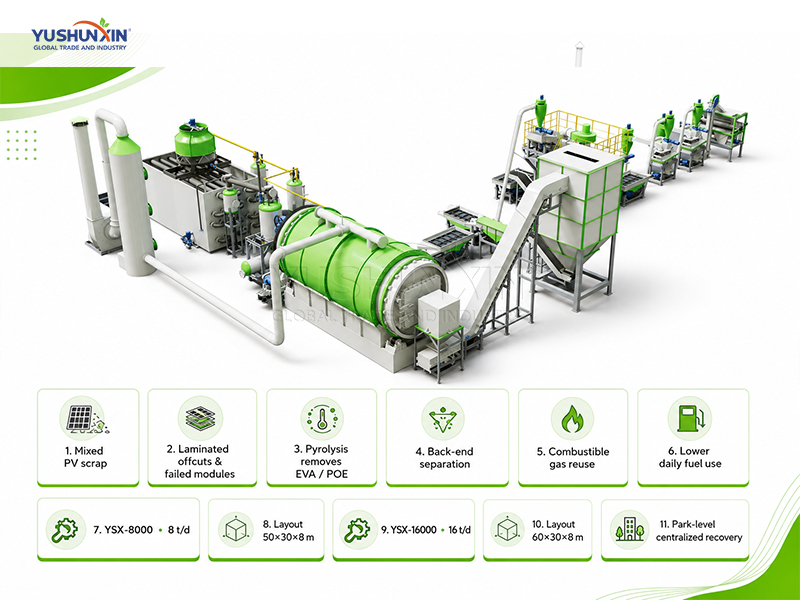
Mixed Module Scrap Fits An
8-16 t/d Pyrolysis Recycling Plant
Mixed single and double glass scrap needs stronger pyrolysis treatment. This line suits laminated offcuts, failed modules and hard-to-separate panels. Pyrolysis removes EVA or POE bonding through controlled pyrolysis treatment. Poi, bicchiere, silicon cells and metal materials enter back-end separation. Nel frattempo, combustible gas can return to the heating system. Perciò, IL PV pyrolysis line can reduce part of daily fuel consumption. YSX-8000 handles about 8 t/d of mixed PV scrap. Its layout is about 50×30×8 m. YSX-16000 handles about 16 t/d. Its layout is about 60×30×8 m. This line fits park-level centralized recovery projects.
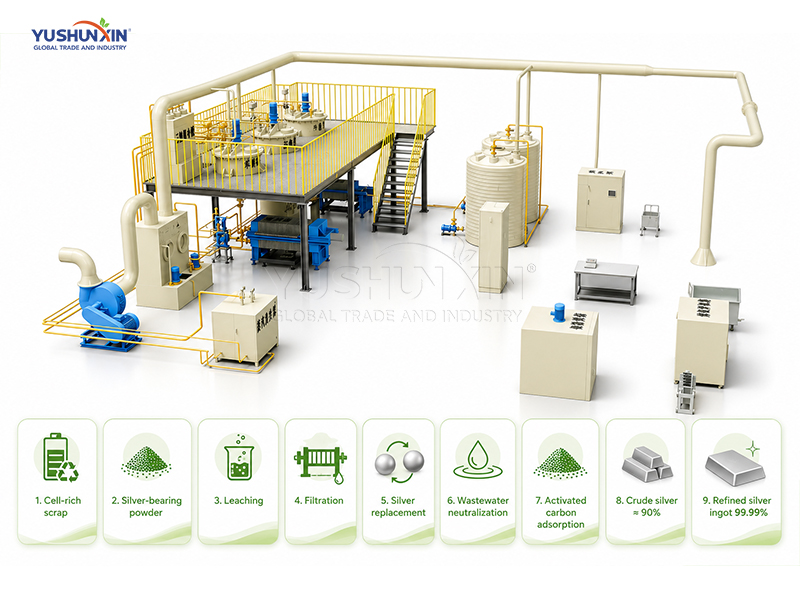
Cell-Rich Scrap Needs A Silver
Extraction And Refining System
Cell-rich scrap needs a different value recovery path. It includes broken cells, silver-bearing powder, silicon powder and metal-rich fractions. The line should not stop at crushing and screening. Invece, it should connect leaching, filtrazione, replacement and refining. Core equipment includes leaching reactors, filter presses and silver replacement kettles. It also needs wastewater neutralization and activated carbon adsorption. Poi, electrolysis can refine crude silver into high-purity silver. The crude argento stage can reach about 90% purezza. After refining, silver ingots can reach about 99.99% purezza.
How Can A PV Park Turn Workshop Scrap Into Saleable Recovery Outputs?
03 · Recovery OutputsPV manufacturing parks need a connected recovery line, non macchine separate. Perciò, the process should follow the factory scrap flow. Module scrap can move from storage to frame removal and pyrolysis. Nel frattempo, cell scrap can enter crushing, grinding or silver pre-treatment directly. This layout helps investors see the equipment path, material path, product path and emission-control path clearly.
AND PRETREATMENT
Front-End Receiving And Pretreatment
The recycling line starts with centralized receiving, pesatura, e classificazione. Rimozione del telaio, rimozione della scatola di giunzione, and material preparation create a stable feed for further recycling processes.
MATERIAL SEPARATION
Pyrolysis And Material Separation
Different scrap types require different routes. Mechanical separation suits clean single-glass scrap, while pyrolysis helps separate mixed laminated waste into glass, silicio, metals, and reusable energy.
COLLECTION
Back-End Sorting And Collection
After separation, screening and sorting recover different products. Bicchiere, silicio, rame, silver-rich materials, and residues enter dedicated collection routes for sales, raffinazione, and environmental management.
How Can Output Planning Turn PV Scrap Into Recoverable Revenue?
05 · Pianificazione dell'outputFor PV manufacturing parks, scrap recovery should not stop at waste reduction. It should create saleable materials and lower daily operating costs. Perciò, the recovery plan must separate high-value metals, bulk materials and usable energy streams. Argento, silicio, bicchiere, rame, aluminum and syngas all support ROI in different ways.
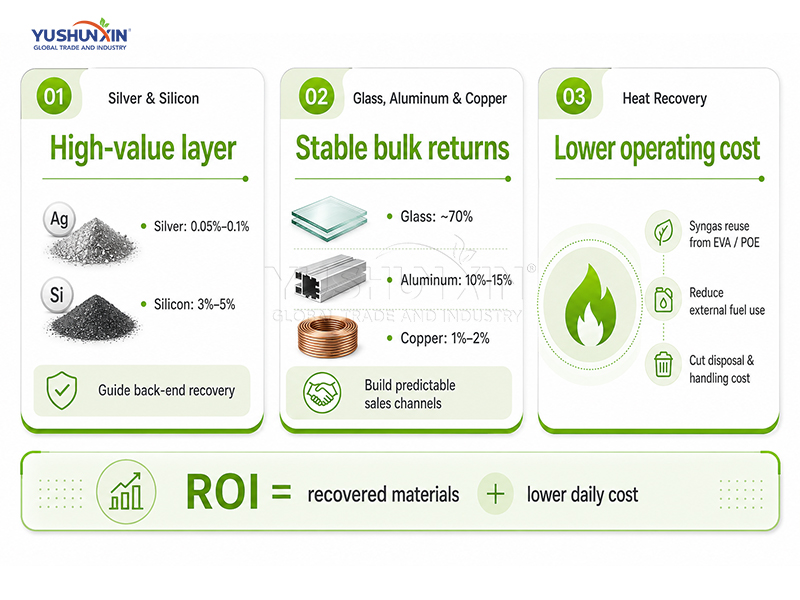
Silver And Silicon Build The Main Value Layer
Silver gives the strongest profit signal in PV scrap recovery. Although silver only accounts for about 0.05%–0.1% of a standard module, it carries high unit value. Perciò, cell-rich scrap, broken wafers and silver-bearing powder need targeted recovery. Silicon also matters in manufacturing parks. Standard modules usually contain about 3%-5% silicio. After proper crushing, screening and separation, silicon-rich material can enter downstream reuse or refining channels. Di conseguenza, silver and silicon recovery should guide the back-end equipment design.
Bicchiere, Alluminio & Copper Create Stable Bulk Returns
Glass forms the largest material stream in PV modules. It usually accounts for about 70% del peso del modulo. Perciò, stable glass separation can improve overall project returns. Complete glass has higher reuse value. Tuttavia, broken glass can still enter furnace or aggregate markets. Aluminum frames usually account for about 10%–15%, while copper accounts for about 1%–2%. Perciò, rimozione del telaio, copper ribbon recovery and clean sorting help build predictable sales channels.
Heat Recovery Helps Control Operating Cost
What Investment Route Fits Your PV Scrap Recovery Plan?
06 · Investment RoutePV parks should plan budget by scrap type, not only equipment price. Cell scrap, single glass modules and mixed modules need different recovery routes. Perciò, investors should review capacity, automazione, spazio vegetale, power load, controllo delle emissioni, silver recovery and future expansion. A clear budget plan helps decide whether to start with mechanical recycling, pyrolysis delamination or a combined silver extraction system.
Single Glass Recycling Defines The Starting Budget
Single-glass scrap usually fits mechanical recycling. The budget depends on capacity, automazione, and separation requirements. Per esempio, YSX-1000 handles 1 t/h, while power, spazio, controllo delle polveri, and operation costs also affect investment.
Pyrolysis Lines Require Higher Investment
Mixed single and double-glass scrap needs pyrolysis separation. The investment depends on processing capacity and system modules, including furnace, raffreddamento, screening, e trattamento del gas di coda. YSX-8000 and YSX-16000 support 8–16 t/d projects.
Silver Recovery Adds Future Value
Silver extraction is a value-added module for silver-rich materials. Investment depends on feedstock volume and refining targets. Stable silver supply can improve ROI, while smaller projects can start with concentration preparation first.
Riepilogo
Solar cell and module scrap recovery needs a complete park-level solution. Yushunxin can help PV manufacturing parks classify scrap, evaluate material value and match suitable equipment. For single glass module scrap, we can provide mechanical recycling lines. For mixed single and double glass modules, we can configure pyrolysis systems. For cell-rich scrap and silver-bearing powder, we can add silver extraction and refining modules. Perciò, your project can connect scrap collection, pretreatment, separazione, environmental control and product recovery in one plan.
Dalle tue esigenze
all'impatto reale


