












On 25th August, 2026, we received an inquiry from a German recycling company titled “how to dismantle PV in Germany.” The customer wanted industrial solar panel dismantling equipment to recover aluminum frames, cajas de conexiones, and glass from retired photovoltaic modules. They also considered expanding into mechanical separation or thermal recycling. Por lo tanto, our team developed a modular equipment proposal covering dismantling, recuperación de materiales, and future plant expansion. The following are the specific information in this case:
How Can a German Recycler Automate PV Panel Dismantling?
For the German customer, the first priority was efficient dismantling rather than immediate silicon or silver extraction. The proposed system would separate aluminum frames, cajas de conexiones, and glass from retired PV modules. Además, the customer needed equipment compatible with different panel structures and future recycling processes.
What PV Components Must Be Removed Before Recycling?
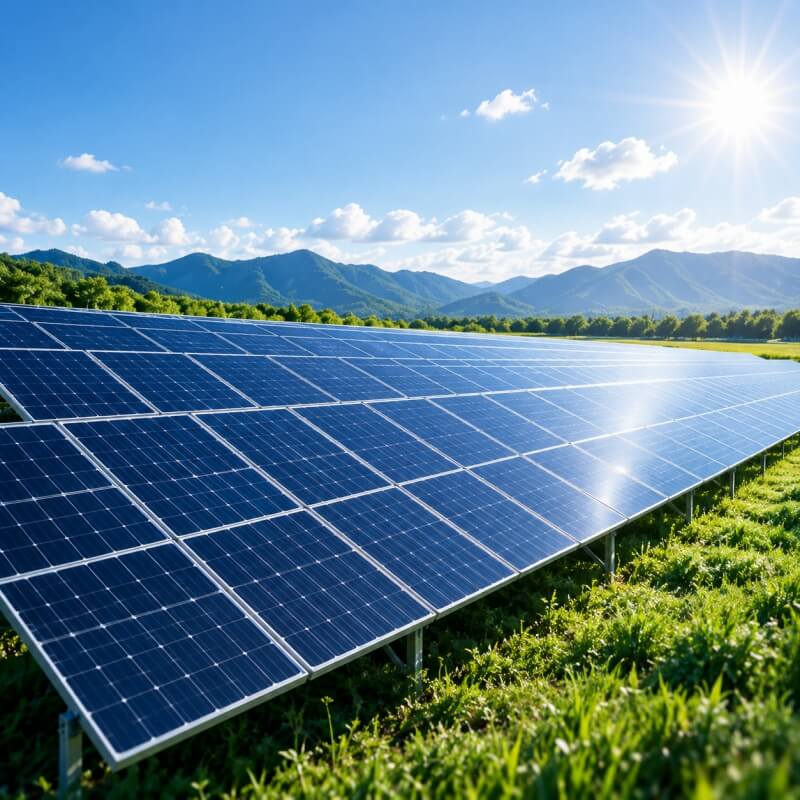
We first needed to identify the customer’s incoming solar panel types. Single-glass modules typically contain front glass, encapsulation layers, solar cells, y una lámina posterior de polímero. Mientras tanto, double-glass modules use glass on both sides, requiring different downstream separation methods. We therefore asked: “Are you processing mainly single-glass modules, or do you also receive double-glass panels?” This distinction directly affects equipment selection. Panel dimensions, damaged frames, and junction box positions also influence automatic handling. For both module types, removing aluminum frames and junction boxes first helps recover valuable materials separately. Additionally, it prevents these components from entering subsequent glass removal, aplastante, or thermal processing stages.
Which Machines Did We Recommend for PV Dismantling?
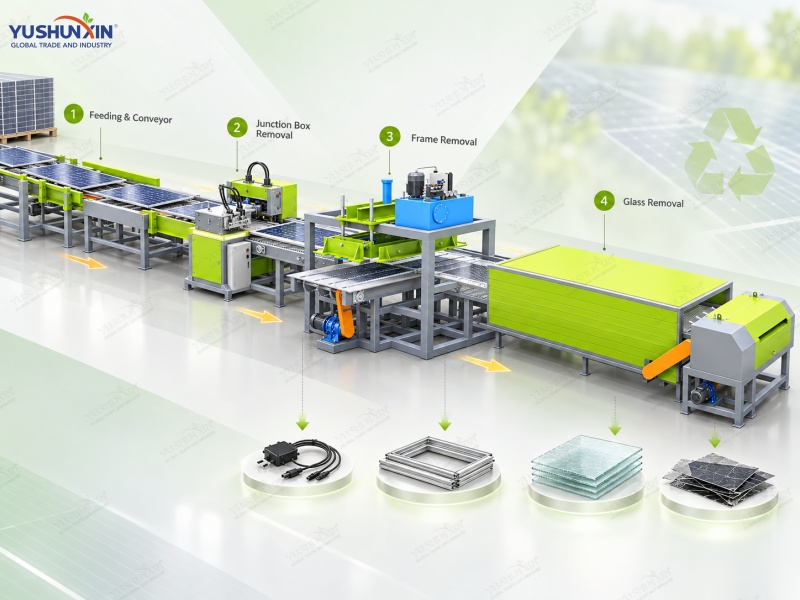
Based on these requirements, we proposed a modular solar panel dismantling equipment configuration with four processing units.
Automatic PV Frame Removal Machine
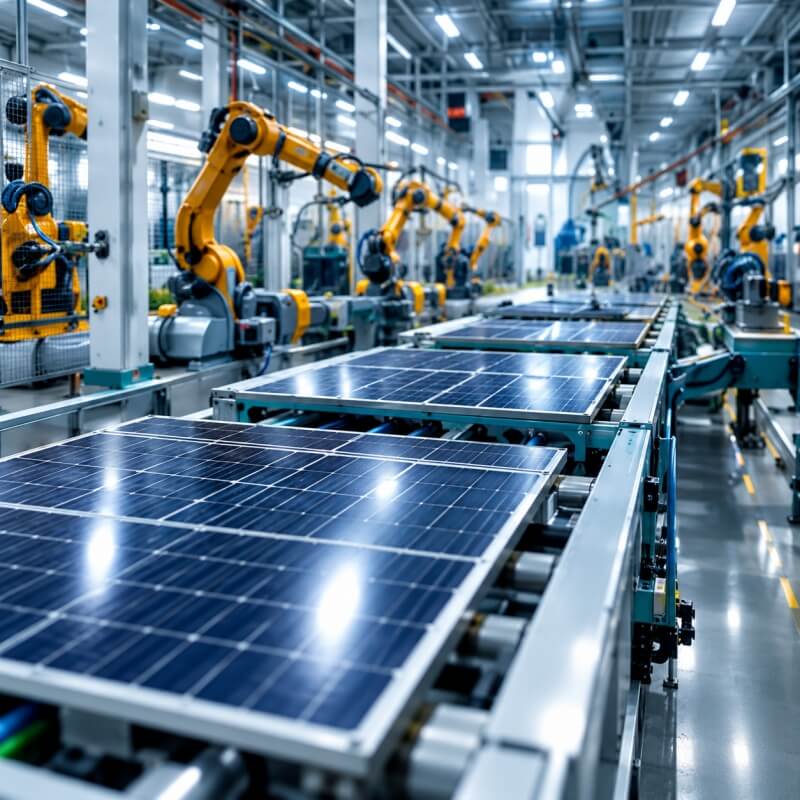
The machine grips and separates aluminum frames from the module edges. Adjustable positioning accommodates different panel dimensions, while automated operation reduces repetitive manual work. Como consecuencia, the customer can collect aluminum directly before further recycling.
Junction Box Removal Machine
Máquina de eliminación de vidrio de paneles solares
Automatic Feeding and Conveyor System
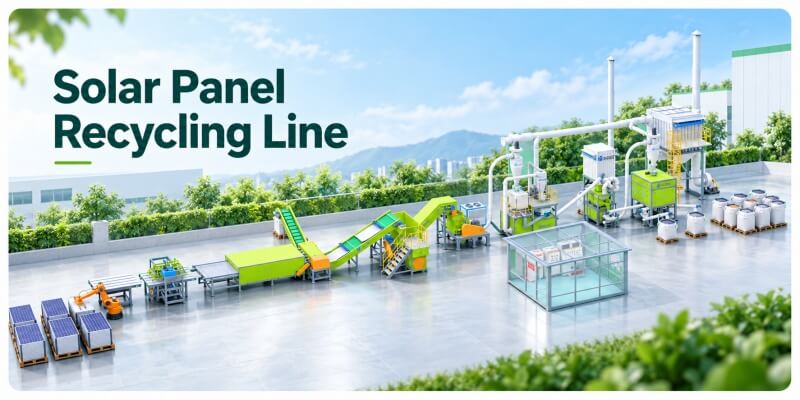
Juntos, these machines establish a practical automatic PV panel dismantling line for industrial recycling operations in Germany. Más importante aún, the modular layout allows the customer to add mechanical separation or tunnel kiln pyrolysis later, without redesigning the entire front-end system.
How Could the German Customer Expand Dismantling Into a Complete Recycling Line?
Beyond aluminum frames and junction boxes, the German customer also considered recovering glass, silicio, y cobre. Por lo tanto, we proposed two expansion routes for the existing PV panel dismantling equipment. The final configuration would depend on panel types, recovered material requirements, and German environmental regulations.
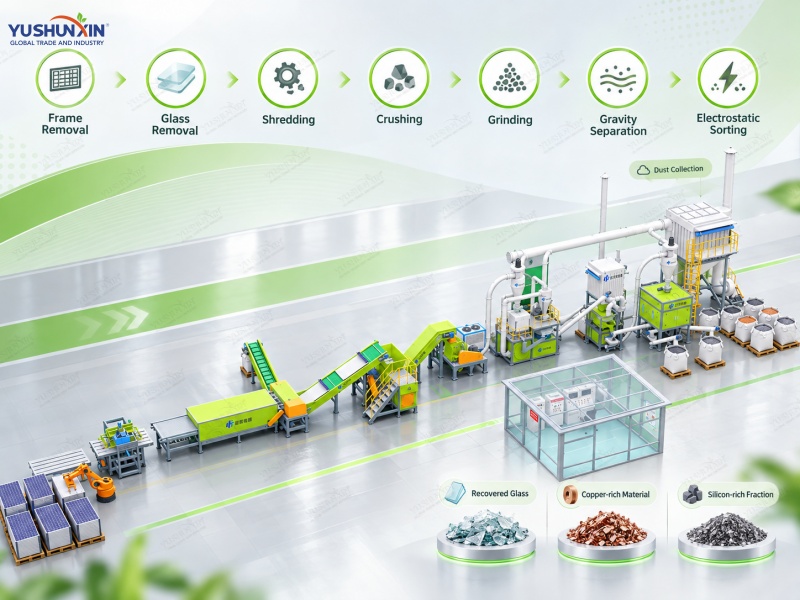
Mechanical Solar Panel Recycling Line
For suitable single-glass modules, we recommended connecting the dismantling system to a mechanical solar panel recycling line. Después de quitar el marco y el vidrio, the remaining laminate enters a shredder and hammer crusher. Próximo, a grinding machine reduces particle size for more effective separation. Gravity separation then divides materials by density, while electrostatic sorting separates conductive and non-conductive fractions. Additionally, an integrated dust collection system helps control airborne particles. This configuration allows the customer to recover glass, copper-rich materials, and silicon-rich fractions. Sin embargo, actual material purity depends on panel composition and processing conditions.
Tunnel Kiln Pyrolysis Recycling Line
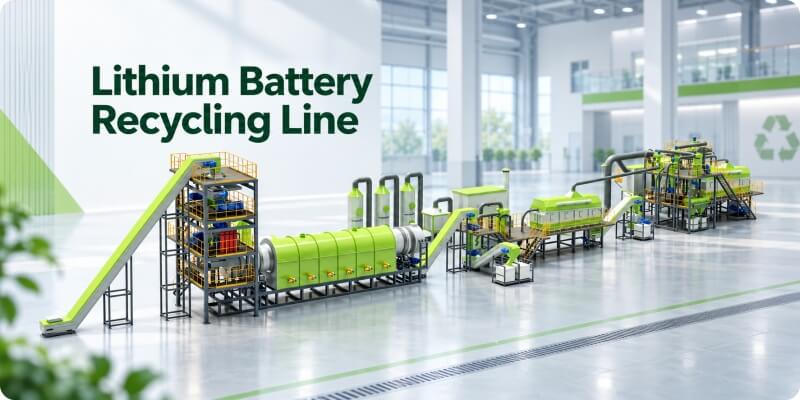
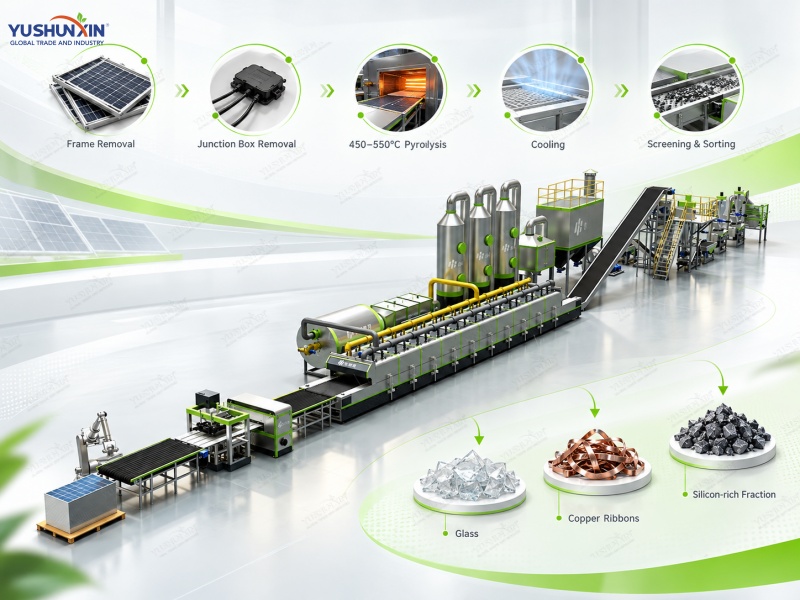
For double-glass modules or projects targeting improved material liberation, propusimos un PV panel pyrolysis recycling line. After removing frames and junction boxes, the modules enter a solar panel tunnel kiln recycling system. Controlled heating at approximately 450–550°C decomposes EVA and other compatible encapsulation materials, including suitable POE formulations. Subsequently, enfriamiento, cribado, separación de aire, and gravity sorting separate glass, cintas de cobre, and silicon-rich fractions. Unlike mechanical crushing, thermal separation can preserve larger material fragments under suitable operating conditions. Nevertheless, additional refining remains necessary for high-purity silicon or silver recovery.
What Must the PV Recycling Line Meet in Germany?
We also considered Germany’s ElektroG and EAG-BehandV requirements during preliminary equipment planning. Para reciclaje mecánico, we recommended enclosed conveying, filtración de polvo, and separate material collection. For thermal recycling, the configuration additionally requires combustion-based off-gas treatment, enfriamiento, filtración, and appropriate emission monitoring. Además, CE-related machinery safety documentation, material traceability, and local permitting requirements must form part of project planning. Our recommendation was to retain a modular front-end dismantling system. This would allow the customer to select mechanical sorting or pyrolysis after evaluating feedstock, objetivos de recuperación, and investment costs.
What Budget Should the German Customer Prepare for PV Dismantling Equipment?
For the German customer, investment planning involved more than the solar panel dismantling equipment price. Processing capacity, nivel de automatización, and future recycling requirements would directly affect the total project cost. Por lo tanto, we proposed a phased investment strategy to balance initial expenditure with long-term material recovery potential.
How Much Does an Automatic PV Dismantling System Cost?
Rather than recommending a complete recycling plant immediately, we presented three equipment configurations based on the customer’s investment priorities.
| Investment Option | Configuración del equipo | Aplicación adecuada |
| Basic PV Dismantling System | Frame removal machine, junction box remover, automatic conveyors | Recycling companies with existing downstream equipment |
| Línea de Reciclaje Mecánico | Desmantelamiento, remoción de vidrio, triturar, molienda, gravity and electrostatic sorting | Industrial recyclers targeting glass, cobre, and silicon-rich fractions |
| Thermal Recycling Line | Dismantling equipment, tunnel kiln, enfriamiento, tratamiento de escape, and sorting systems | Investors planning advanced material separation |
We also clarified that equipment quotations would not automatically include shipping, German import-related charges, instalación, puesta en marcha, or local environmental infrastructure. Como consecuencia, the final costo de la planta de reciclaje de paneles solares would depend on the selected configuration and site requirements.
Which Operating Costs Matter Most for a German Recycling Plant?
For Germany, operating expenses were another important consideration. Por lo tanto, we evaluated several factors beyond the initial equipment purchase.
Electricity and Labor
Automated feeding and dismantling can reduce repetitive manual work. Sin embargo, power consumption, horas de funcionamiento, and inspection requirements affect processing costs.
Maintenance and Environmental Control
Cutting tools, grinding components, dust filters, and scheduled maintenance create recurring expenses. Additionally, thermal recycling requires more extensive exhaust treatment and monitoring.
Recovered Material Value
Aluminio, cobre, vaso, and silicon-rich fractions offer different revenue opportunities. Their actual value depends on recovery purity, local buyers, and market conditions.
During equipment planning, one question helps clarify the investment direction:
“Would you prefer a lower initial investment or greater downstream material recovery capacity?"
For this German project, our recommendation was to match the initial equipment configuration with verified feedstock and processing targets. Además, a modular layout would preserve future expansion options. By providing the expected daily capacity, panel types, diseño de fábrica, and investment budget, the customer could receive a customized PV dismantling equipment quotation and preliminary production line design.
For the German customer, PV dismantling provides the starting point for a scalable solar panel recycling operation. Automated frame and junction box removal can improve material handling and prepare panels for further processing. Además, mechanical sorting and tunnel kiln pyrolysis offer different expansion options for valuable material recovery. The final investment depends on module types, capacidad requerida, and German environmental requirements. Explore our solar panel recycling equipment, mechanical recycling solutions, y PV pyrolysis recycling lines to compare suitable configurations. Contact our engineering team for a customized layout and equipment quotation.
"
De tus necesidades
al impacto real


