

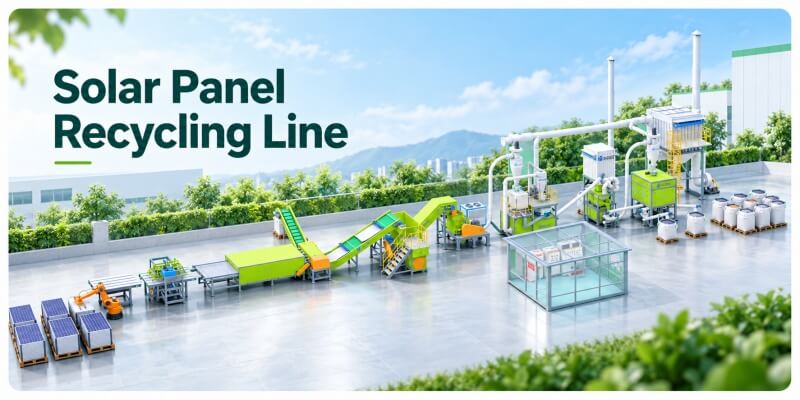










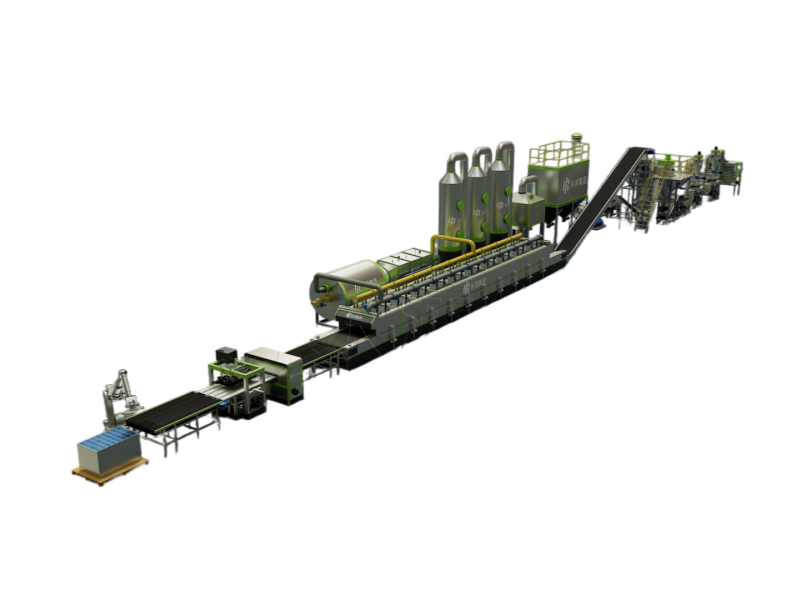


As PV retirement volumes rise, recyclers need stable delamination without sacrificing glass quality or increasing gas-treatment loads. EVA thermal decomposition sits at the center of that challenge. Temperature alone cannot deliver consistent results. Furnace zoning, tiempo de residencia, oxygen control, extracción de gas, and downstream separation must work together. Industrial equipment design must control EVA removal, pureza del producto, uso de energía, y estabilidad operativa. The discussion covers both single-glass PV recycling plant and double-glass module recycling line.
How Does Feedstock Classification Guide EVA Delamination Line Design?
01 · ClasificaciónPV module structure determines heat demand, gas load, and delamination difficulty. Por lo tanto, the line should classify each batch before setting furnace parameters.
Build The Feedstock Matrix Before Thermal Testing
Feedstock Matrix should classify single-glass, double-glass and damaged modules. Module size, estructura, moisture and encapsulant type define heating demand and gas treatment needs.
Match Pretreatment With Saleable Product
Pretreatment should follow the target product. Glass-focused projects need intact glass recovery, while silicon-focused projects can use stronger crushing and separation routes.
Set Feedstock Exclusions And Batching Rules
Feedstock Exclusions and Batching Rules prevent unknown polymers and risky materials from entering production. Different structures and backsheets need separate testing and processing.
How Does a Zoned Thermal Delamination System Protect PV Glass?
02 · PV GlassStable EVA delamination requires a controlled heating path, not one horno de túnel setpoint. Por lo tanto, the system must coordinate temperature, tiempo de residencia, conveyor speed, and heat distribution. This approach protects glass while improving separation consistency.
Match Conveyor Speed With Heat Exposure
Conveyor Speed should match temperature and material thickness. PLC control links residence time with heating zones to achieve stable delamination.
Control Temperature Uniformity Across Width
Temperature Uniformity matters more than peak temperature. Multi-point sensors and thermal monitoring reduce cold zones and improve consistent separation.
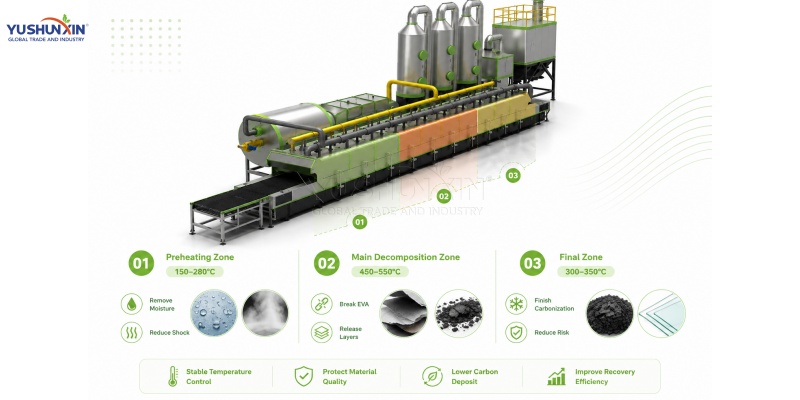
Use Three Thermal Zones To Control EVA Breakdown
Three Thermal Zones control EVA Breakdown through preheating, decomposition and cooling. Proper temperature ranges reduce glass stress, residue and overheating risks.
Obtenga su solución!How Can a Matched Feeding and Conveyor Solution Stabilize EVA Delamination?
03 · SoluciónStable EVA delamination depends on controlled material movement, no solo la temperatura del horno. The line must maintain even spacing, consistent bed depth, and predictable residence time. A matched feeding solution improves heat transfer while protecting glass quality and throughput.
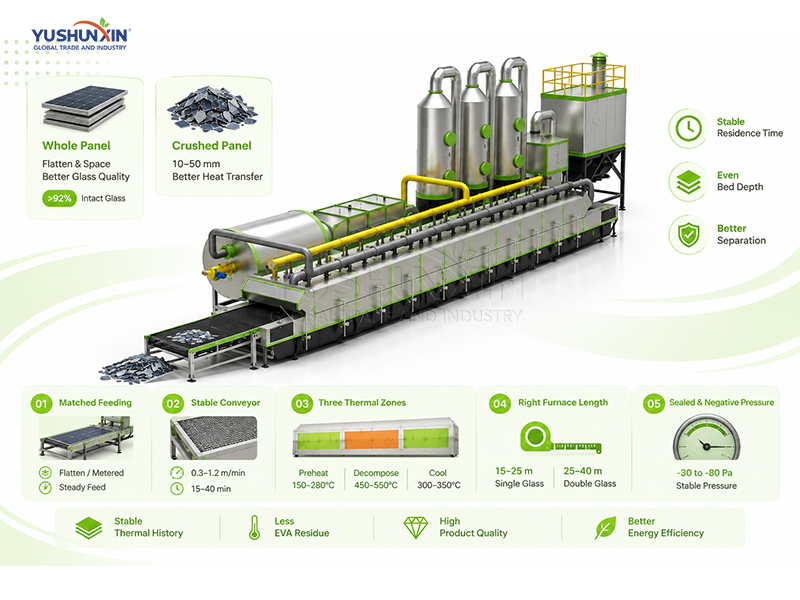
Whole-Panel And Crushed-Panel Need Different Feeding
Conveyor Stabilizes Material Position And Exposure
Furnace Length Matches Thermal Exposure
Sealing And Negative Pressure Protect Stability
How Can an Integrated Gas Circuit Stabilize EVA Delamination?
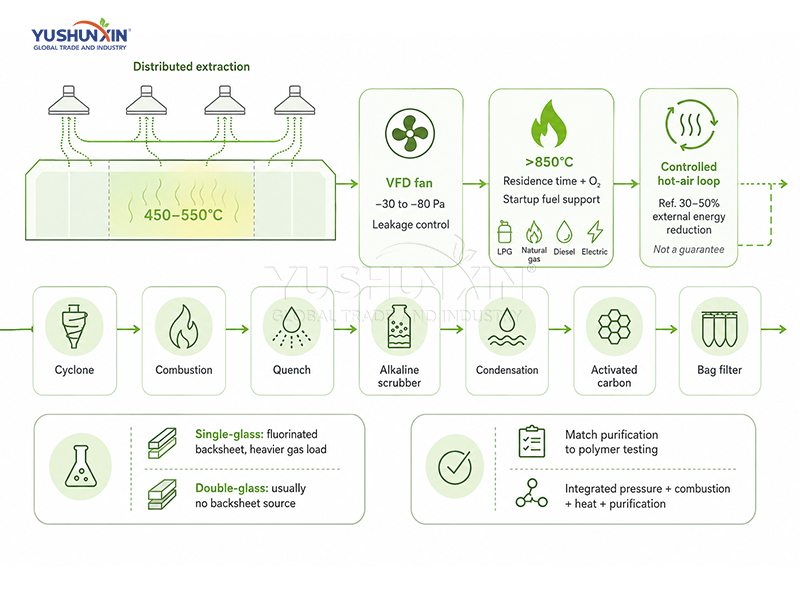
04 · EVA DelaminationEVA and back-sheet materials release gas unevenly during thermal decomposition. Por lo tanto, the gas circuit must follow each furnace zone and changing polymer load. It should connect extraction, combustión, recuperación de calor, purification, and pressure control.
Distributed Extraction
Controls Furnace Gas
Distributed Extraction removes gas near the EVA decomposition zone. Negative Pressure control and proper pipe design reduce leakage, tar buildup and temperature disturbance.
Controlled Secondary
Combustion Treats Gas
Controlled Secondary Combustion processes extracted gas above 850°C. Oxygen supply, residence time and fuel support help maintain stable organic gas treatment.
Heat Recovery Supports
Energy Efficiency
Heat Recovery reduces external fuel demand after stable operation begins. Heat balance calculations should consider gas flow, humedad, temperature and system losses.
Staged Purification
Matches Gas Chemistry
Staged Purification follows EVA and backsheet chemistry. Cyclone, combustión, quench, depuración, activated carbon and filtration control dust, acid gas and VOC emissions.
How Can Closed-Loop Controls Stabilize EVA Delamination?
05 · ControlIndustrial PV recyclers need consistent separation across changing module batches. Closed-loop control links furnace zones, flujo de gas, conveyor speed, and outlet quality. This structure reduces residual EVA, overheating, and unstable emissions. It also creates traceable data for technical acceptance.
Unified PLC Coordinates Process Variables
Unified PLC connects temperature, presión, gas, conveyor speed and energy data. It maintains stable residence time and helps prevent incomplete or excessive delamination.
Independent Interlocks Protect Furnace Atmosphere
Independent Interlocks control oxygen, pressure and temperature risks. Nitrogen protection, emergency exhaust and feeding stop functions improve furnace safety.
Outlet Inspection Validates Process Results
Outlet Inspection compares PLC data with glass, cells and residues. Adjustments to heating, sealing and residence time improve delamination quality.
Batch Records Support Technical Acceptance
Batch Records link feedstock, operating conditions and product quality. Traceable data helps verify capacity, energy use and stable industrial delamination.
How Can Product Specifications Control Delamination and Recovery?
06 · SpecificationsDelamination quality should follow the final product specification. A stable process must protect glass, release cells, expose ribbons, and control carbon residue. Por lo tanto, engineers should design thermal treatment and downstream separation as one integrated system.
Define Product Acceptance Before Configuration
Product Acceptance should define purity, recovery rate and energy targets before equipment selection. EVA removal rate, glass purity and silicon recovery require sample verification.
Build Recovery Route Around Final Product
Recovery Route depends on the target product. Whole-glass recovery focuses on intact glass, while crushed-material recovery focuses on particle size and material purity.
Separate Single-Glass And Double-Glass Logic
Single-Glass modules prioritize intact glass recovery and surface quality. Double-Glass modules require layer separation, dust control and stable screening performance.
Verify Results Through Closed Material Balance
Closed Material Balance compares input modules with recovered products and losses. It verifies recovery rate, product quality and final project value.
Resumen
Stable EVA delamination requires matched feedstock control, furnace zoning, tratamiento de gases, transporte, and downstream separation. Yushunxin can provide a complete PV module recycling solution based on module structure, capacidad, objetivos del producto, and emission limits. Our service covers sample testing, diseño de procesos, configuración del equipo, planificación del diseño, instalación, y puesta en marcha.
De tus necesidades
al impacto real


