

















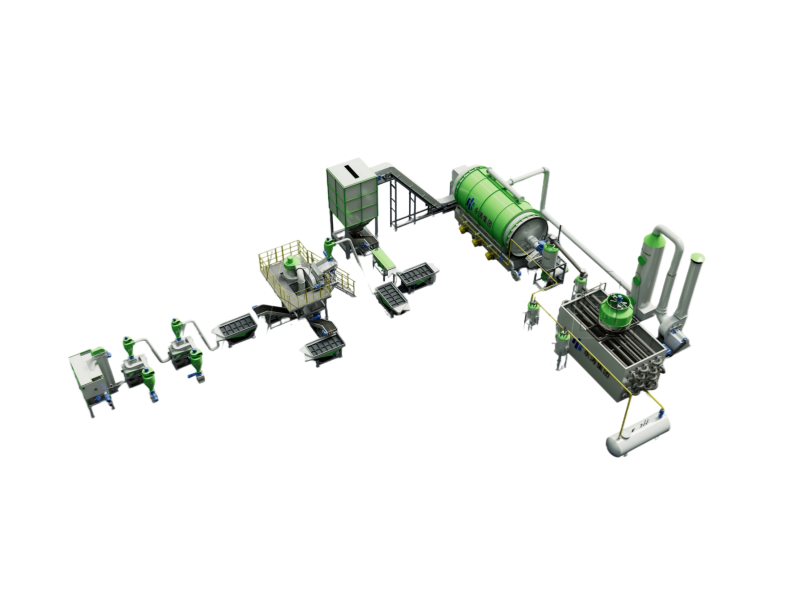


As global solar installations keep growing, more end-of-life PV modules need industrial recycling. Simple dismantling cannot solve every separation problem. EVA film, POE film, backsheet materials, glass, silicon cells, and metal ribbons stay tightly bonded. Therefore, recycling companies need a deeper separation route. A solar panel pyrolysis processing line helps remove organic layers, recover valuable materials, control emissions, and build a scalable PV recycling project.
What Do You Confirm Before Building a Solar Panel Pyrolysis Processing Line?
01 · Confirmation
Before selecting a solar panel pyrolysis processing line, you should confirm your raw material type, daily supply, recovery target, site condition, and emission requirements. These factors decide whether the line should use whole-panel thermal delamination, pre-crushing with pyrolysis, or a mixed processing route. They also affect capacity, fuel cost, separation purity, and long-term profit.
Different Panel Structures Need Different Solutions
Single-glass and double-glass panels require different recycling designs. Single-glass modules are suitable for thermal delamination when complete glass recovery matters. Double-glass modules usually need crushing, pyrolysis, and separation to improve silicon and metal recovery. Flexible settings help handle mixed PV waste.
Capacity Should Match Feedstock Supply
The processing capacity should match your real panel supply. An oversized line may increase idle costs, while a suitable capacity improves operation efficiency. Common pyrolysis systems range from 8 t/d and 16 t/d, while larger routes can be designed around 1–5 t/h.
Recovery Goals Define Equipment Layout
Different targets require different configurations. Complete glass recovery needs gentle thermal separation, which can achieve high glass purity. Higher-value silicon, copper, and silver recovery requires stronger crushing and separation modules with future upgrade options.
Site Conditions Affect System Design
A complete PV recycling line needs space for heating, cooling, separation, dust collection, and exhaust treatment. Site layout and environmental requirements determine system design, including gas treatment, safety control, and emission management.
How Does Pyrolysis Technology Upgrade PV Module Recycling?
02 · Upgrade
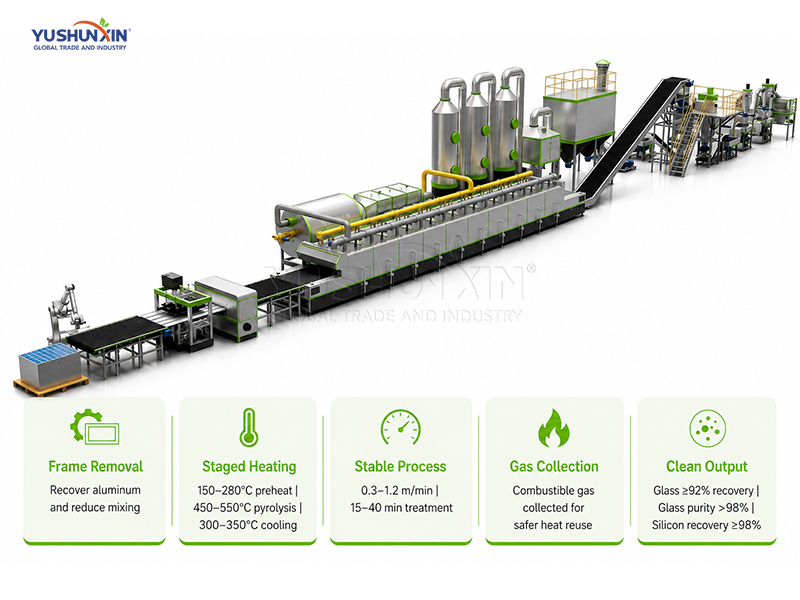
A solar panel pyrolysis processing line starts from one key target: removing the EVA or POE bonding layer. Once the encapsulant loses adhesion, glass, silicon cells, copper ribbons, and silver-bearing fractions become easier to separate. Therefore, this process is more suitable for projects that need deeper material recovery, not only basic dismantling.
Frame Removal Prepares Clean Material Flow
Staged Heating Breaks The EVA Bonding Layer
Gas Collection Supports Safer Operation
Cooling And Sorting Create Higher-Value Outputs
How Does PV Module Structure Shape the Pyrolysis Recycling Solution?
03 · Structure
Single-glass, double-glass, and mixed PV modules do not behave the same during thermal treatment. Their glass layers, EVA or POE bonding, backsheet materials, and heat transfer conditions all affect the recycling route. Therefore, an industrial solar panel pyrolysis processing line should match the real module structure, instead of using one fixed process for every project.
Single-Glass Modules Need Whole-Panel Delamination Control
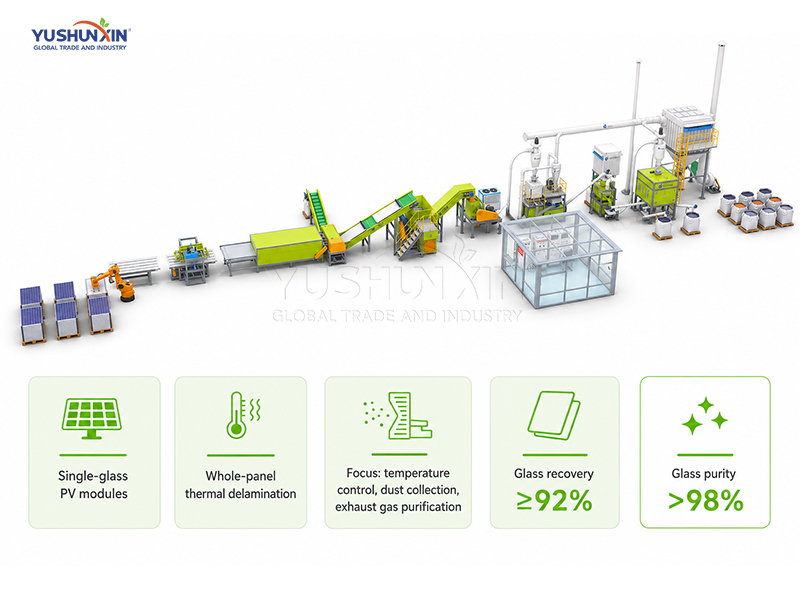
Single-glass modules usually contain one tempered glass layer, EVA or POE encapsulant, silicon cells, copper ribbons, and an organic backsheet. During pyrolysis, the backsheet and EVA layer create exhaust gas. Some backsheets may also bring fluorine-related treatment pressure. Therefore, the solution should focus on temperature control, dust collection, and exhaust gas purification. If the project wants higher glass value, whole-panel thermal delamination is more suitable. Under suitable conditions, complete glass recovery can reach ≥92%, and separated glass purity can reach over 98%.
Double-Glass Modules Need Stronger Heat Penetration
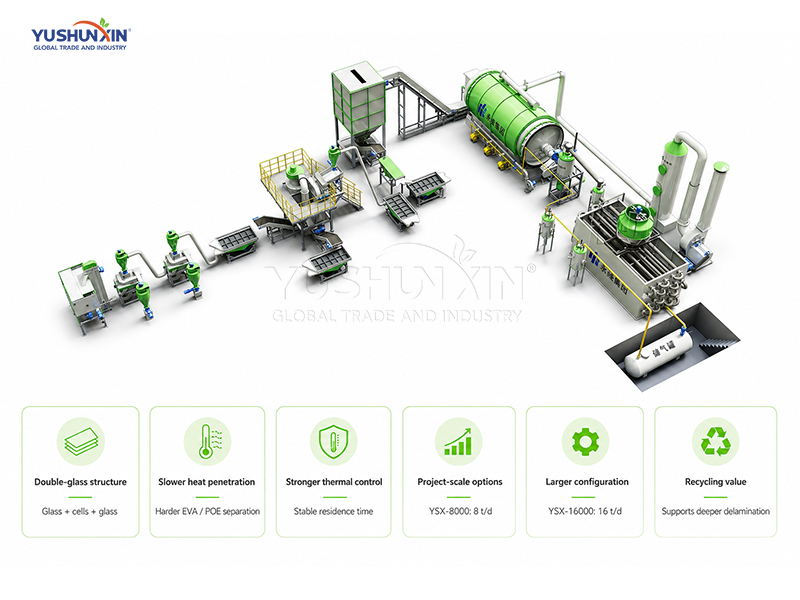
Double-glass modules have glass on both sides. The silicon cells stay sealed between two glass layers. This structure makes heat transfer slower and separation more difficult. So the line needs stronger thermal control and more stable residence time. For project-scale recycling, YUSHUNXIN can design 8 t/d and 16 t/d pyrolysis configurations, such as YSX-8000 and YSX-16000. The value is not only larger capacity. The key is that the system can support deeper EVA or POE decomposition for future double-glass module recycling volume.
Mixed PV Waste Needs Adjustable Process Settings
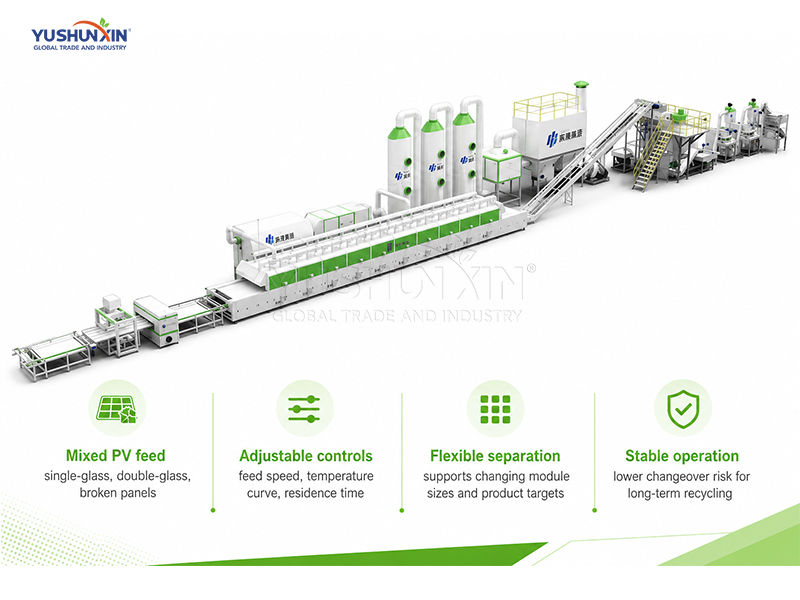
Many overseas recycling projects receive unstable materials. One batch may include single-glass panels, double-glass modules, broken panels, and different module sizes. If the line cannot adjust quickly, material switching may reduce recovery purity. Therefore, the pyrolysis solution should support adjustable feeding speed, temperature curve, residence time, and separation configuration. This design helps recyclers handle mixed PV waste with lower changeover risk. It also makes the plant more practical for long-term industrial operation.
How Does Pyrolysis Upgrade PV Waste into Higher-Value Materials?
04 · Material
The profit of a solar panel recycling project depends on material quality. If glass, silicon, copper, and silver-bearing fractions remain mixed, buyers usually pay a lower price. Therefore, a solar panel pyrolysis processing line should focus on material upgrading. It helps reduce bonding layers first, then improves downstream separation value.
Whole-Panel Glass Recovery Supports Stable Revenue
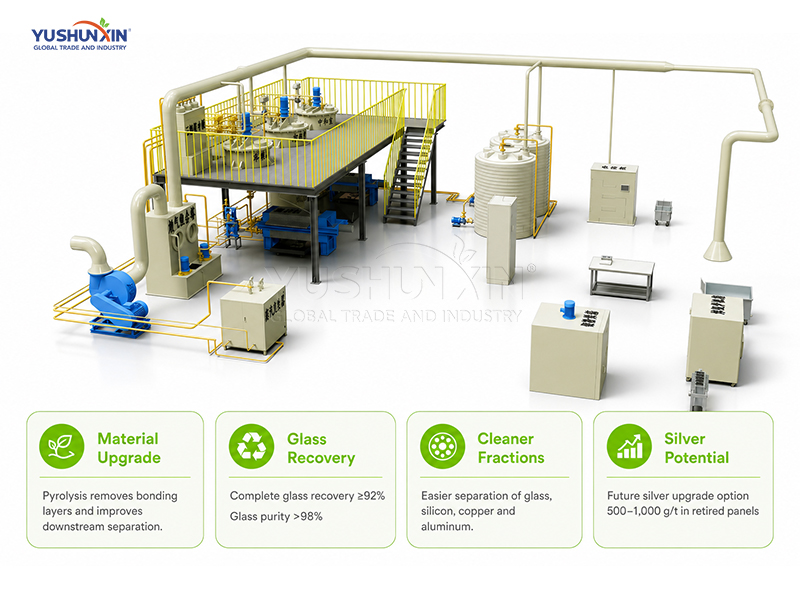
Glass usually accounts for the largest share of a crystalline silicon PV module. In many panels, glass can reach around 70% of the total weight. Therefore, glass recovery directly affects project revenue. For single-glass modules, whole-panel thermal delamination can protect more complete glass. Under suitable conditions, complete glass recovery can reach ≥92%. Separated glass purity can also reach over 98%. This makes a solar panel glass recovery line more valuable than simple mixed crushing. Cleaner glass can enter glass recycling, construction material, or glass raw material markets.
Cleaner Silicon And Metal Fractions Reduce Price Loss
Pyrolysis is not only for waste disposal. It helps turn laminated PV waste into cleaner material fractions. After EVA removal, silicon cells, copper ribbons, and aluminum frames can separate more easily. Aluminum usually leaves the process before pyrolysis. Copper ribbons and silicon materials enter the back-end sorting system. Finer separation reduces mixed-material discount. It also helps recyclers sell silicon, copper, and metal fractions to more specific downstream buyers.
Silver Recovery Can Be Added As A Future Upgrade
Silver extraction does not need to be the first-stage investment. Many investors can first build the pyrolysis recycling line. Then they can add a silver extraction system when feedstock volume becomes stable. Silver content in retired crystalline silicon panels can reach about 500–1,000 g per ton. Therefore, silver recovery from solar panels can improve long-term profit. With this upgrade, silver-bearing cell materials can enter leaching, replacement, refining, and wastewater treatment stages. This allows the project to move from basic separation to higher-value material refining.
Get SolutionHow Does YUSHUNXIN Reduce Risk for Industrial Solar Panel Pyrolysis Projects?
06 · Risk
For project-level buyers, the lowest machine price is not always the safest choice. A solar panel pyrolysis project needs process matching, site planning, emission control, installation support, and long-term operation guidance. Therefore, a turnkey solution helps reduce design gaps, delivery mistakes, approval pressure, and commissioning risk.
Project Evaluation Guides Equipment Selection
YUSHUNXIN does not use one fixed model for all projects. Engineers evaluate panel type, capacity, site conditions, energy supply, emission requirements, and recovery targets before selecting the right route. The process follows: evaluation → design → configuration → cost analysis.
Full-Cycle Engineering Support Reduces Risks
A complete solution includes more than equipment supply. YUSHUNXIN supports layout design, process planning, manufacturing, delivery, installation, commissioning, and training. This helps connect heating, gas handling, separation, and emission systems for stable operation.
Manufacturing Documents Support Procurement Review
Industrial projects require reliable supplier documents before purchase. YUSHUNXIN can provide technical files, manufacturing information, and certification materials for recycling equipment. These documents help customers review suppliers and reduce uncertainty during procurement.
Summary
A solar panel pyrolysis processing line should match your panel type, capacity, recovery target, site layout, and emission rules. For industrial PV recycling projects, a practical solution should combine pretreatment, thermal delamination, material separation, environmental control, and optional silver extraction. If you want to get more solutions, we can also provide you with mechanical solar panel recycling solution.
From Your Needs
to Real Impact


