













A mechanical solar panel recycling plant helps industrial recyclers process single glass PV modules efficiently. It covers aluminum frame removal, glass separation, crushing, grinding, gravity separation and electrostatic separation. This solution recovers aluminum, glass, copper, silicon powder and plastic powder through a physical process. It suits PV waste recyclers, solar farm operators and environmental service companies with stable panel supply. This article explains how to plan capacity, layout, equipment configuration and future upgrades. It also shows when pyrolysis or silver extraction may create more value.
Is Mechanical Recycling the Right Route for Your PV Waste Project?
01 · Choice
A mechanical solar panel recycling plant works best for projects that mainly process single glass PV modules. This route suits customers who want physical separation, clear material recovery and easier daily operation. Before choosing the line, buyers need to confirm panel type, hourly capacity, plant space and target recovered materials.

Single Glass Panels Are the Best Fit
Mechanical recycling is more suitable for single glass solar panels. These panels can go through frame removal, glass removal, crushing, grinding and separation. If your feedstock includes many double glass panels, the project needs another evaluation. In that case, a solar panel pyrolysis recycling line may fit better.
Stable Feedstock Makes the Project More Practical
This solution fits PV waste recyclers, solar farm operators and environmental service companies with stable module supply. You should confirm these points before planning:
A stable material source helps the plant run smoothly. It also makes labor, power and maintenance costs easier to calculate.

Target Products Decide the Line Configuration
A mechanical PV recycling line should match your product goal. Some buyers focus on aluminum and glass recovery. Others want better separation of copper, silicon powder and plastic powder. For this reason, YUSHUNXIN usually designs the line around final material output. The standard process can separate copper from silicon and plastic powder, then further separate silicon powder from plastic powder. If you want higher metal value, silver extraction can become a later upgrade. However, the first step is still a stable front-end recycling solution.
 Need Help Choosing the Right Solution?
How Does a Mechanical PV Recycling Line Recover Valuable Materials?
02 · Process
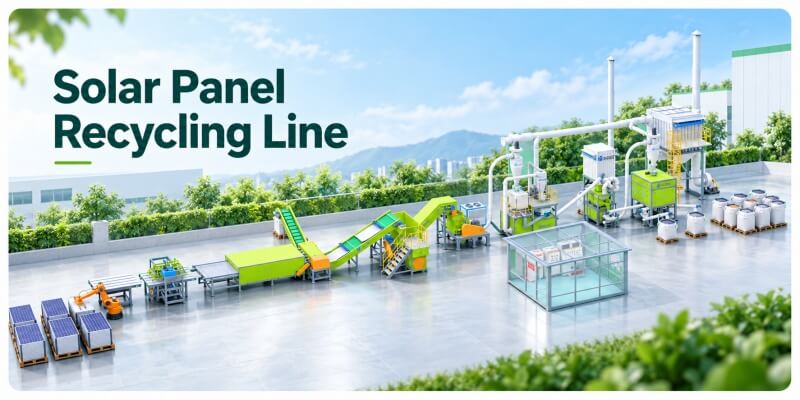
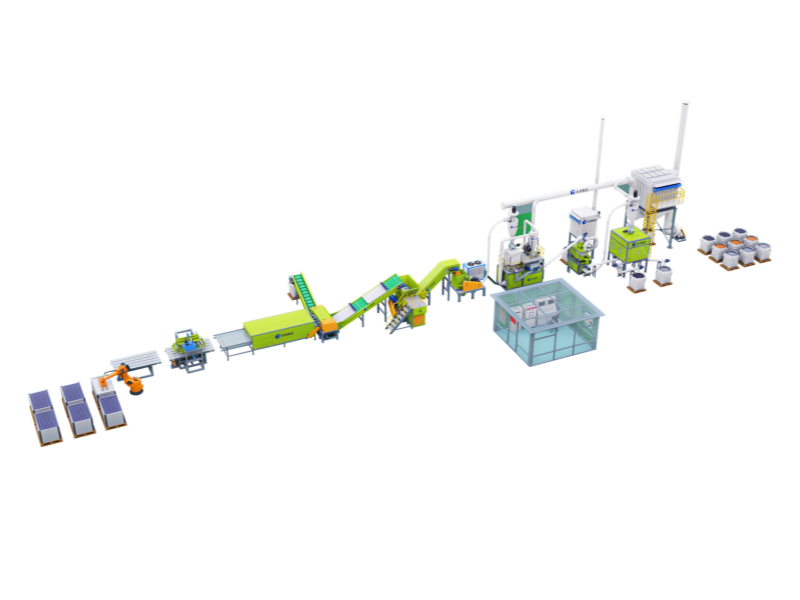
A mechanical PV recycling line follows the structure of single glass solar panels. It removes high-value parts first. Then it reduces material size step by step. Finally, it separates copper, silicon powder and plastic powder through physical sorting. This process helps industrial buyers build a clear and controllable solar panel recycling solution.
Front-End Dismantling Protects Material Value
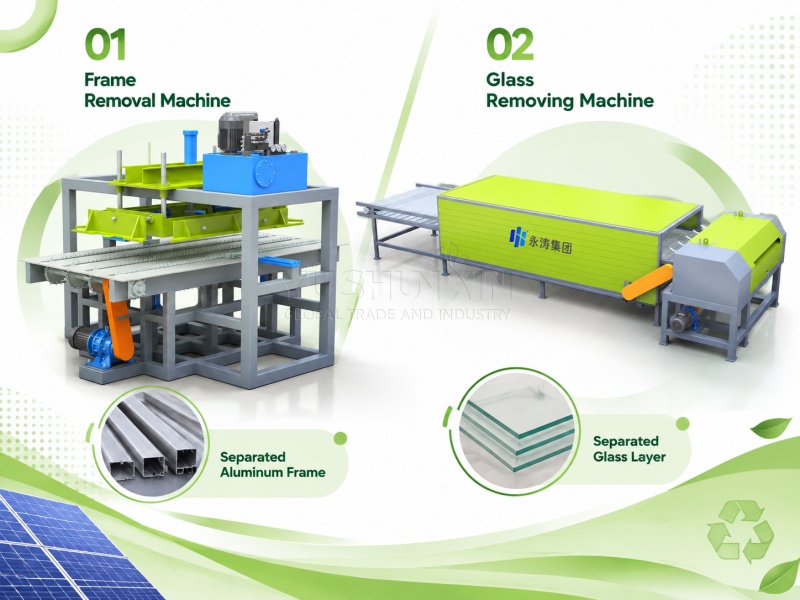
The process starts with aluminum frame removal. This step separates aluminum before crushing. Next, the glass removal machine separates the front glass layer. This reduces material mixing and protects downstream equipment. For industrial projects, stable dismantling is important. It improves recovery quality and reduces pressure on crushing and separation.
Step-by-Step Crushing Prepares Materials for Separation
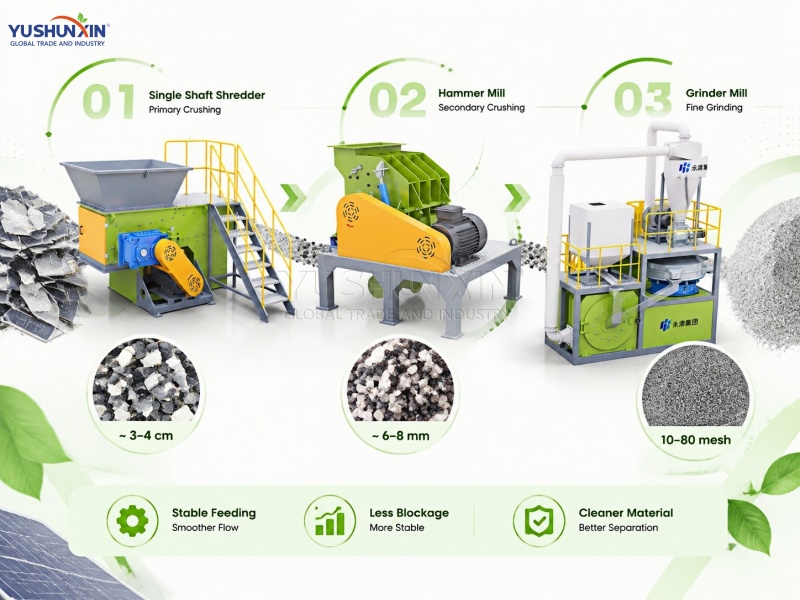
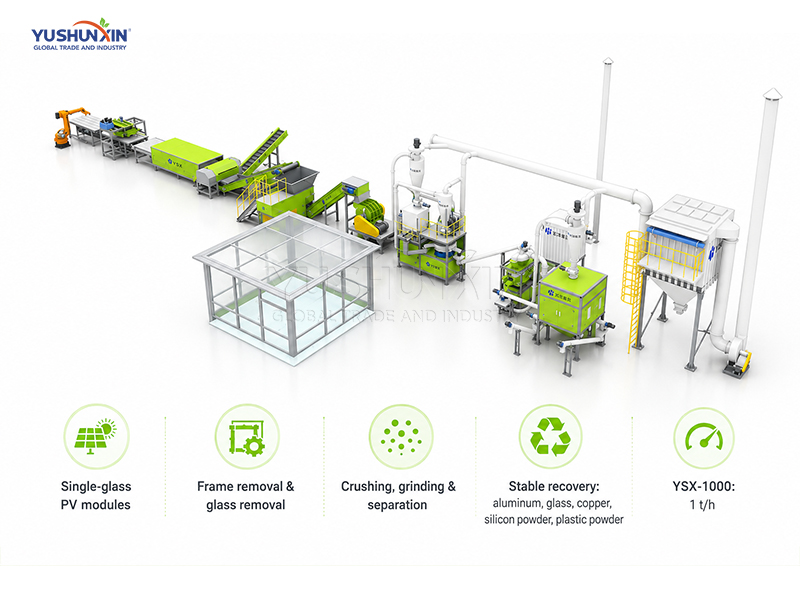
After dismantling, the shredder crushes the panel into larger pieces. Then the hammer crusher makes the material smaller. The grinding mill further processes the material into fine powder. This step prepares copper, silicon and plastic for accurate separation. YUSHUNXIN’s mechanical line crushes panels to 3-4cm first, then 6-8mm, and finally 10-80 mesh before separation.
Physical Separation Turns Mixed Material Into Saleable Fractions
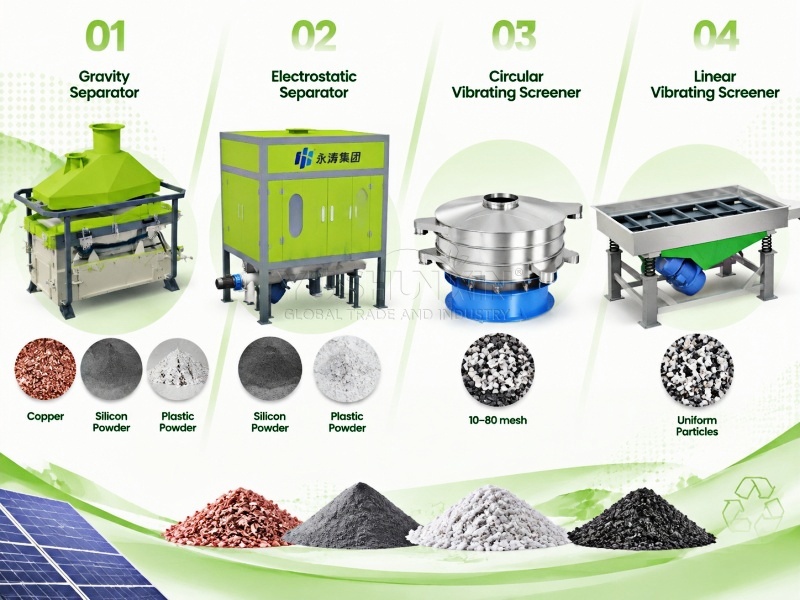
The gravity separator separates copper from silicon powder and plastic powder. Then the electrostatic separator separates silicon powder from plastic powder. This route helps customers recover several materials from one waste stream. These include aluminum, glass, copper, silicon powder and plastic powder.
For high-value PV recycling projects, the goal is not only crushing capacity. The real value comes from clean separation and stable product output.
How Do you Match Capacity to Project Demand?
03 · Capacity
You should plan capacity from real panel supply. A larger machine does not always mean a better project. The right mechanical solar panel recycling plant should match hourly feedstock, working shifts, workshop space and final product targets.
Start From Real Panel Supply
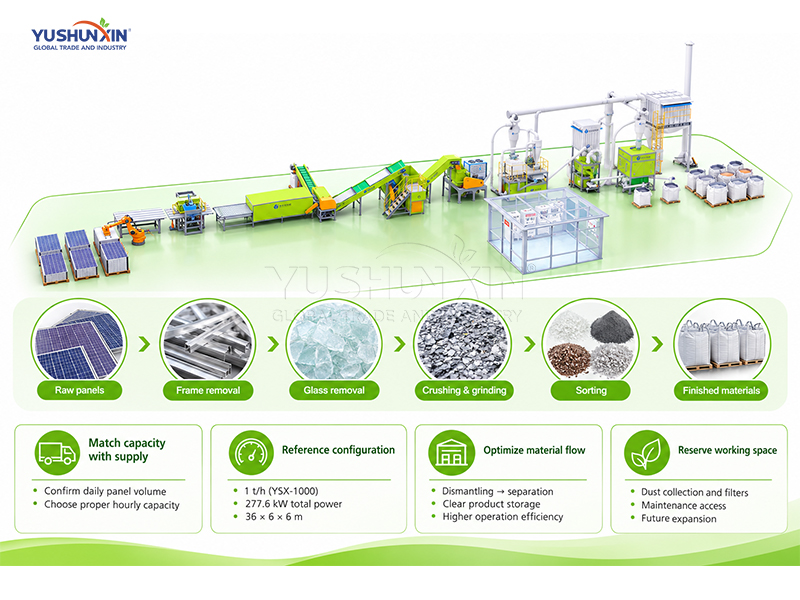
You can first confirm daily PV waste volume. Then you can decide hourly processing capacity. For stable industrial projects, a 1 t/h mechanical PV recycling line can be a practical starting point. It suits recyclers with regular single glass panel supply. YUSHUNXIN’s YSX-1000 mechanical line has a capacity of 1 t/h, with 277.6 kW total power. The required space is about 36 × 6 × 6 m.
Plan the Line Around Material Flow
Reserve Space for Dust Control and Maintenance
How Does Mechanical Recycling Increase Material Value?
04 · Material
A mechanical solar panel recycling plant creates value from several recoverable fractions. Aluminum and glass bring stable bulk recovery. Copper and silicon powder improve the material sales structure. Therefore, the line should focus on clean separation, not only crushing capacity.
Aluminum and Glass Drive Bulk Recovery
Aluminum frames and glass are the main recovery materials in PV modules. Glass accounts for about 70% of module weight, while aluminum frames account for 10%–15%. Recovering these materials first improves separation efficiency and creates stable bulk revenue through glass recycling and aluminum remelting channels.
Copper and Silicon Increase Material Value
Although copper and silicon have lower weight shares, they provide higher-value recovery opportunities. Copper usually accounts for 1%–2% and silicon 3%–5% of PV module weight. Effective separation improves product quality and helps avoid selling mixed low-value materials.
Silver Recovery Enables Future Upgrades
A mechanical PV recycling plant focuses on material separation rather than silver extraction. However, it can prepare concentrated materials for future silver recovery. With about 0.05%–0.1% silver content, retired modules can become a valuable upgrade opportunity for projects targeting higher recovery value.
How to Choose the Right PV Recycling Solution?
05 · Solution
Not every solar panel recycling project should use the same process. Buyers should choose the route based on panel type, recovery target and project scale. Mechanical recycling fits single glass panels. Pyrolysis fits mixed panel streams. Silver extraction works better as a back-end value upgrade.
Mechanical Line for Single Glass Panels
A mechanical solar panel recycling plant suits single glass PV modules. It uses frame removal, glass removal, crushing, grinding and physical separation. Therefore, the process is easier to operate and control. This route also gives industrial buyers a clearer investment path. It focuses on stable recovery of aluminum, glass, copper, silicon powder and plastic powder. YUSHUNXIN’s YSX-1000 mechanical line reaches 1 t/h. It is suitable for customers with regular single glass panel supply.
Get a free quote!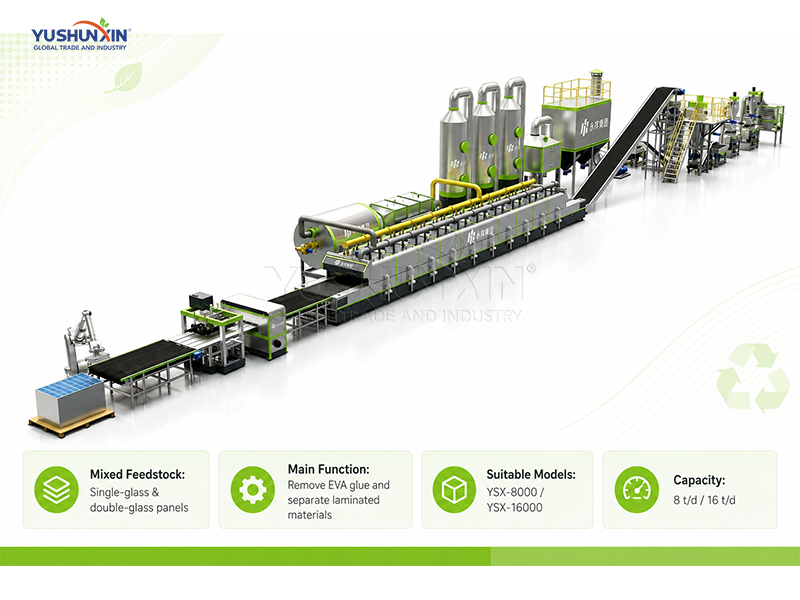
Pyrolysis Line for Mixed PV Panels
If the project handles both single glass and double glass panels, pyrolysis may be more suitable. The pyrolysis route helps remove EVA glue and separate mixed laminated materials. It also reduces the limits of mechanical glass removal. YUSHUNXIN offers YSX-8000 and YSX-16000 pyrolysis lines for mixed panels. Their capacities are 8 t/d and 16 t/d.
Get a free quote!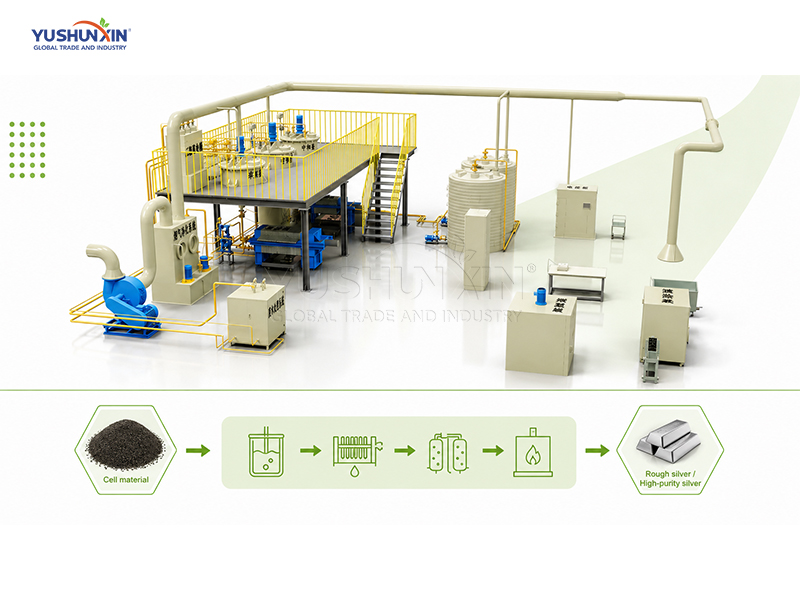
Silver Extraction for Higher Metal Value
Silver extraction is not the first step for every project. It works better after front-end separation. This upgrade suits mature recyclers with stable retired panel supply. It helps them recover higher-value metal from separated cell materials. Silver only accounts for about 0.05%–0.1% of PV modules. However, 1 ton of retired panels may contain about 500–1000g of silver. YUSHUNXIN’s silver extraction line can produce rough silver first. Then refining can upgrade it into high-purity silver.
Get a free quote!How Can you Control PV Recycling Project Risk?
06 · Risk
High-value buyers should review more than capacity and price. Certification, electrical safety, dust control and maintenance support all affect project approval. They also influence financing, daily operation and long-term plant stability.
SUPPORTS
Certification Supports Compliance Review
You often need documents for internal review, import clearance or project approval. YUSHUNXIN’s solar panel recycling plant and other e-waste recycling machines have certification information related to the Machinery Directive and Electromagnetic Compatibility Directive. The listed models include YSX-M-1t/h, YSX-P-10t/d, YSX-P-15t/d, YSX-P-30t/d and YSX-P-40t/d. This does not replace local approval. However, it helps you prepare technical files and compliance checks.
STARTS EARLY
Dust Control Should Start From Plant Design
Mechanical recycling includes crushing, grinding and powder separation. These steps may create dust during operation. Therefore, the layout should reserve space for dust collectors, pipelines and filters. The silicon powder and plastic powder areas also need closed collection. Early dust control planning costs less than later modification. It also helps keep the workshop cleaner and safer.
MAINTENANCE
PROTECTS OUTPUT
Easy Maintenance Protects Long-Term Output
A mechanical PV recycling line needs regular service. Key parts include cutters, screens, bearings, motors and separators. Operators should also adjust separation parameters during production. Different panel conditions may affect material flow and sorting quality. For industrial buyers, spare parts supply and operator training matter. They reduce downtime and support stable long-term recovery.
Summary
A mechanical solar panel recycling plant is a practical choice for industrial projects that mainly process single glass PV modules. It helps buyers recover aluminum, glass, copper, silicon powder and plastic powder through a clear physical process. Before investment, buyers should review feedstock type, capacity, layout, product targets, certification and long-term operation needs.For mixed single and double glass panels, you can choose the solar panel pyrolysis recycling plant solution. For higher-value metal recovery, the solar panel silver extraction line can be the next upgrade. For plant preparation, we can help you plan space, workflow and installation more clearly.
From Your Needs
to Real Impact


