

















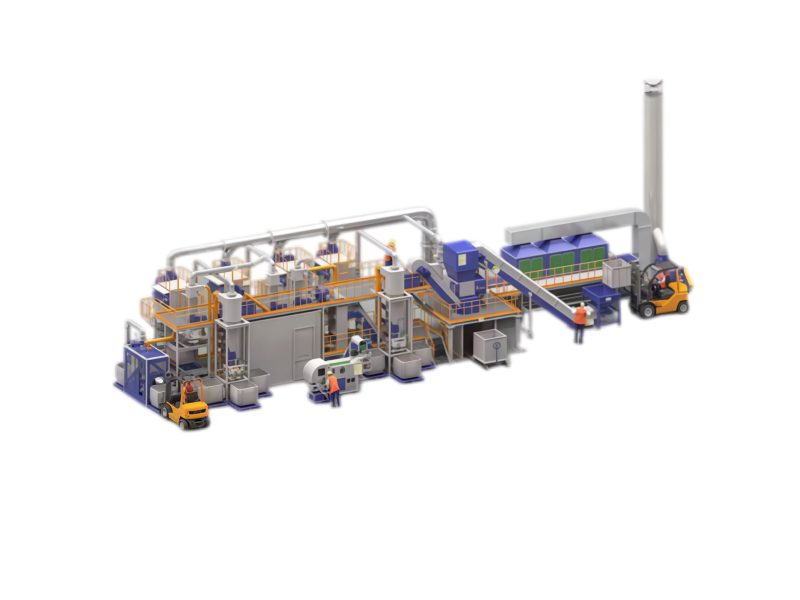


As EV battery retirement grows, recyclers need more than basic crushing equipment. They need a safe and scalable recovery route. A practical EV battery recycling line should handle packs, modules and cells, while recovering black mass, copper, aluminum and iron. This solution focuses on feedstock planning, safety control, capacity design, environmental treatment and future refining expansion.
What Battery Input Rules Should Guide Your EV Battery Recycling Line?
01 · RulesBefore designing an EV battery recycling line, buyers should define one clear input route. EV battery packs, modules, cells, production scrap and black mass require different handling methods. Therefore, one production line should focus on one main battery material. It should not process mixed feedstocks freely. This decision affects safety zoning, dismantling depth, crushing method, separation accuracy and final black mass recovery value.
Define Battery Feedstock Before Design
A lithium battery recycling project should first confirm battery form, SOC level, shell ratio, and impurities. These factors affect dismantling, feeding, storage, and safety design. Clear feedstock standards help improve operation stability and black mass quality.
Match Process With Battery Chemistry
Different battery chemistries create different recovery values. LFP, NMC, and NCA batteries require different recovery strategies. Confirming chemistry before equipment selection helps optimize crushing, separation, black mass recovery, and future refining upgrades.
How Can A Safe Intake Solution Reduce EV Battery Crushing Risk?
02 · Risk
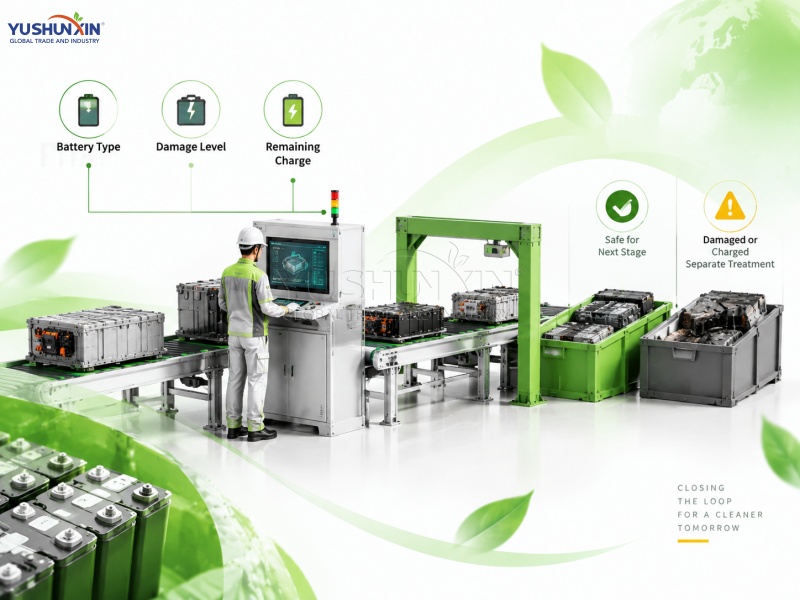
A EV battery recycling line should control risk before material reaches the crusher. Therefore, the front-end solution should include receiving, checking, discharge and dismantling. This design reduces short-circuit, heating and fire risks during later crushing.
Battery Status Checks Future Come First
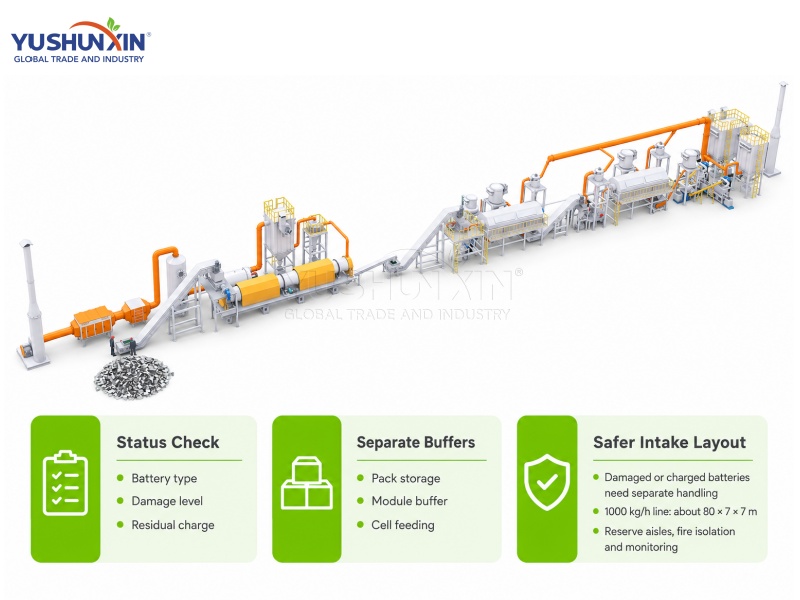
Operators should first check battery type, damage level and remaining charge. Then, safe materials can move to the next handling stage. Damaged packs or charged modules need separate treatment. So the line should not promise direct crushing for all batteries.
Separate Buffers Control Material Flow
The plant should separate pack storage, module buffer and cell feeding buffer. This layout keeps risky materials away from stable materials. It also makes emergency handling faster and clearer. For a 1000kg/h line, the layout may need about 80m×7m×7m. Therefore, the safety zone should reserve aisles, fire isolation and monitoring points. This makes the project safer than a simple crushing quotation.
How Can The Recovery Method Increase Black Mass Value?
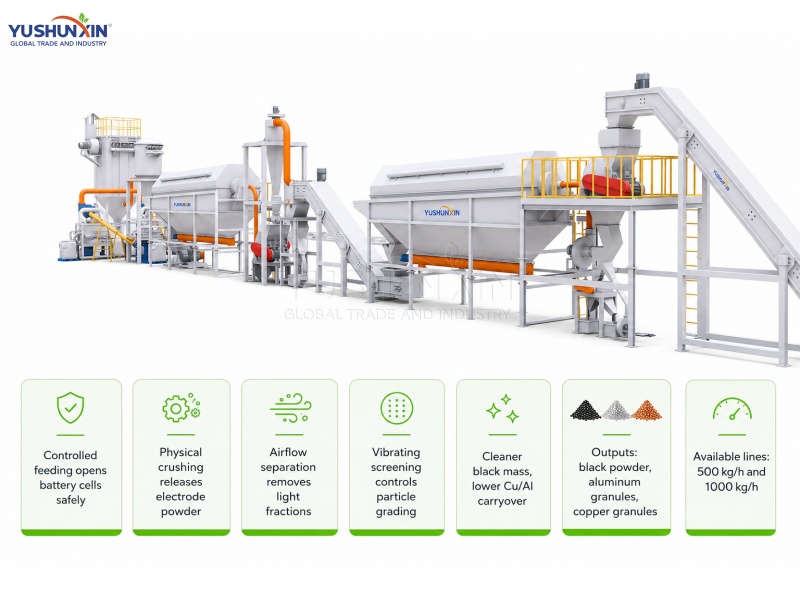
03 · MethodA EV battery recycling project should not stop at crushing. It must create clean material streams. Black mass quality affects sales price, refining cost, and buyer trust. Therefore, Yushunxin designs the system around controlled crushing, airflow separation, vibrating screening, and metal recovery. This system helps separate electrode powder from copper, aluminum, and iron streams.
Put Black Mass Quality Before Crushing Output
Crushing should prepare separation, not only reduce particle size. The line first opens battery cells under controlled feeding. Then physical crushing releases electrode powder from current collectors. After that, airflow separation removes lighter fractions. Vibrating screening controls particle grading. This process helps reduce copper and aluminum carryover. So, the final black mass becomes easier to sell. It also gives downstream refiners a cleaner feedstock. For 500kg/h and 1000kg/h lines, the target outputs include black powder, aluminum granules and copper granules.
Separate Metal Streams For Higher Project Returns
A strong EV battery recycling solution should not mix all outputs. After powder separation, the system collects copper granules separately. It also separates aluminum granules and iron strips. Each stream needs independent discharge and storage. This design makes weighing, packing and sales clearer. Copper and aluminum can go to metal recyclers. Iron strips can enter normal scrap channels. Meanwhile, black mass can go to hydrometallurgy refiners. For industrial buyers, this system improves cash flow. It also reduces dependence on one product market. So, the project can sell black mass first. Then it can expand into deeper metal refining later.
How Can You Match EV Battery Recycling Capacity With Real Operation?
04 · Capacity
Capacity should follow confirmed battery supply, working shifts, site size, and power conditions.A larger EV Battery Recycling Line only works when raw material arrives steadily. Therefore, Yushunxin suggests sizing the plant around daily intake, storage rhythm, black mass packaging, and future expansion.
500kg/h Creates A Safer First Industrial Step
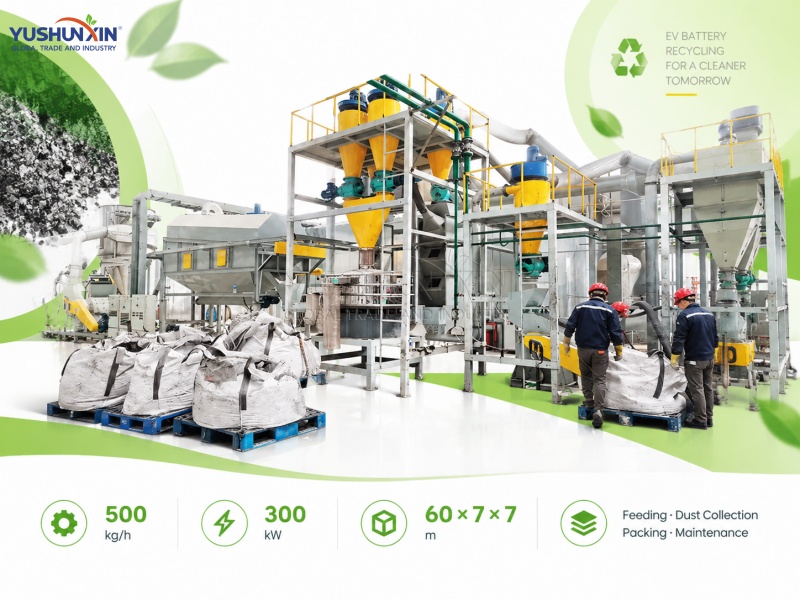
A 500kg/h EV battery recycling line suits you with stable but limited feedstock. It also fits projects moving from pilot recycling to formal operation. This capacity needs about 300kW main power and 60m×7m×7m floor area. So, you should check transformer capacity before layout design. They also need space for feeding, dust collection, product packing and maintenance. This system helps control investment while building stable black mass output.
Get a free quote!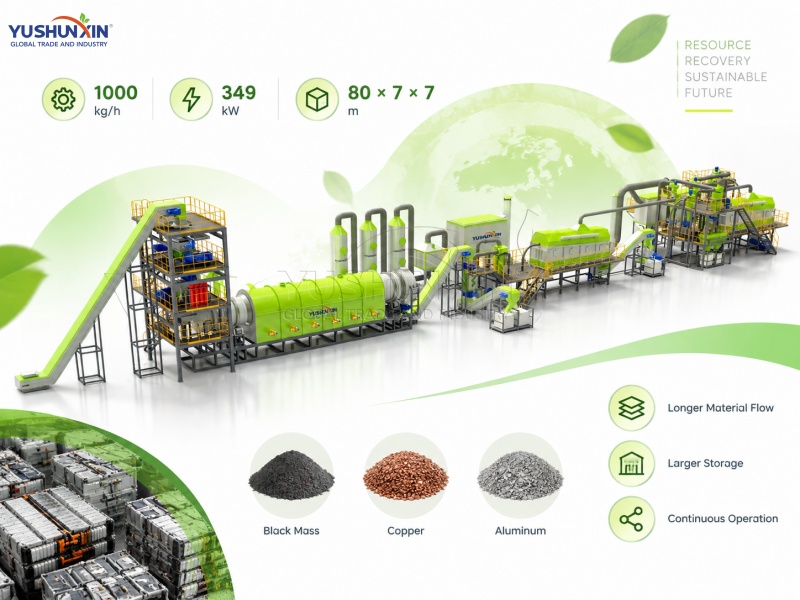
1000kg/h Builds A Larger Continuous Recovery Platform
A 1000kg/h line suits industrial recyclers with stronger collection networks. It also fits regional battery collection centers. This configuration needs about 349kW main power and 80m×7m×7m floor area. Therefore, the plant needs longer material flow and stronger feeding organization. It also needs larger storage for black mass, copper and aluminum. This capacity can improve throughput, but only with stable daily feedstock.
Get a free quote!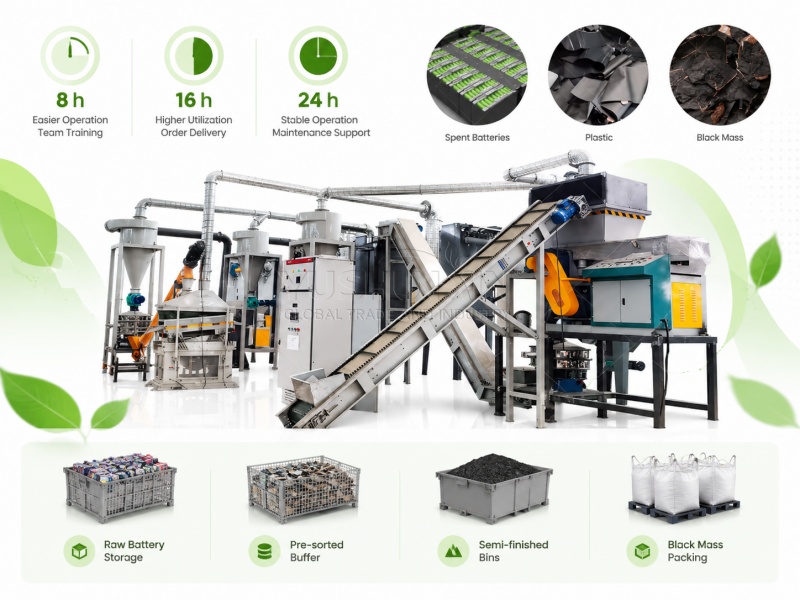
Working Shift Design Decides Real Daily Output
Hourly capacity does not equal final daily output. An 8-hour shift helps teams control operation and train workers. A 16-hour schedule improves equipment utilization and order delivery. A 24-hour schedule needs stronger maintenance planning and spare parts support. So, the layout should reserve raw battery storage. It should also include pre-sorted buffers, semi-finished bins and black mass packing space. This buffer design reduces waiting time and protects project returns.
Get a free quote!How Does A Permit-Ready EV Battery Recycling Line Control Dust, Gas And Wastewater Risk?
05 · Ready
Environmental design should start before equipment layout. EV battery recycling creates dust, waste gas and possible electrolyte residue. So, a permit-ready solution must connect crushing, screening, air collection and future refining areas. This helps investors reduce approval risk and protect long-term operation.
Connect Gas Purification With Every Dust-Generating Point
Waste gas treatment should not stand alone. It should connect with crushing, air separation, screening and conveying points. Yushunxin’s EV battery recycling plant uses physical crushing, air separation and vibrating screening. The processing waste gas then enters environmental protection equipment for purification. A practical system can include collection ducts, filtration units and discharge monitoring. This plant helps control dust before it spreads.It also helps clients prepare documents for environmental review.
Reserve Utility Space For Future Wet Refining
Many projects start with mechanical black mass recovery. However, some clients later add hydrometallurgy refining. So, the plant should reserve space for wastewater, chemicals and neutralization areas. This does not mean overbuilding at the first stage. Instead, it keeps the EV battery recycling line expandable. For project-level investors, this layout strategy protects future metal recovery plans.
Turn Crushing And Screening Into A Controlled Processing Zone
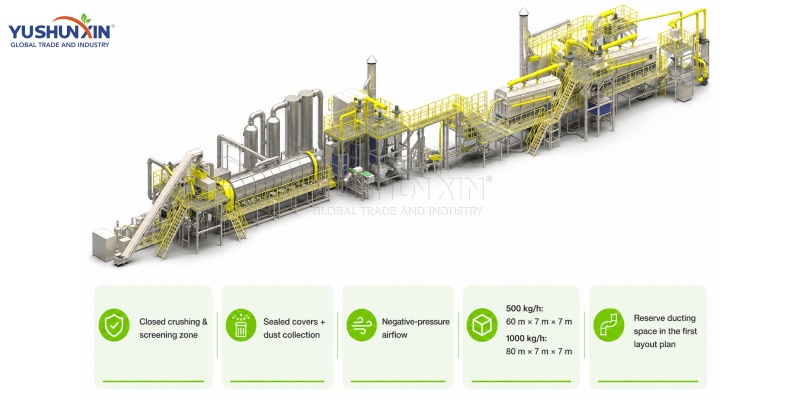
The crushing and screening area should work as a closed section. It should include sealed covers, dust collection points and negative-pressure airflow. This design reduces black powder leakage during material transfer. It also improves worker safety and workshop cleanliness. For a 500kg/h line, the plant may need about 60m × 7m × 7m. For a 1000kg/h line, the layout may reach 80m × 7m × 7m. So, ducting space should enter the first layout plan.
Get your Solution!How Can The Line Prepare Black Mass For Higher-Value Recovery?
06 · Recovery
Some buyers only need black mass sales. However, industrial recyclers often plan the next value step. Therefore, the EV battery recycling line should prepare clean black mass, clear metal streams and traceable batches. This makes later refining, resale or long-term supply contracts easier.
Mechanical Recovery Builds The First Profit Base
The first stage should focus on stable black mass recovery. It also separates copper, aluminum and iron from battery waste. This route helps recyclers build processing capacity quickly. Meanwhile, it keeps the investment more controllable. For new projects, this stage can test local battery supply. It can also test black mass buyers and metal sales channels. This is not a low-end solution. It is a practical industrial base for long-term upgrading. A stable first-stage line helps customers avoid early over-investment. Then, they can expand after supply and sales become clear.
Product Flow Should Support Two Business System
The project can follow two business systems. One system sells black mass directly to downstream refiners. This suits recyclers with strong collection networks. It also suits companies that want faster cash flow. Another system connects black mass to hydrometallurgy refining. This helps recover nickel, cobalt, lithium or manganese later. So, Yushunxin can reserve process interfaces in the layout. These interfaces may include storage, transfer, packaging and refining connection areas. This design gives high-value customers more flexibility. They can start with mechanical recovery first. Then, they can add deeper refining when the market supports it.
Batch Records Make Black Mass Easier To Sell
Black mass buyers care about stable quality. Therefore, the line should not only chase recovery rate. It should also support sampling and batch documentation. Each batch can record moisture, copper impurity and aluminum impurity. It can also record package weight, production time and source type. These records help buyers compare product stability. For industrial customers, traceable black mass builds trust faster. It also makes price negotiation easier. So, product documentation should become part of the recycling solution. This improves black mass sales and supports future refining cooperation.
Summary
A successful EV Battery Recycling Line should work as a complete industrial recovery system. It should define battery feedstock first, then control safety risks, recover saleable black mass, separate copper and aluminum, and support environmental approval. It should also leave space for future metal refining. If you want to know more lithium battery recycling solutions, please contact us.
From Your Needs
to Real Impact


