











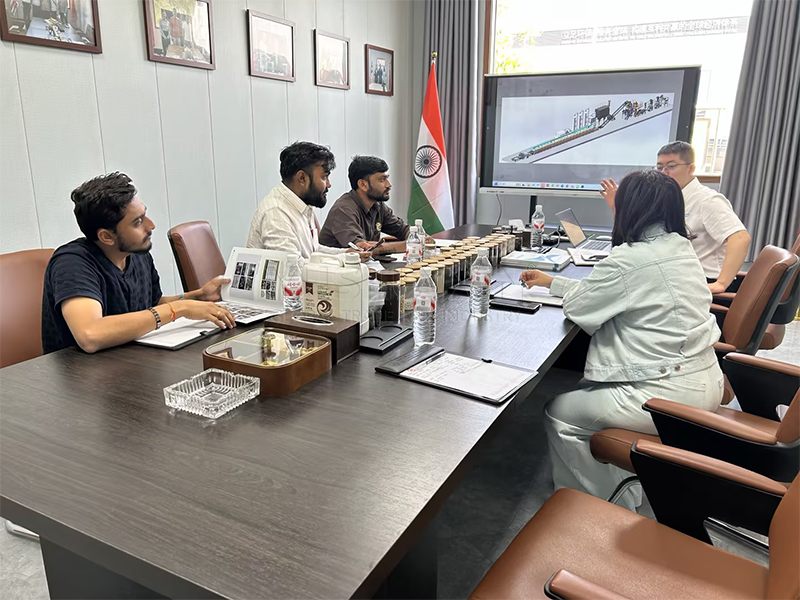

On April 20th, 2026, a solar panel recycling investor in Surat, Gujarat, India, contacted us about an industrial recycling project. The customer needed to process single-glass and double-glass modules, recover valuable materials, and produce 99.99% pure silver ingots. With an existing 3,000 m² factory and a budget of approximately $600,000-750,000, the project required an integrated solution combining pyrolysis, material separation, wet silver extraction, and emission control. The following are the specific information in this case:
How Did We Plan the Solar Panel Recycling Line for This Indian Project?
The customer was an established solar panel recycling group with substantial quantities of discarded modules. The company had registered a new recycling business and applied for Consent to Establish (CTE) through the Gujarat Pollution Control Board (GPCB). Therefore, we needed to consider production requirements, factory conditions, and environmental management before selecting the equipment.
What Were the Customer’s Main Requirements?
The customer provided factory drawings and photographs of the incoming materials. These details helped define the initial project scope.
| Project Parameter | Customer Requirement |
| Location | Surat, Gujarat, India |
| Factory Area | Approximately 3,000 m² |
| Feedstock | Single-glass and double-glass modules |
| Module Dimensions | 1,000–2,400 mm long; 800–1,300 mm wide |
| Design Capacity | Approximately 1 TPH |
| Target Products | Glass, silicon, copper wires, copper ribbons, aluminum frames, and silver ingots |
| Silver Purity Target | 99.99% |
| Investment Budget | Approximately $600,000–750,000 |
These requirements called for a complete solar panel recycling plant rather than a standalone pyrolysis machine. The proposed capacity and equipment configuration would still require technical confirmation against actual feedstock conditions.
How Should a 3,000 m² Solar Panel Recycling Plant Be Laid Out?
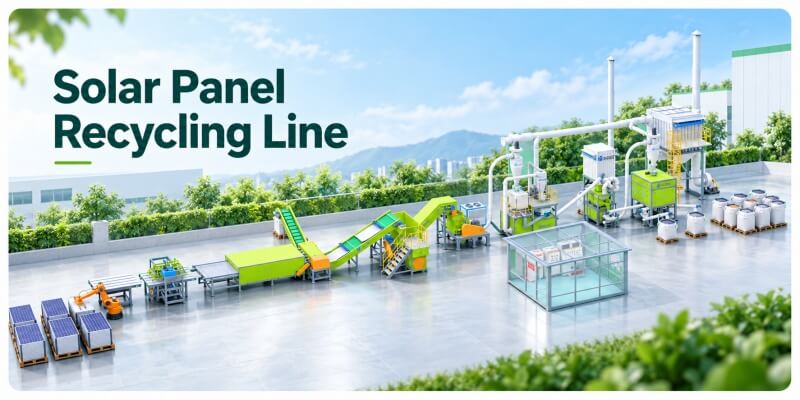
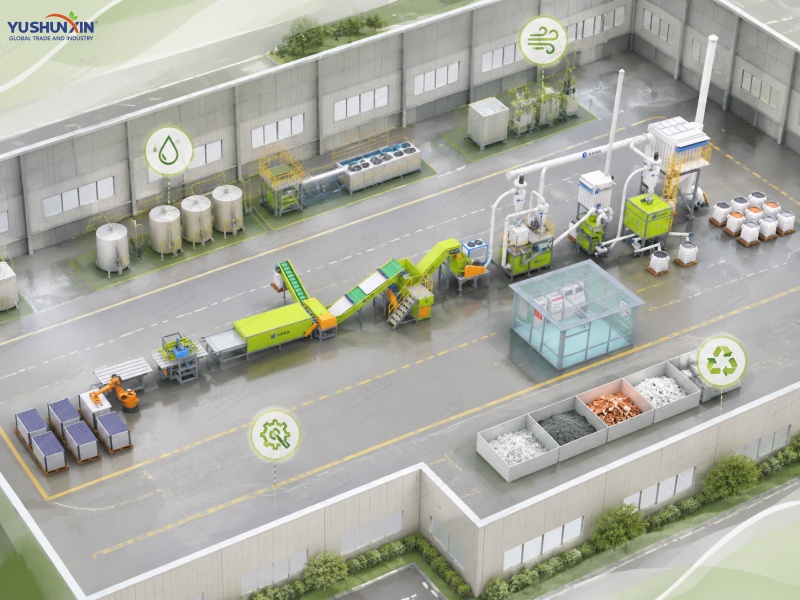
We planned the solar panel recycling plant layout around the customer’s existing 3,000 m² factory and CAD drawings. The proposed arrangement connects panel storage, frame removal, tunnel kiln pyrolysis, material separation, wet silver extraction, and finished-product storage in sequence. We also reserved access for equipment maintenance, material handling, and environmental systems. The layout must accommodate exhaust treatment, wastewater treatment, and equipment foundations. Final equipment positions and foundation specifications require confirmation against detailed drawings and site conditions.
How Can Solar Panel Pyrolysis Recover Valuable Materials?
The customer’s objective extended beyond removing encapsulation materials. The project needed to produce saleable fractions and prepare silver-bearing materials for further refining. Therefore, we considered pyrolysis, physical separation, and wet silver extraction as connected stages.
Why Choose a Tunnel Kiln for Solar Panel Pyrolysis Recycling?
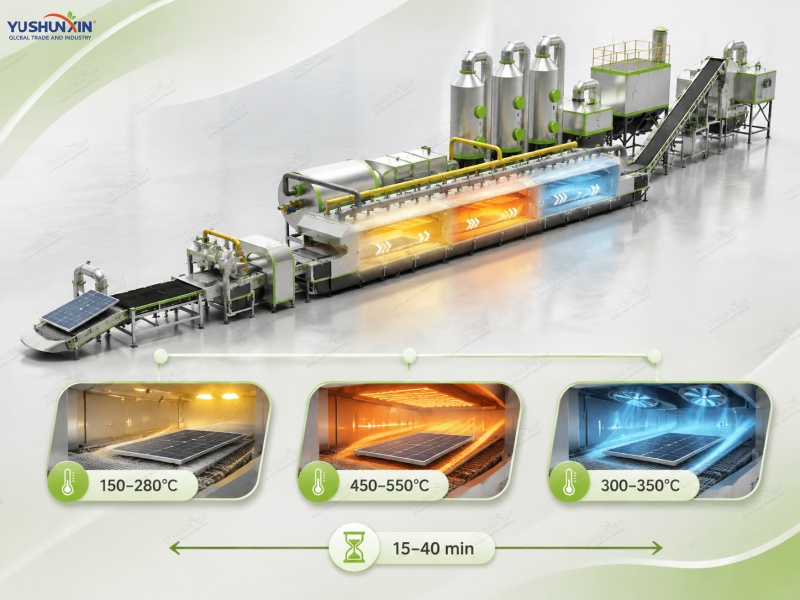
We considered a tunnel kiln for the proposed 1 TPH solar panel recycling line because it supports continuous thermal processing and controlled material separation. The preliminary design uses three temperature zones: 150–280°C for preheating, 450–550°C for EVA pyrolysis, and 300–350°C for controlled cooling. A typical tunnel kiln measures 28–40 m in length, with a residence time of approximately 15–40 minutes, depending on the configuration. Before pyrolysis, the line requires suitable module preparation to accommodate single-glass and double-glass structures. After thermal treatment, cooling conveyors, screening, and separation equipment recover glass, silicon-bearing fractions, and copper ribbons. Final temperatures, residence time, and throughput must be validated against actual feedstock and product quality requirements.
Get a free quote!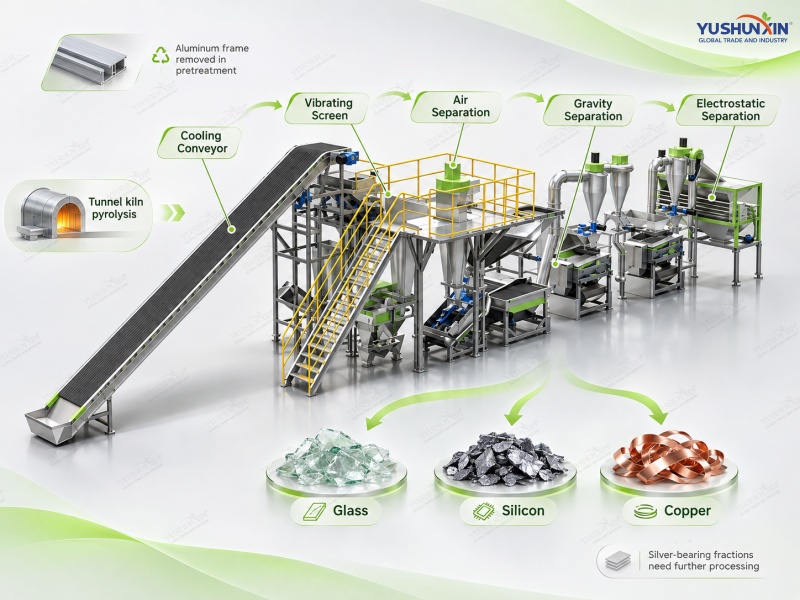
Which Solar Panel Recycling Equipment Separates Glass, Silicon, and Copper?
After tunnel kiln pyrolysis, the material separation system recovers valuable fractions for downstream processing. A cooling conveyor transfers the treated modules to a vibrating screen, which classifies materials by size. An air separator separates lightweight silicon-bearing fragments from heavier glass and metal fractions. Gravity separation then separates copper ribbons from silicon-rich material, while electrostatic separation can further refine suitable mixed fractions. Aluminum frames are removed during pretreatment and collected separately. The resulting glass, silicon, and copper fractions require appropriate screening and separation to meet downstream specifications. Actual purity and recovery rates depend on module condition, feedstock composition, and equipment settings. Silver-bearing fractions require additional processing before wet silver extraction.
Get a free quote!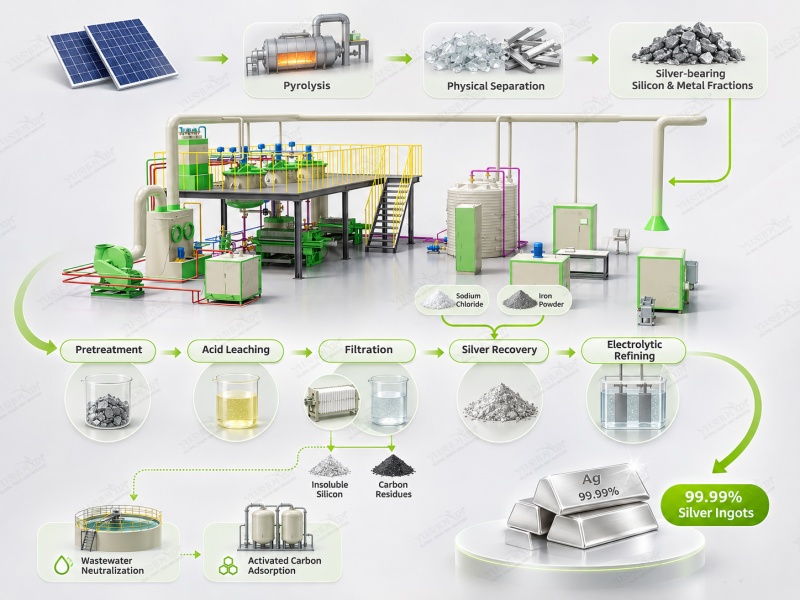
How Does Solar Panel Silver Recovery Produce 99.99% Pure Silver Ingots?
The customer required 99.99% pure silver ingots, so we incorporated wet silver extraction and refining into the proposed recycling line. After pyrolysis and physical separation, silver-bearing silicon and metal fractions undergo pretreatment and acid leaching. Filtration separates insoluble silicon and carbon residues from the silver-containing solution. Sodium chloride and iron powder can then support silver recovery, followed by electrolytic refining to obtain high-purity silver. The supporting process design also includes wastewater neutralization and activated carbon adsorption. Reagent consumption, silver yield, and refining performance depend on feedstock assays and process conditions. Therefore, the 99.99% purity target must be verified through process trials and final product testing rather than assumed from equipment configuration alone.
Get a free quote!What Is the Solar Panel Recycling Plant Cost in India?
The customer allocated approximately $600,000-750,000 for the project. However, the solar panel recycling plant cost in India depends on the complete equipment scope, not simply the price of the tunnel kiln. The quotation must also clarify the silver recovery system, environmental equipment, installation requirements, and other project expenses.
Which Equipment Packages Determine Solar Panel Recycling Plant Cost?
The total solar panel recycling plant cost depends on the processing capacity, recovery targets, and equipment included in the supply scope. For this proposed 1 TPH project in India, the main investment components cover pretreatment, tunnel kiln pyrolysis, material separation, wet silver extraction, and environmental control. Buyers should also account for electrical integration, installation, and commissioning when comparing equipment quotations.
| Equipment Package | Main Equipment and Scope |
| Pretreatment | Frame removal equipment, junction-box removal, and feeding conveyors |
| Pyrolysis | Tunnel kiln, heating system, conveying equipment, and temperature controls |
| Material Separation | Cooling conveyor, vibrating screens, air separator, gravity separator, and electrostatic separator |
| Silver Recovery | Silver-bearing material preparation, leaching reactor, filter press, silver recovery equipment, and electrolytic refining |
| Environmental Control | Thermal exhaust treatment, quenching, scrubbing, activated carbon adsorption, dust collection, and wastewater treatment |
| Project Implementation | Electrical integration, equipment foundations, installation, commissioning, and operator training |
This breakdown helps buyers compare solar panel recycling equipment prices against equivalent supply scopes. A lower initial quotation may exclude essential silver refining or environmental systems, increasing the total project investment later.
Can a $600,000-750,000 Budget Cover a Complete Solar Panel Recycling Plant?
The customer’s budget provides a starting point for evaluating project feasibility. We would assess the investment against three key factors before recommending the final configuration.
Silver Recovery Requirements
The target of 99.99% silver purity requires a suitable refining route. The required processing stages and equipment specifications will affect the investment.
Factory Readiness
The existing 3,000 m² facility requires an assessment of available power, ventilation, drainage, and equipment installation conditions. These factors determine whether additional infrastructure work is necessary.
Commercial Scope
The quotation should clearly define equipment supply, technical documentation, commissioning, operator training, and after-sales support. This allows the customer to compare suppliers on equivalent terms.
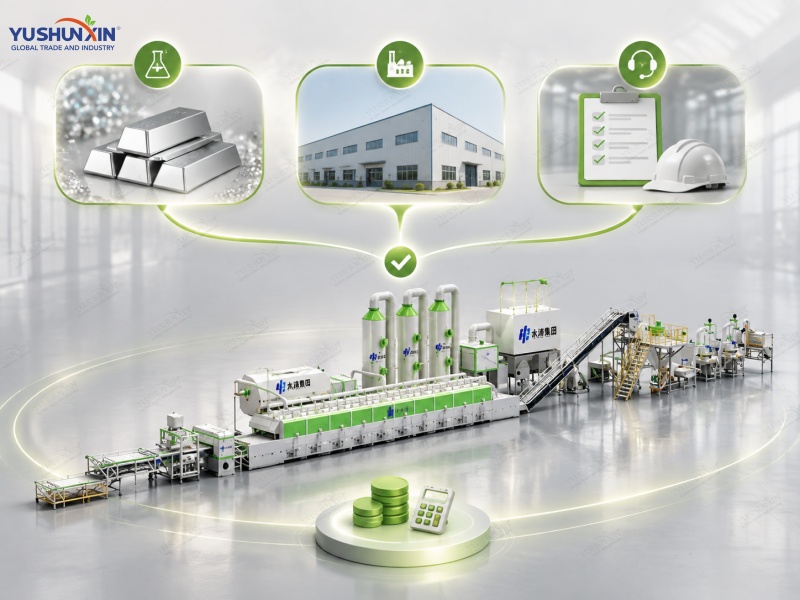
A final investment estimate should follow technical confirmation and a review of the factory drawings. This approach helps identify potential cost gaps before the customer commits to the project.
This Gujarat project demonstrates why solar panel recycling plant cost depends on the entire production system. The proposed solution combines a 1 TPH design target, tunnel kiln pyrolysis, material separation, wet silver extraction, and environmental control. The $600,000-750,000 budget remains subject to detailed engineering and quotation. Explore our solar panel recycling equipment and silver recovery solutions to evaluate the next steps for your project. Contact us with your feedstock details and factory layout to discuss a customized proposal.
”
From Your Needs
to Real Impact


