

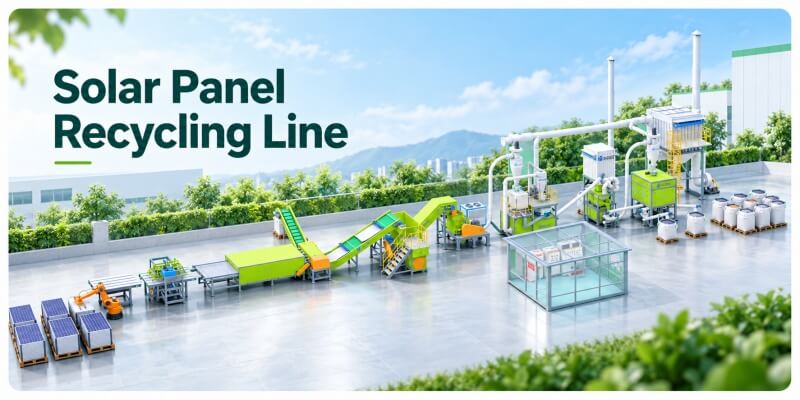











On August 20th, 2026, an Indian recycling investor contacted us about a 1000kg/h solar panel recycling plant start in India. The customer had retired modules but needed more than one solar panel recycling machine. He wanted dismantling, separation, emissions control, and future silver recovery. We focused on plant design and investment control. The following are the specific details of our communication in this case:
What Did the Indian Customer Need Before PV Recycling Plant Design?
Before selecting the process, we first clarified the customer’s raw material, recovery targets, and future business direction. These factors influence equipment selection, separation accuracy, environmental systems, and the final solar panel recycling plant cost in India.
What Types of Retired Solar Panels Would Enter the Recycling Plant?
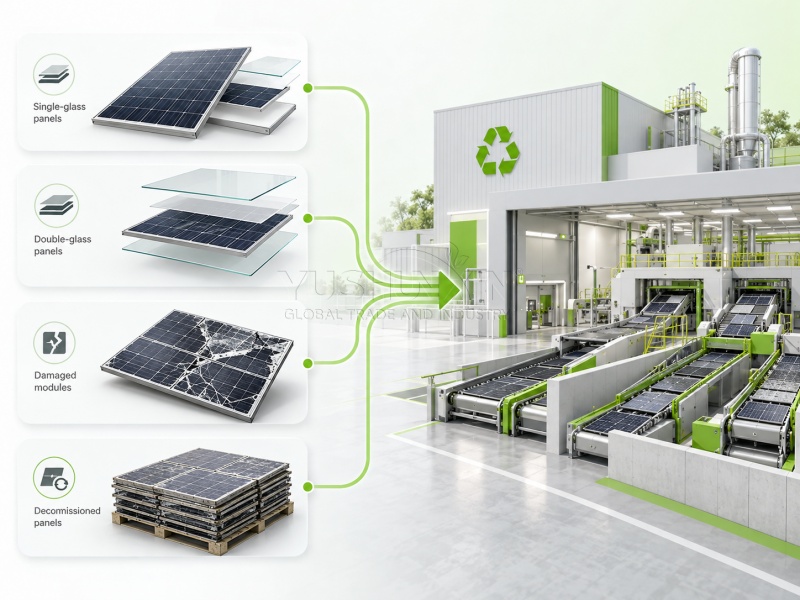
The customer planned to process retired photovoltaic modules collected from utility-scale and commercial solar projects in India. The incoming materials could include single-glass panels, double-glass panels, damaged modules, and decommissioned panels with different structures. This mattered because panel construction affects the recycling route. Single-glass modules and double-glass modules require different separation strategies. Therefore, we first confirmed the module structure before recommending the complete solar panel recycling equipment configuration.
Get a free quote!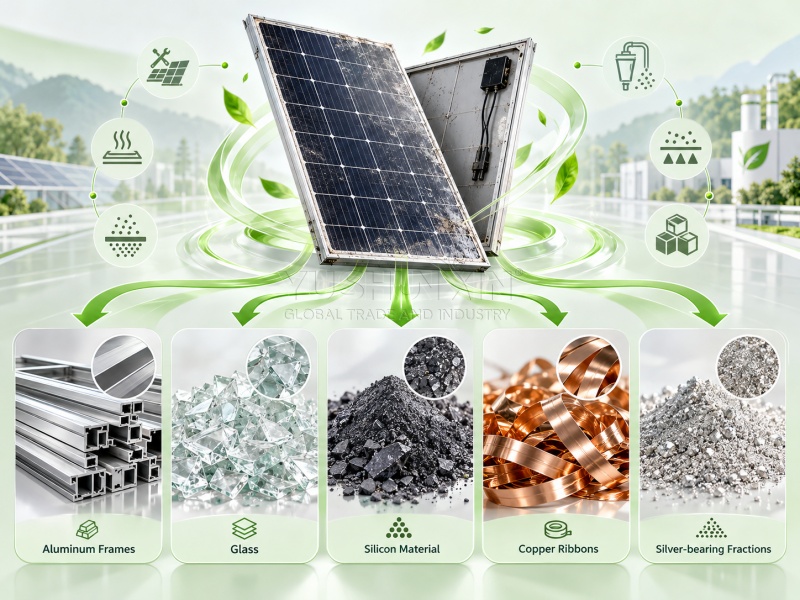
Which Recovered Materials Did the Customer Want to Sell?
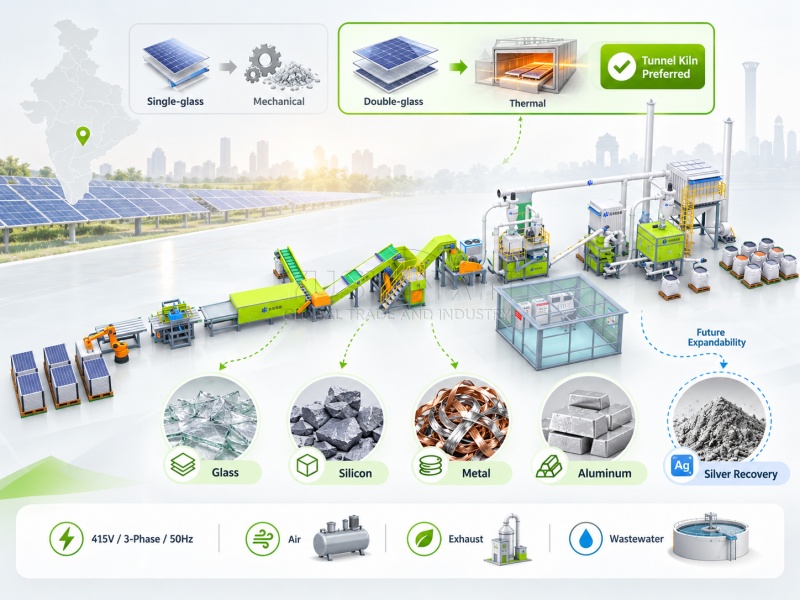
The customer wanted to recover several saleable materials instead of producing mixed scrap. His target products included aluminum frames, glass, silicon material, copper ribbons, and silver-bearing fractions. Therefore, we designed the project around material value rather than simple dismantling. The proposed system combined solar panel dismantling equipment, thermal separation, screening, sorting, dust collection, and product collection. For industrial investors, recovery purity directly affects downstream sales value. Environmental compliance and stable long-term operation are also important when planning a complete recycling facility.
Get a free quote!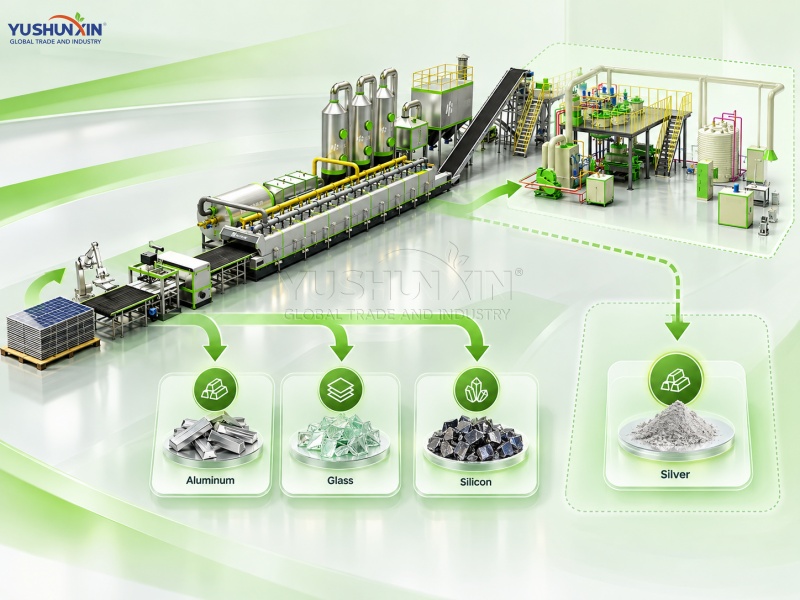
How Did the Customer’s Business Goal Affect the PV Recycling Equipment Configuration?
The customer was not looking for one standalone recycling machine. He wanted a system that could support both current material recovery and future process expansion. This changed our equipment strategy. We needed to consider whether the plant would only recover glass, aluminum, and silicon, or later add precious-metal processing. Therefore, the layout reserved flexibility for downstream solar panel silver recovery equipment. This approach helps industrial customers build the recycling section first, then expand into higher-value material recovery when their feedstock and market channels become stable.
Get a free quote!How Did We Configure the 1000kg/h Solar Panel Recycling Line?
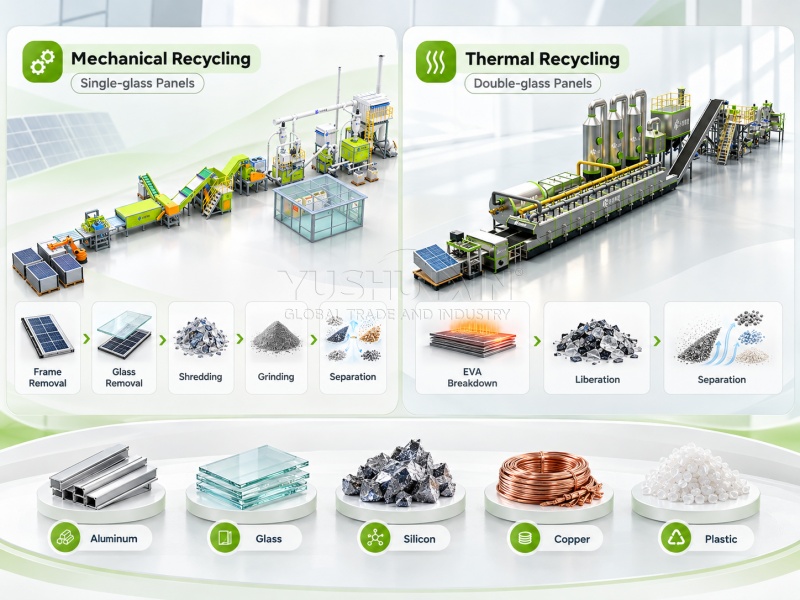
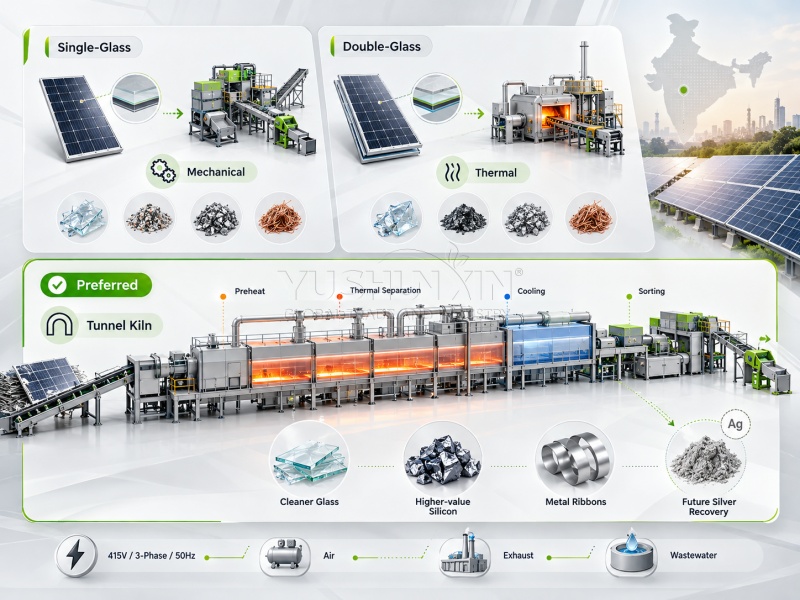
For single-glass solar panels, a mechanical route can be suitable when the customer mainly wants aluminum, glass, silicon, copper, and plastic fractions. The typical process includes frame removal, glass removal, shredding, crushing, grinding, gravity separation, and electrostatic separation. This route avoids a thermal treatment stage and works well when the customer accepts crushed glass and separated mixed fractions. For double-glass panels, however, mechanical separation becomes more difficult. Two glass layers remain strongly bonded by EVA. In this case, we recommend a thermal route to break down the encapsulation layer before material separation.
Should the Customer Choose Mechanical Recycling or Thermal Recycling?
For single-glass solar panels, a mechanical route can be suitable when the customer mainly wants aluminum, glass, silicon, copper, and plastic fractions. The typical process includes frame removal, glass removal, shredding, crushing, grinding, gravity separation, and electrostatic separation. This route avoids a thermal treatment stage and works well when the customer accepts crushed glass and separated mixed fractions. For double-glass panels, however, mechanical separation becomes more difficult. Two glass layers remain strongly bonded by EVA. In this case, we recommend a thermal route to break down the encapsulation layer before material separation.
When Is a Rotary Pyrolysis Reactor a Better Choice?
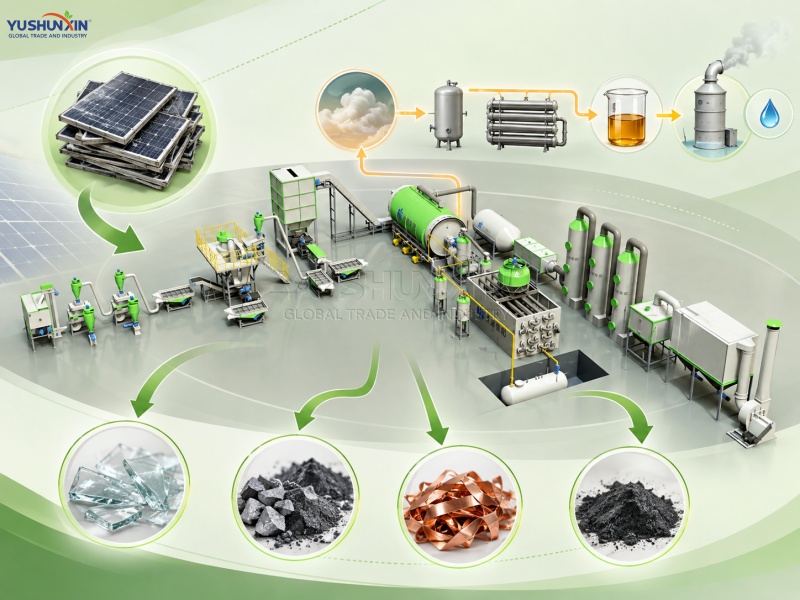
A solar panel pyrolysis reactor follows a different strategy. Instead of keeping panel layers relatively intact, the system focuses more on thermal decomposition and bulk material recovery. The typical route includes pyrolysis, gas separation, condensation, oil collection, and downstream material sorting. According to the existing process design, the pyrolysis section can include the reactor, gas tank, damping tank, condenser, oil tank, water seal, and spray tower. This route suits customers who focus more on large-scale thermal treatment and energy recovery. However, it is less suitable when the main goal is high-value silver recovery. Because rotary pyrolysis can increase silver loss through material friction. It can also make later silver separation more difficult.
When Should a Tunnel Kiln Be Used for Solar Panel Recycling?
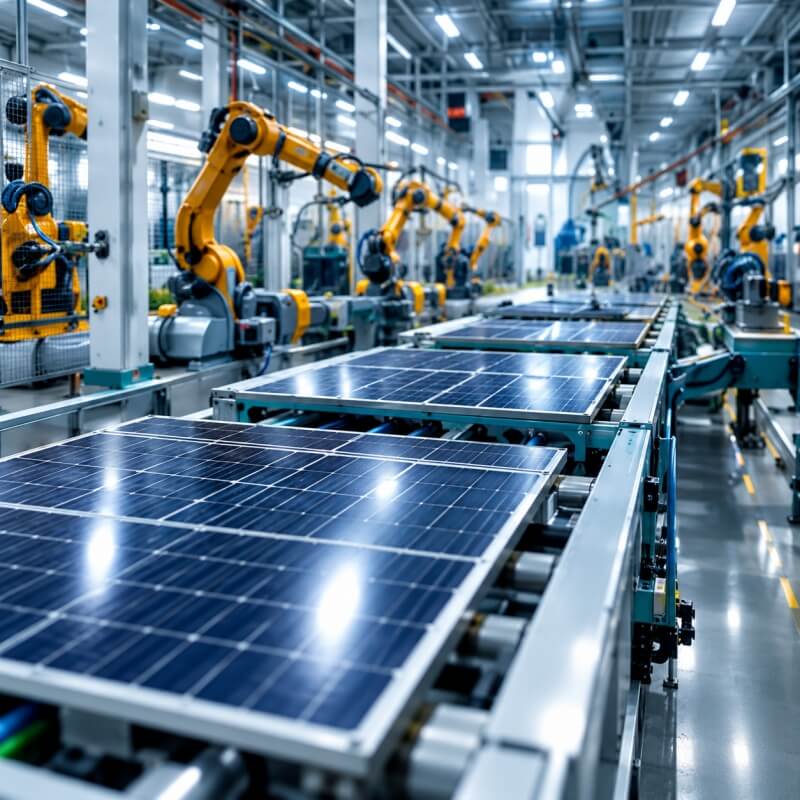
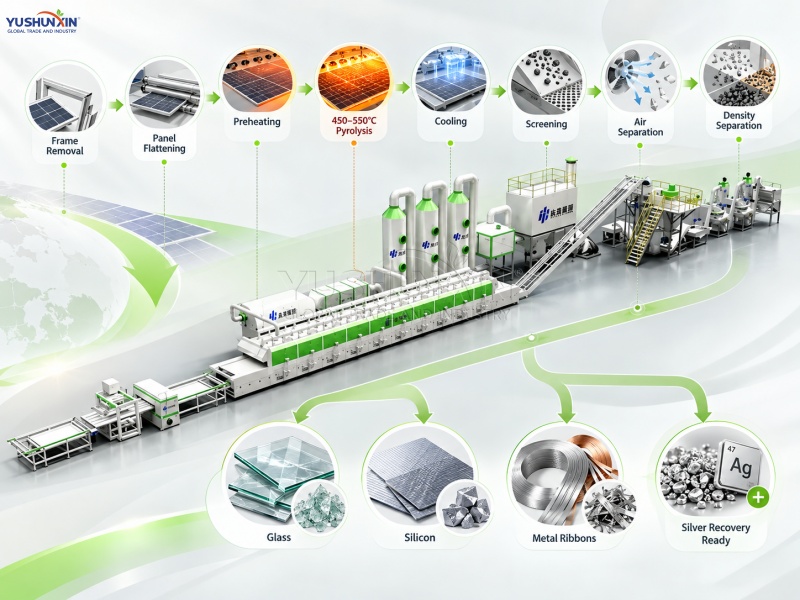
A solar panel recycling tunnel kiln is better when the customer wants to preserve more valuable downstream materials. The process normally includes frame removal, panel flattening, staged thermal treatment, cooling, screening, air separation, and density separation. The tunnel kiln uses several temperature zones. The preheating section gradually warms the panels. The main pyrolysis zone decomposes EVA at about 450–550°C. The cooling zone then reduces discharge temperature before sorting. This route is especially suitable when the customer wants cleaner glass, silicon wafers, and metal ribbons. It is also more suitable when future solar panel silver recovery is planned, because the material structure remains easier to separate after treatment.
Which Process Did We Recommend for This Indian Project?
For this Indian customer, the process choice depended on his final recovery goal. If he mainly processed single-glass modules and accepted crushed products, we could configure a mechanical line. If double-glass modules formed a large share, we would recommend thermal separation. Because the customer also considered higher-value silicon and future silver recovery, the tunnel kiln recycling process became the preferred direction. It protects downstream material value better and creates a clearer path toward later silver extraction. The supporting system also considered 415V, three-phase, 50Hz power, compressed air, exhaust treatment, and wastewater handling for the Indian project.
What Budget Should You Prepare for a Solar Panel Recycling Plant in India?
The solar panel recycling plant cost in India cannot be judged by one machine price. The final budget depends on the process route, automation level, recovery target, environmental systems, and whether silver recovery is included. Therefore, we normally divide the project into equipment investment, local construction costs, and operating costs.
What Is the Reference Equipment Budget for a 1000kg/h Recycling Line?
For a 1000kg/h solar panel recycling line, a practical reference equipment budget can start from about US$180,000–350,000 for a basic mechanical recycling configuration. If the project uses thermal separation, such as a tunnel kiln or pyrolysis system, the equipment budget can rise to around US$300,000–600,000, depending on furnace design, automation, sorting accuracy, and emission-control requirements. If the customer also adds solar panel silver recovery equipment, the complete investment can increase further. Silver extraction may require leaching reactors, filter presses, wastewater treatment, electrolysis equipment, and a silver melting furnace. Your existing silver-recovery configuration already includes these units. These figures should be treated as planning references, not fixed quotations.
Which Factors Change the Solar Panel Recycling Plant Cost?
Several factors can create a large price difference between two plants with the same nominal capacity. The first factor is the recycling process. A mechanical line usually costs less than a thermal line. However, thermal separation can better support double-glass modules and higher-value downstream recovery. The second factor is automation. Automatic feeding, PLC control, online monitoring, and higher-accuracy sorting increase equipment cost. The third factor is the final product target. Recovering basic glass and aluminum requires fewer systems. Producing cleaner silicon fractions or preparing material for silver extraction requires more equipment. Environmental requirements also matter. Dust collection, exhaust treatment, wastewater treatment, and chemical handling can significantly change the final quotation.
What Costs Are Not Included in the Equipment Price?
The equipment quotation is only one part of the total project investment. Customers should also prepare a budget for international freight, customs duties, local taxes, foundations, electrical installation, workshop construction, ventilation, exhaust ducts, water systems, forklifts, and installation labor. If the project includes wet silver extraction, chemical storage and wastewater treatment areas must also be planned. For this reason, the solar panel recycling machine cost in India should always be evaluated together with local project conditions.
What Operating Costs Should Be Calculated Before Investment?
Industrial customers should also calculate long-term operating costs before placing an order. These usually include electricity, fuel, compressed air, water, labor, maintenance, spare parts, and consumables. If silver recovery is added, chemical consumption and wastewater treatment become additional costs. In the current project specification, the silver-recovery section requires nitric acid, sodium chloride, iron powder, and caustic soda during operation. Therefore, the best investment decision should compare both CAPEX and operating cost, rather than choosing equipment only by the lowest purchase price.
This Indian project showed that a 1000kg/h solar panel recycling line should be designed around the customer’s feedstock and recovery goals, not capacity alone. Mechanical processing can suit single-glass modules, while double-glass panels usually require thermal separation. When cleaner silicon and future silver recovery become priorities, a tunnel kiln route offers greater flexibility. The same planning logic also connects with broader decisions such as mechanical vs thermal solar panel recycling, solar panel recycling with silver recovery, and downstream silver extraction production lines. Together, these choices help define the process, equipment configuration, environmental systems, and overall project budget.
”
From Your Needs
to Real Impact


