

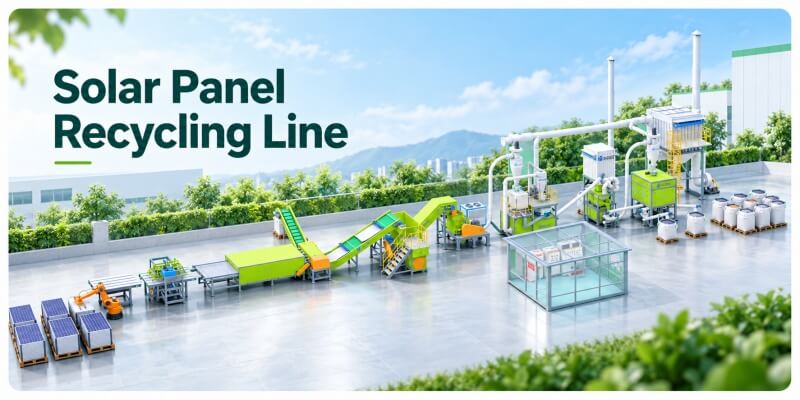


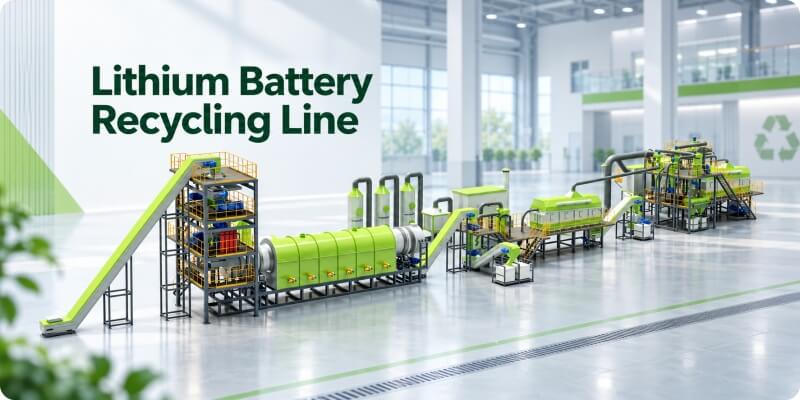

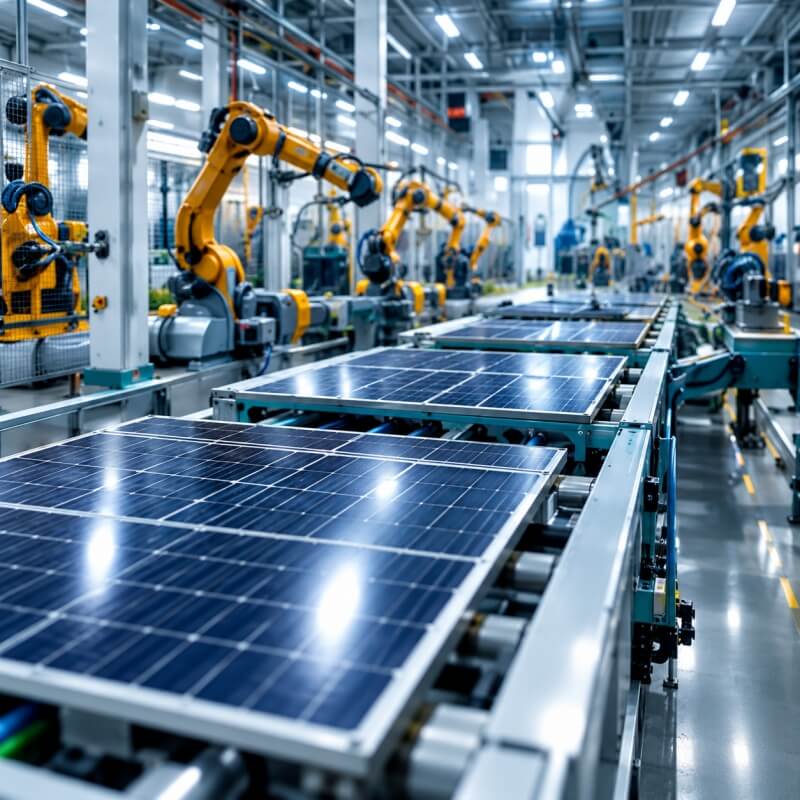









End-of-life PV modules are moving from scattered disposal to industrial recycling Single glass panels offer a practical starting point for this shift. Yet buyers need more than a glass removal machine. They need a route that protects glass value and separates aluminum, copper, silicon powder, and plastics. This solution also leaves room for silver extraction and future mixed-module upgrading. For PV recyclers, EPC contractors, asset owners, and waste management groups, the right plant can turn retired modules into a stable recovery business.
Which PV Modules Suit A Single Glass Recycling Line?
01 · TypeAfter crushing, the grinding mill processes the material to 10-80 mesh. This particle range prepares the material for copper recovery and silicon powder separation. Then, the gravity separator separates copper from silicon powder and plastic powder. After that, the electrostatic separator separates silicon powder from plastic powder. This route helps buyers create cleaner output streams. Copper can enter the metal recycling market. Silicon powder can move toward further refining or reuse channels. Plastic powder can be collected separately for disposal or downstream treatment. As a result, the plant does not only “recycle panels.” It builds separated material flows for commercial use.
Check Module Structure First
Buyers should confirm the glass layer, backsheet type, frame condition and breakage rate. They also need to check the mixed-module ratio. If most panels are single glass modules, a mechanical single glass recycling line is suitable. For example, Yushunxin’s YSX-1000 line can reach 1 t/h. If many double glass panels are mixed in, the route should change. In that case, a mixed single and double glass solar panel pyrolysis line is more suitable.
Match The Recovery Goal
PV power plant owners usually need fast disposal and compliance. So, they care more about capacity and stable operation. Waste recycling companies focus more on material sales. Therefore, glass, aluminum and copper recovery matter more. PV manufacturers may need deeper value recovery. They can start with mechanical separation. Then they can connect silicon powder treatment or silver recovery later.
Why Do you Dismantle Single Glass Solar Panels Before Crushing?
02 · Dismatling
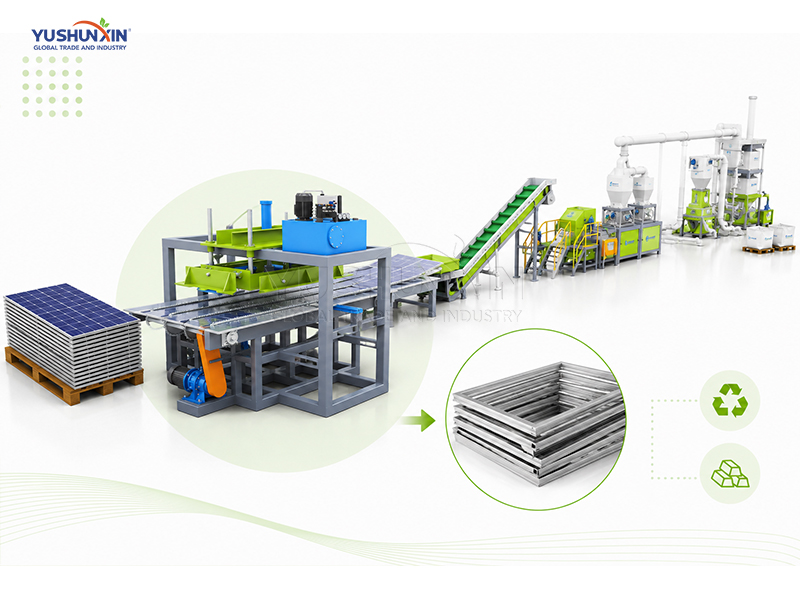
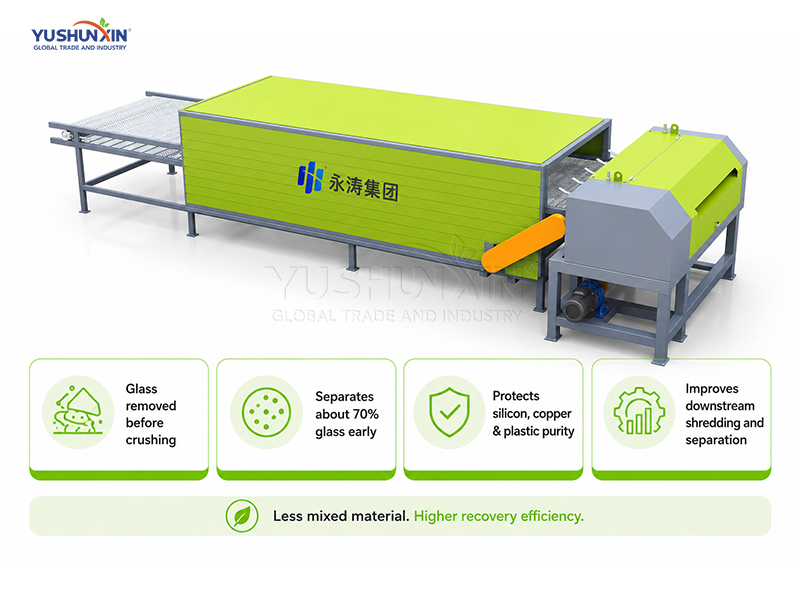
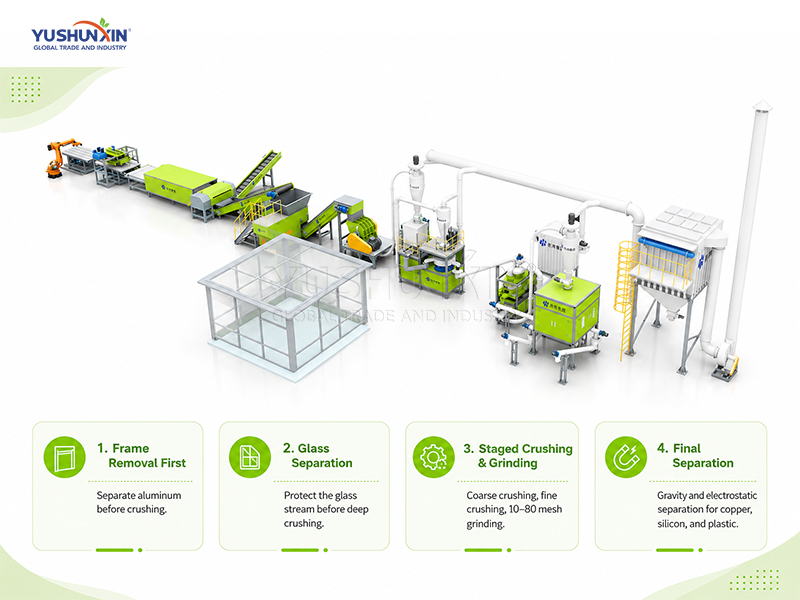
For a single glass solar panel recycling plant, the process should not start with direct crushing. Yushunxin first removes the aluminum frame, then removes the front glass. After that, the remaining laminate enters shredding, milling and separation. This route protects high-volume glass and keeps downstream materials cleaner. In standard PV modules, glass accounts for about 70% of total material. So, early glass removal directly affects recovery value and sorting stability.
Separate Aluminum Frames As An Independent Metal Stream
The aluminum frame should leave the line before crushing. This step reduces metal interference in the shredder and crusher. It also lowers unnecessary load on the size-reduction system. At the same time, the frame becomes a separate aluminum product. Recyclers can sell it through existing scrap aluminum channels. This also makes material accounting clearer for industrial recycling projects.
Remove Glass Before Mixed Crushing To Protect Purity
After frame removal, the glass removal machine separates glass from the single glass panel. This step avoids mixing about 70% glass with silicon, copper and plastic fractions. As a result, the downstream system handles less mixed material. The shredder, hammer crusher and grinding mill can focus on the remaining laminate. This supports steadier copper separation, silicon powder recovery and plastic powder separation. For industrial buyers, this is the key value. The line does not only crush panels. It first protects the most valuable material streams, then separates the smaller fractions more efficiently.
How Can Each Separation Stage Create Marketable Recycling Outputs?
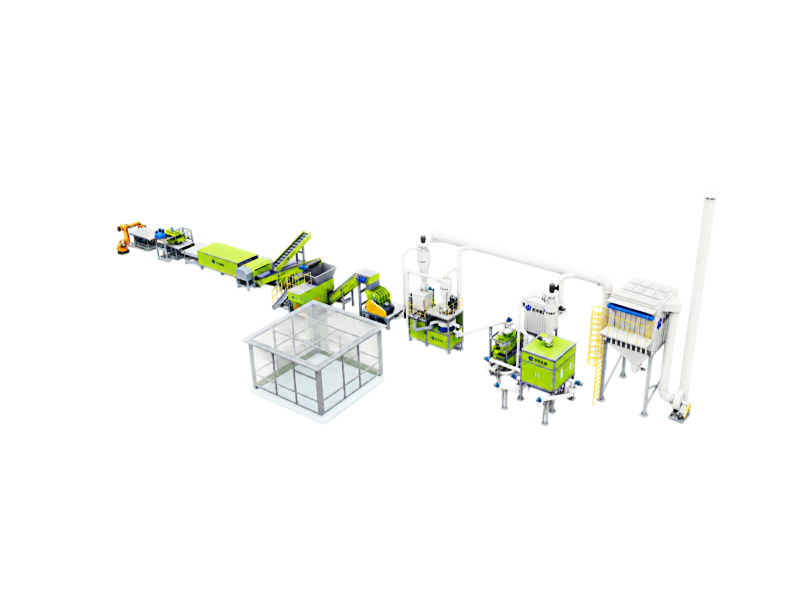
03 · SeparationA single glass solar panel recycling plant should not treat all materials as mixed waste. Instead, it should guide each material into a clear recovery route. For industrial buyers, this means stable particle size, cleaner separation, and easier sales after processing. In YSX-1000, the line first removes the aluminum frame and glass. Then it uses shredding, crushing, grinding, gravity separation and electrostatic separation to recover different material streams.
Stable Particle Size Builds A Cleaner Downstream Flow
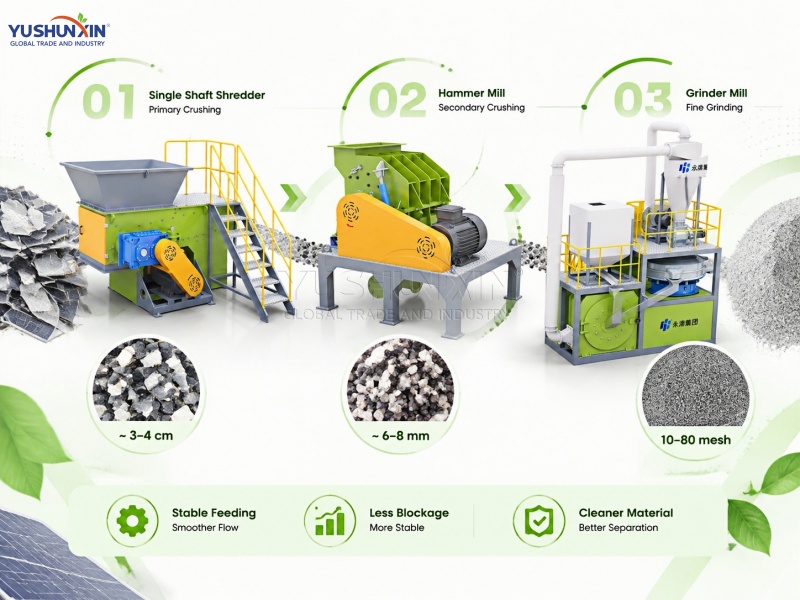
After frame and glass removal, the remaining laminate enters the size reduction section. The shredder first crushes the material to about 3-4cm. Then, the hammer crusher reduces it further to about 6-8mm. This staged crushing avoids sudden over-grinding. It also gives the grinding mill a more stable feed. For industrial operation, this step matters. If the particle size changes too much, the later separation system becomes less stable. Therefore, Yushunxin designs crushing as a preparation stage, not only a reduction stage. It supports smoother feeding, lower blockage risk, and better downstream sorting.
Fine Powder Routing Decides Copper And Silicon Recovery
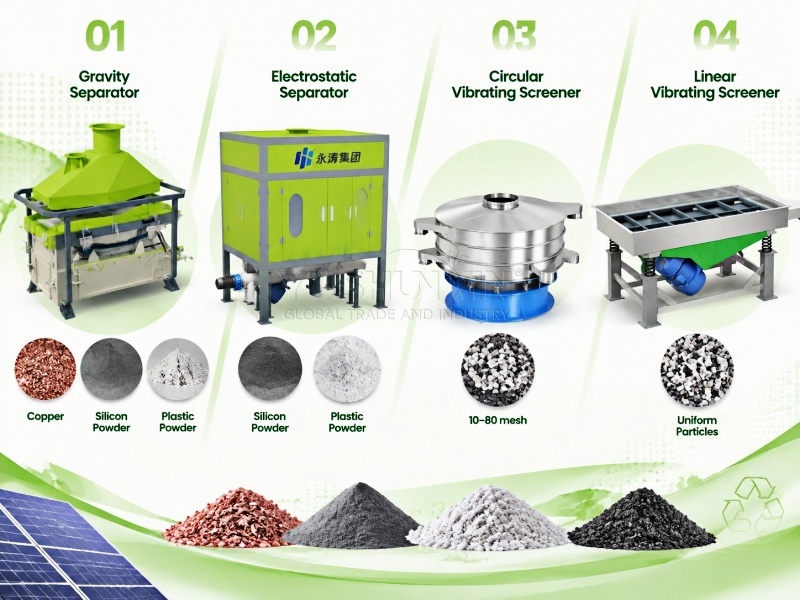
After crushing, the grinding mill processes the material to 10-80 mesh. This particle range prepares the material for copper recovery and silicon powder separation. Then, the gravity separator separates copper from silicon powder and plastic powder. After that, the electrostatic separator separates silicon powder from plastic powder. This route helps buyers create cleaner output streams. Copper can enter the metal recycling market. Silicon powder can move toward further refining or reuse channels. Plastic powder can be collected separately for disposal or downstream treatment. As a result, the plant does not only “recycle panels.” It builds separated material flows for commercial use.
Separate Sales Routes Improve Project Returns
Each recovered material needs a different sales channel. Glass can go to glass recycling plants or building material users. Aluminum frames can enter the recycled aluminum market. Copper can enter non-ferrous metal recovery channels. Silicon powder and silver-containing fractions can connect with deep processing or silver extraction lines. This design is important because silver has high value. Technical data shows that one ton of retired PV modules may contain about 500-1000g of silver. Mature wet recovery processes can reach 98%-99% silver recovery. Therefore, buyers can start with a mechanical single glass recycling line. Then, they can add silver extraction when material volume and market demand justify the investment.
What Project Details Should Be Ready Before Quotation?
04 · Details
Before quotation, buyers should confirm more than equipment capacity. A single glass solar panel recycling plant should match real module supply, plant space, power conditions and local emission rules. For YSX-1000, the reference capacity is 1t/h. The main power is about 277.6kW. The main line needs about 36×6×6m of space. However, the final proposal still depends on real project data.
Real Supply Decides Practical Capacity
Do not only check “tons per hour”.
The real output depends on daily operation time and module supply stability.
Capacity Checklist Before Quotation- How many tons of single glass solar panels can you collect per day?
- How many hours will the plant run each day?
- Will you run one shift or two shifts?
- How many working days do you plan each year?
- Is the PV waste supply stable or project-based?
- Do the modules come from one solar farm or several sources?
- Do you need temporary project operation or long-term industrial operation?
For example, a 1t/h line can process about 8 tons per day in one 8-hour shift. If the buyer has only one retired solar farm, Yushunxin can design a project-based configuration. If the buyer has long-term PV waste contracts, the plant should support continuous industrial operation.
Site Planning Starts Beyond The Main Line
The YSX-1000 single glass line needs about 36×6×6m for the main system. However, this is not the full plant area. A practical layout should also reserve space for feeding, storage, collection and maintenance.
Plant Layout Checklist Before Quotation- Is the workshop length enough for a 36m main line?
- Is the workshop width enough for operation and maintenance?
- Is the workshop height enough for conveyors and dust pipes?
- Is there enough space for incoming solar panels?
- Is there a separate area for aluminum frame storage?
- Is there space for glass collection and packaging?
- Can forklifts move safely around the line?
- Is there space for dust collectors and air ducts?
- Are maintenance aisles reserved on both sides?
- Is there space for silicon powder and plastic powder collection?
This planning helps the plant run smoothly after installation. It also reduces later layout changes, civil work costs and production delays.
Power And Air Treatment Need Early Confirmation
The 277.6kW power figure is only the main line reference. The final power plan should also include auxiliary conveyors, dust collectors, control cabinets and other supporting systems.
Power And Environmental Checklist Before Quotation- What is the local industrial voltage?
- Can the factory support about 277.6kW main power?
- Is extra power needed for dust collection systems?
- Does the project need a dedicated control cabinet room?
- Are local electrical standards confirmed?
- Are local dust emission rules confirmed?
- Are noise control requirements confirmed?
- Does the site need extra air treatment equipment?
- Do European, North American or Middle East standards apply?
- Are installation and inspection documents required?
For high-value industrial buyers, these details affect the final configuration. Therefore, Yushunxin needs complete project data before offering a reliable quotation.
How Can Your Single Glass Recycling Solution Keep Material Value Stable?
05 · Solution
A single glass solar panel recycling plant should help you control output quality, not only finish separation. When you plan the line, you need clear targets for glass quality, copper recovery, silicon powder separation, labor use and downtime. These KPIs help you compare the real value of different solutions.
Start With Clear Product Standards
Before choosing the configuration, you should decide what products matter most. Do you want cleaner glass? Do you need higher copper recovery? Do you plan to sell silicon powder separately? These targets will affect crushing size, grinding fineness and separation design. If you only choose a low-cost line, the final material value may drop. For example, glass takes a large share in single glass modules. So, poor glass handling can reduce the return from the whole project.
Treat Maintenance As A Cost Control Point
Your long-term cost does not stop at equipment purchase. Knife wear, screen replacement, bearings, dust filters and control systems all affect daily operation. If one key part stops, the whole line may lose production time. So, you should plan spare parts and maintenance before installation. Yushunxin can support equipment configuration, operator training, spare parts and after-sales service. This helps your single glass recycling line run more steadily after delivery.
Separate High-Volume Materials First
For single glass modules, the better solution is not direct mixed crushing. You should remove the frame first, then separate the glass before deep crushing. This route helps protect the glass stream. It also reduces glass powder entering silicon material. After that, the remaining material can enter staged crushing, grinding and separation. A practical route can use coarse crushing, fine crushing and 10–80 mesh grinding. Then gravity separation and electrostatic separation can improve copper, silicon and plastic separation.
Get your Solution!How Can You Extend A Single Glass Solar Panel Recycling Solution For Higher Project Value?
06 · Extend
A single glass solar panel recycling solution should not stop at material separation. It should also help you prepare project documents, plan silver recovery, and reserve an upgrade path for mixed PV waste. In this way, your recycling plant can start with single glass modules first. Then, it can grow toward deeper metal recovery and larger PV waste treatment.
Extend Recycling Value
Beyond Material Separation
A single glass solar panel recycling solution can create more value through future upgrades. The project can start with glass, aluminum, copper, and silicon recovery, then expand toward deeper metal recovery and larger PV waste processing.
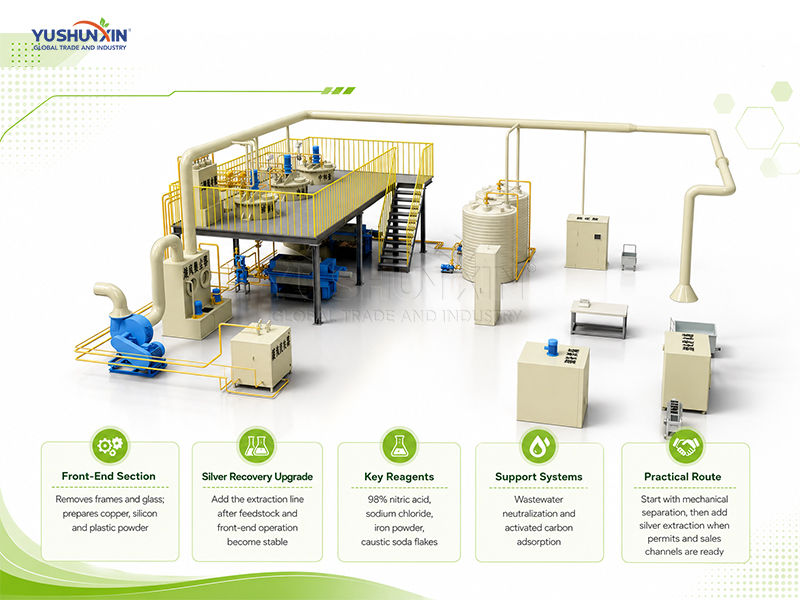
Add Silver Recovery For
Higher Material Value
The recycling line can serve as a front-end separation system for silver extraction. When feedstock, permits, and sales channels become stable, customers can add silver recovery equipment to improve overall project value.
Prepare Technical Documents
For Project Approval
Large recycling projects often require technical files before delivery. Yushunxin can support CE documents, drawings, layouts, installation guidance, and operation manuals. These materials help customers communicate with investors, EPC teams, and local reviewers.
Build A Flexible Route
For Future Expansion
Different PV waste types require different solutions. Single glass projects can later connect with mixed PV pyrolysis systems, such as YSX-8000 (8 t/d) and YSX-16000 (16 t/d) , creating a staged investment path.
Summary
A single glass solar panel recycling plant works best when it matches your real PV waste supply. With the right solution, you can protect glass value, separate metals and powders, and keep daily operation more stable. As your project grows, you can connect this line with a solar panel silver extraction production line for higher recovery value. If your feedstock later includes double glass modules, you can also explore a mixed PV pyrolysis recycling solution. For the next planning step, you can review related guides on solar panel recycling plant cost, plant layout planning, equipment delivery, installation support and commissioning service.
From Your Needs
to Real Impact


