

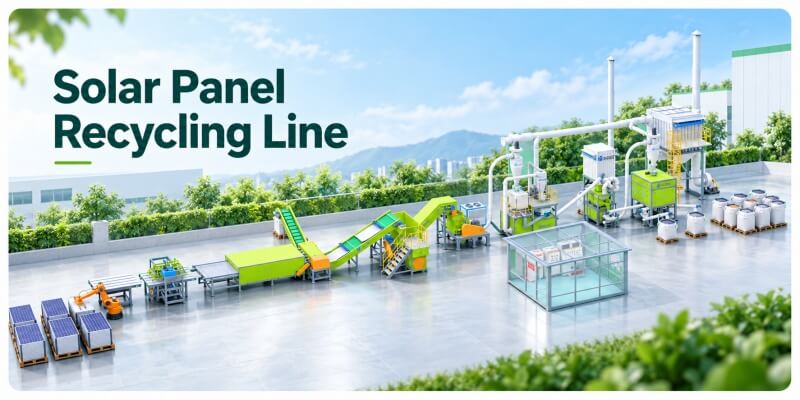












As retired PV modules enter large-scale recycling, silver recovery is becoming a key profit point. Crystalline silicon panels usually contain 0.05%–0.1% silver, or about 500–1000g per ton. Mature wet recovery can reach 98%–99% silver recovery. Therefore, industrial recyclers need more than extraction equipment. They need a complete solution covering dismantling, cell separation, leaching, refining, wastewater treatment and final silver sales.
How Does Front-End Separation Decide Silver Recovery Value?
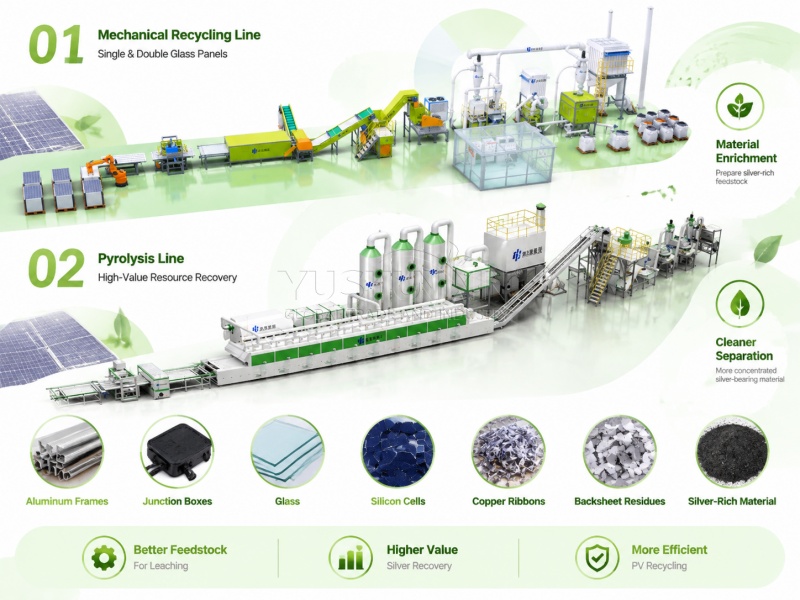
01 · SeparationSilver recovery from solar panels should start before the chemical section. In a real PV module recycling plant, silver value depends on early separation quality. If the front-end line damages cell materials too much, the later solar panel silver extraction line may lose efficiency. Therefore, a PV recycling silver recovery solution should first organize dismantling, delamination and silver-rich material collection.
Silver-Rich Cell Material Comes Before Silver Extraction
A high-value silver recovery project should not feed mixed waste directly into leaching. Instead, the line should first remove aluminum frames and junction boxes. Then it should separate glass, silicon cells, ribbons and backsheet residues. This step matters because silver mainly stays in the cell electrodes. The front-side busbars and fingers contain most of the silver paste. Some silver also remains in rear electrodes and interconnection areas. So, cleaner cell separation creates better material for leaching. For this reason, Yushunxin should design the front-end PV recycling line around material enrichment. The goal is not only to break panels, but also to prepare stable silver-rich feedstock for the next recovery stage.
The Whole Line Should Protect Every Valuable Output
You do not only calculate silver revenue. They also calculate glass, silicon, copper and aluminum value. For example, common PV modules contain about 70% glass, 10%–15% aluminum, 3%–5% silicon and 1%–2% copper. Therefore, the silver recovery line should not damage other saleable materials. If the process only chases silver, it may reduce total plant profit. A better solution protects complete glass when possible. It also keeps silicon and metal fractions easier to sort. So, a practical PV recycling silver recovery solution should connect two goals. First, it should improve silver-rich material concentration. Second, it should keep other recovered products marketable. This makes the whole PV module recycling plant more profitable and stable
Why Should You Grade PV Modules Before Silver Extraction?
02 · GradeFor industrial PV recycling projects, silver profit should not be calculated only by tons. Different module batches bring different silver yield. Therefore, Yushunxin suggests checking module type, cell technology and silver-rich material ratio first. This helps buyers estimate recovery value before choosing the silver extraction process.
Module Technology Affects Silver Recovery Value
Different PV technologies contain different silver levels. P-type, PERC, TOPCon, and HJT modules have different recovery values. Retired crystalline silicon modules usually contain about 0.05%–0.1% silver. Sorting modules by technology and generation helps improve recovery estimation.
Batch Testing Defines Silver Recovery Design
Silver recovery configuration depends on feedstock volume, silver content, and final product targets. Batch testing helps determine leaching, filtration, and refining requirements. Based on results, the project can choose rough silver recovery or add refining processes for higher-value silver products.
How Can Material Stay Stable Before Silver Extraction?
03 · MaterialA silver recovery line should not start from chemical leaching directly. It should start from a stable silver-rich material stream. Therefore, the front-end PV recycling line must separate glass, silicon, copper and cell materials first. Then the silver extraction line can focus on silver recovery and refining.
The transfer point should reduce silver loss
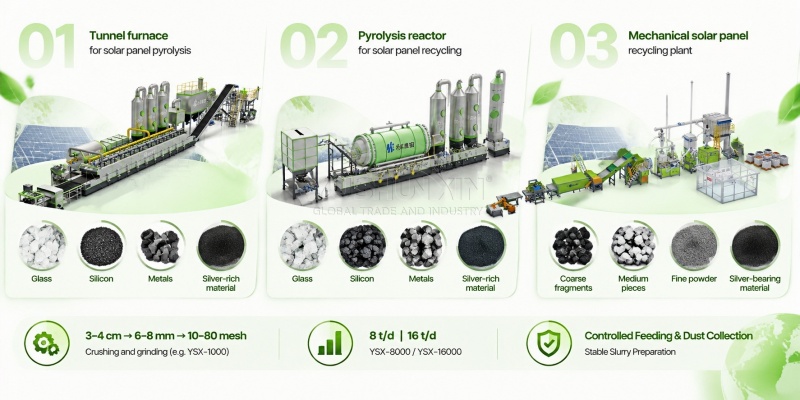
Silver only accounts for about 0.05%–0.1% of PV module weight. In other words, 1 ton of retired panels may contain only 500–1000g silver. Therefore, the connection between separation and extraction must avoid uncontrolled mixing. Yushunxin can design this interface around your front-end route. For mechanical PV recycling lines, the focus is fine material collection and dust control. For pyrolysis method, the focus is screened cell material and closed transfer. This helps protect silver value before the chemical recovery stage.
The silver line should match the front-end rhythm
The front-end PV recycling line often runs continuously. However, the silver extraction line may work by chemical batch. So, the two sections need a buffer system between them. This buffer should not become an open material pile. It should include weighing, batch marking, sealed storage and planned feeding. As a result, the plant can control inventory and reduce handling loss. Before layout design, customers should confirm four numbers: front-end capacity, silver-rich material ratio, leaching batch volume and daily silver target. Then Yushunxin can match the silver extraction line with the full PV recycling plant.
Front-End Routes Affect Silver Material Quality
Different recycling routes create different silver-bearing materials. Mechanical recycling produces fine mixed material, requiring crushing control, dust collection, and stable leaching preparation. Pyrolysis can concentrate silver-bearing fractions after separation, requiring cooling, screening, and sealed transfer systems.
Get your Solution!How Should Your Silver Product Target Shape The Recovery Line?
04 · TargetFor industrial PV recyclers, the silver recovery route should follow the product target. If the project needs fast value recovery, rough silver may be enough. However, if you want premium sales channels, refining becomes necessary. Therefore, Yushunxin should design the route around silver content, permit conditions, budget and final product plan.
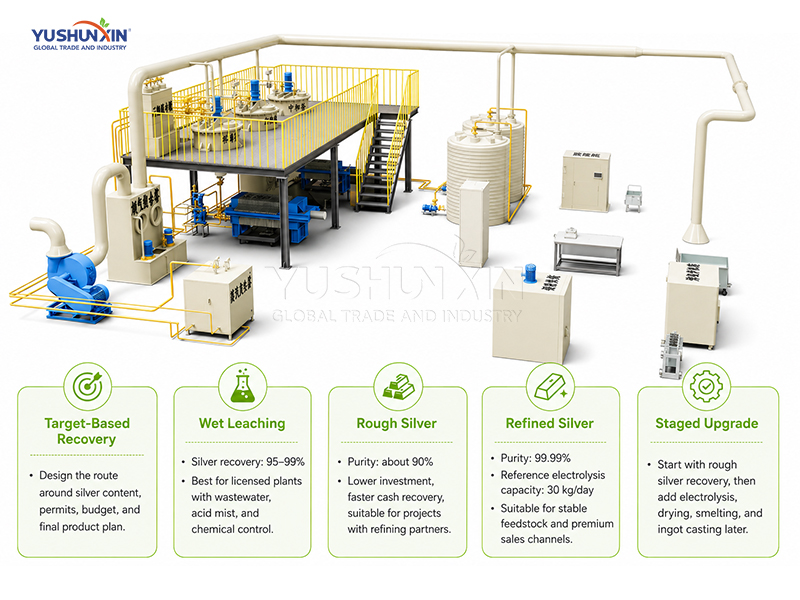
Wet leaching fits projects with clear environmental permits
Rough silver supports faster cash recovery
Refined silver supports higher-value sales channels
Yushunxin can configure a staged recovery route
How Can Compliance Design Make Silver Recovery More Reliable?
05 · Compliance
Environmental design should enter the silver recovery plan at the first stage. Otherwise, the project may look cheaper at quotation stage. However, real operation costs will rise after production starts. For industrial PV recyclers, compliance design protects both approval and profit.
Wastewater Treatment Should Be Included
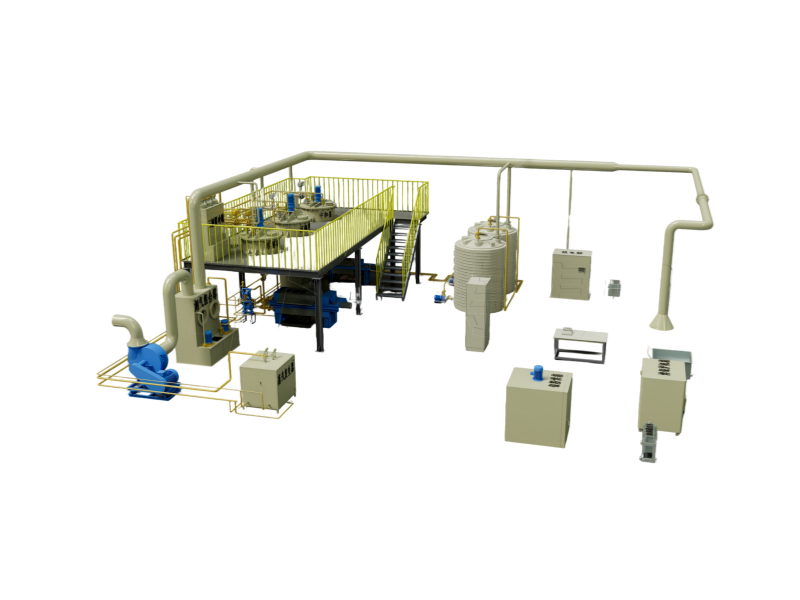
Silver extraction generates acidic wastewater and metal-containing liquids. A complete solution should include neutralization, filtration, and adsorption systems. These treatment units affect operating costs and environmental approval, so the whole process scope matters.
Acid Mist Control Supports Compliance
Leaching and acid washing may produce acid mist. A proper system needs gas collection, spray treatment, exhaust pipes, and fans. This helps reduce corrosion, odors, and workshop risks while supporting project review.
Chemical Safety Defines Industrial Standards
Silver recovery projects require safe chemical handling and corrosion-resistant equipment. Materials such as PPH, fiberglass, and PTFE-lined components improve durability. Yushunxin can configure systems based on capacity, treatment needs, and approval requirements.
How Do you Choose The Right Silver Monetization Solution?
06 · Solution
Silver recovery should match your sales channel. Therefore, the final product route matters before equipment selection. Some recyclers need fast cash flow. However, others want higher product premiums. Yushunxin can help configure rough silver recovery or refined silver production. The choice depends on downstream buyers, budget, permits and operating skills.
CASH-OUT ROUTE
Rough Silver Creates A Faster Cash-Out Route
Rough silver suits recyclers with existing refining partners. It can reduce early investment pressure. Also, it helps the project start faster. In this route, the plant focuses on leaching, filtration and replacement. Then, you sell rough silver to a refinery. This model works well for new PV recycling projects. It also fits investors who want quicker material turnover. However, rough silver usually sells at a lower price. So, you should compare lower equipment cost with lower selling value. Yushunxin’s silver extraction line can support about 90% purity rough silver.
PRODUCT ROUTE
Refined Silver Builds A Higher-Margin Product Route
Refined silver suits customers with stronger market channels. For example, they may sell to metal traders, refineries or silver material users. Also, high-purity silver can support premium pricing. This route needs more process sections. It may include electrolysis, drying, melting and ingot casting. Therefore, the investment is higher. However, the final product has stronger market acceptance. Yushunxin’s refining configuration can produce high-purity silver ingot, which can get a 99.99% silver ingot route. And we can also provide silver electrolysis, dryer, smelting furnace and ingot mould.
PROJECT
MORE STABLE
Multi-Output Sales Make The Project More Stable
Silver is the profit highlight. However, it should not carry the whole business alone. A PV recycling plant also recovers glass, silicon, copper and aluminum. This matters for industrial recyclers. Because silver content may change by module type. One ton of retired PV modules may contain about 500–1000g silver. With 98% recovery, the plant may recover about 490–980g metal silver. Meanwhile, glass and silicon provide steady output volume. Copper and aluminum add extra metal income. So, the silver recovery solution should connect with the full PV recycling line. This structure improves revenue stability. It also helps customers build a stronger long-term recycling business.
Summary
As end-of-life PV modules increase, silver recovery is becoming a key profit point in PV recycling. A practical solution should start with panel dismantling and silver-rich material preparation. Then it should connect wet recovery, refining, wastewater treatment and final silver sales. For industrial recyclers, Yushunxin can design the solution around feedstock type, silver content and product target.
From Your Needs
to Real Impact


