













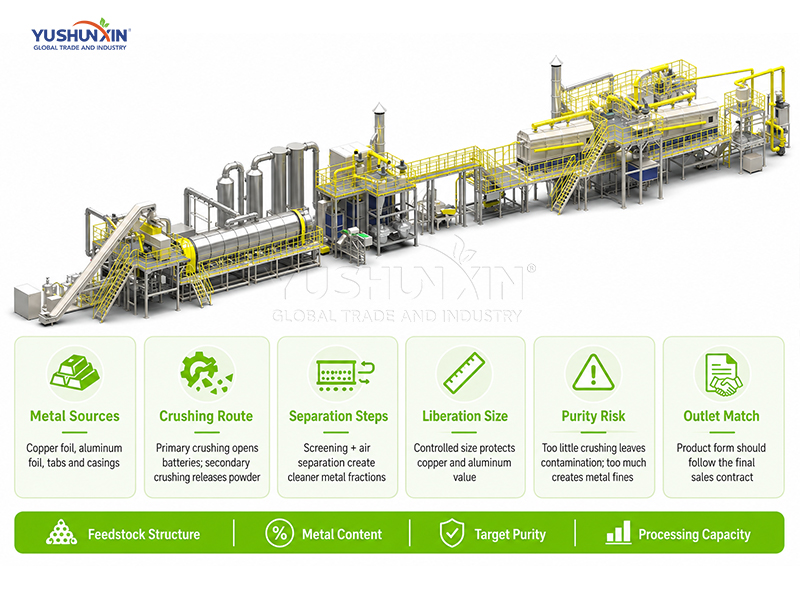

Lithium battery recycling can recover black mass, copper, aluminum, and ferrous metals. However, each material requires a different separation stage. For industrial buyers, recovery value depends on product purity, material loss, and downstream sales standards. This FAQ explains which products carry the most value. It also shows how line configuration shapes final recovery quality.
How Can the Line Produce a Higher-Value Black Mass Stream?
Black mass often carries the strongest value within a lithium battery recycling project. It concentrates cathode and anode materials into one saleable powder stream. Therefore, buyers should compare purity, recovery, and batch stability before comparing equipment prices.
How Does Controlled Liberation Protect Black Mass Value?
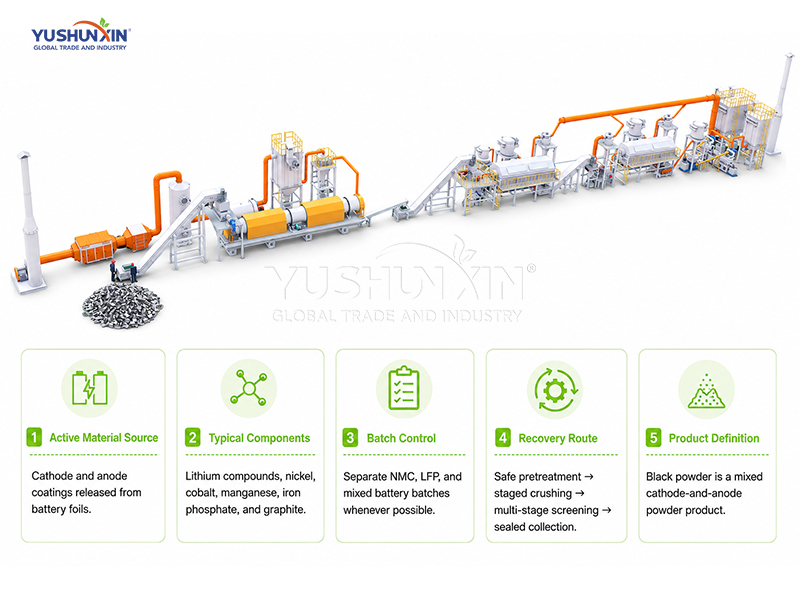
Black mass comes from active materials released from cathode and anode foils. It may contain lithium compounds, nickel, cobalt, manganese, iron phosphate, and graphite. However, battery chemistry changes the final composition. Therefore, the line should separate NMC, LFP, and mixed battery batches whenever possible. Safe pretreatment first reduces electrical and thermal risks. Then, staged crushing opens casings and releases electrode coatings. Multi-stage screening separates fine electrode powder from larger material pieces. Finally, sealed collection transfers the target powder without treating it as ordinary dust. Yushunxin materials define black powder as a mixed cathode and anode powder product.
How Can Screening and Airflow Reduce Contamination?
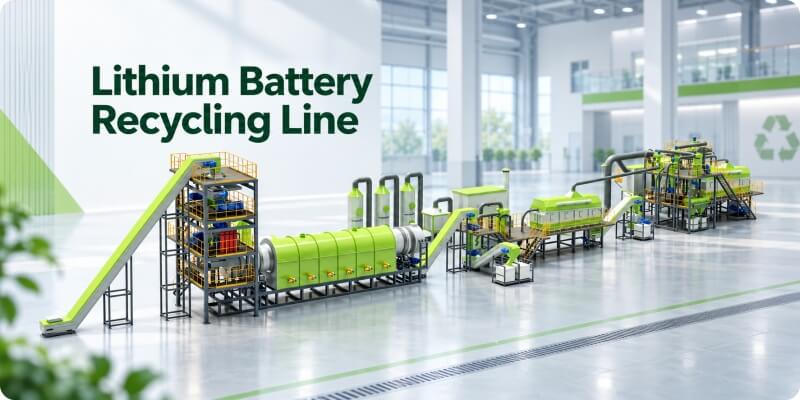
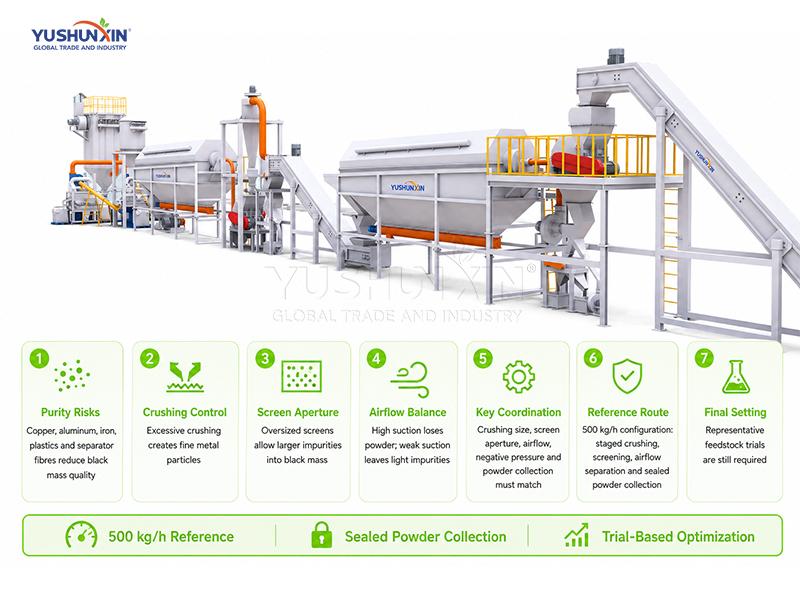
Black mass quality falls when copper, aluminum, iron, plastics, or separator fibres enter the powder. Excessive crushing creates fine metal particles that pass through the screens. Meanwhile, oversized apertures send larger impurities into the black mass outlet. Airflow also needs careful balance. High suction can remove valuable powder, while weak suction leaves films and light plastics. Therefore, the line should coordinate crushing size, screen aperture, airflow, negative pressure, and powder collection. One 500 kg/h reference configuration uses staged crushing, screening, airflow separation, and sealed powder collection. However, final settings still require representative feedstock trials.
How Should the Line Produce Saleable Copper and Aluminum Streams?
Industrial lithium battery lines must produce controlled copper and aluminum streams, not one mixed metal outlet. These metals come from foils, tabs, casings, and structural parts. Therefore, the process must balance liberation, purity, and black powder retention. Existing Yushunxin configurations process 500–1,000 kg/h and recover copper and aluminum granules.
Release Copper and Aluminum Before Fine Separation
Copper foil carries the negative electrode material. Meanwhile, aluminum foil carries the positive electrode material. Battery tabs also contain copper or aluminum. In addition, some casings and structural parts contain aluminum. Primary crushing first opens the battery structure. Then, secondary crushing separates electrode powder from the metal foils. Screening divides the material by particle size. Air separation then removes lightweight films and powder. This sequence creates cleaner metal fractions. However, crushing alone cannot produce saleable copper and aluminum products.
Control Liberation Size to Protect Metal Value
Match Each Product Outlet to the Sales Contract
Can the line produce separate copper and aluminum products?
Yes, but the result depends on particle size and material liberation. Basic lines may produce a mixed non-ferrous fraction. Higher-purity products require additional separation stages.
How Does Lithium Battery Recycling Line Control Ferrous Materials Before Final Recovery?
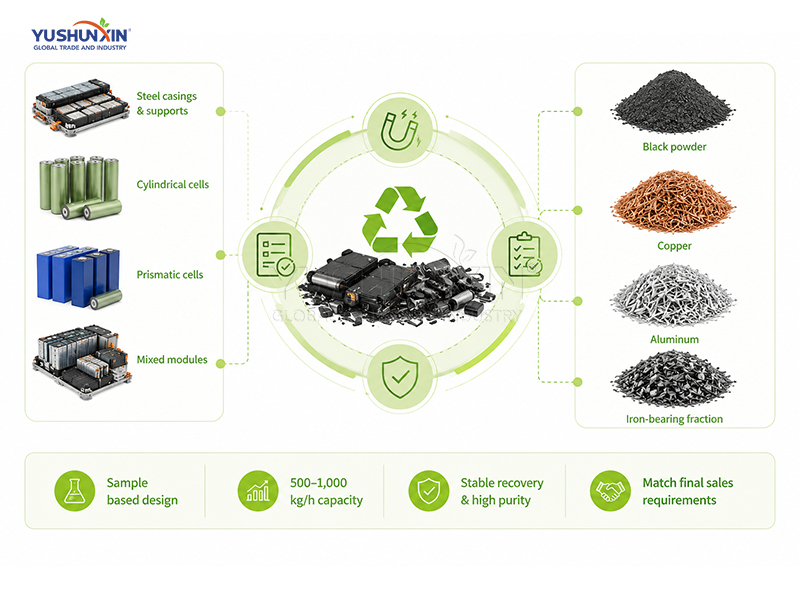
Ferrous materials offer limited value, yet they can reduce every recovered product’s purity. Therefore, the line should remove iron before final product collection. A controlled magnetic stage also reduces equipment wear and stabilizes continuous production.
Match Magnetic Stage
To Actual Battery Feed
Magnetic Stage should match Actual Battery Feed and ferrous content. Representative samples help define separator capacity and magnetic strength for stable recovery.
Position Magnetic Separation
After Material Liberation
Magnetic Separation should follow crushing and screening. Controlled particle size and material depth reduce valuable material carryover and improve ferrous removal.
Use Ferrous Stream
To Confirm Recovery
Ferrous Stream helps verify iron recovery and material balance. Testing iron, copper, aluminum and black mass carryover confirms separation performance and product quality.
Define Supply Boundary
For Residual Materials
Supply Boundary should define plastics, separators, electrolyte residues, dust and tailings. Clear treatment stages protect black mass, copper and aluminum quality.
A complete lithium battery recycling line should recover black mass, copper, aluminum, and ferrous materials as controlled product streams. Black mass usually provides the main project value. Meanwhile, metal recovery improves total material utilization. Buyers should compare purity, recovery rate, product loss, continuous stability, and downstream sales requirements. Yushunxin can design complete solutions around battery type, capacity, and target products. Our configurations can include discharge, crushing, screening, airflow separation, magnetic separation, and powder collection.
”
From Your Needs
to Real Impact


