



















As more utility-scale solar farms approach retirement, module disposal is becoming an investment issue. Investors now need a planned route for dismantling, recycling, compliance and value recovery. Therefore, retired PV modules should enter an industrial recycling system, not a simple waste stream. With the right equipment configuration, projects can recover glass, aluminum, silicon, copper and silver while reducing disposal risk. This planning also helps IPPs, EPC companies and asset owners control cost before large-scale decommissioning begins.
What Do You Check Before Building A Module Disposal Plan?
01 · Check
Before equipment selection, investors should audit module type, retirement scale and site condition. Therefore, this step helps match the recycling route, capacity and pre-treatment system.
Module Type Defines Recycling Route
Single-glass, double-glass, and mixed modules require different recycling methods. Classification before processing helps select the right route, from glass separation to crushing and pyrolysis.
Retirement Scale Defines Capacity
Solar farm retirement volume determines daily processing capacity. Annual supply, storage, transport, and working shifts should be considered to avoid over-sized or insufficient equipment.
Module Condition Affects Pretreatment
Frame condition, glass damage, moisture, and contamination influence front-end design. Clean panels need simple separation, while damaged modules require stronger crushing and dust control.
What PV Module Disposal Path Protects Investor Value?
02 · Value
Utility-scale solar farms need a disposal route that matches asset value, approval pressure and recycling depth. Therefore, investors should not treat retired modules as ordinary waste. A practical plan should compare landfill, manual dismantling and industrial recycling. Then, the project can select a route that controls risk and recovers glass, aluminum, silicon, copper and silver.
Landfill Route Creates Investor Exposure
Landfill may look simple at the early stage. However, it can create long-term compliance pressure for renewable energy investors. It also weakens ESG performance during asset exit. Moreover, large IPPs and funds must protect brand credibility. Therefore, landfill does not fit high-value solar farm retirement projects.
Manual Dismantling Covers Only Front-End Value
Manual dismantling can remove aluminum frames and junction boxes. Therefore, it helps recover aluminum and part of copper first. However, this route cannot release glass, silicon wafers and silver value. It also leaves laminated modules without deep separation. So, investors still need mechanical separation or pyrolysis delamination equipment.
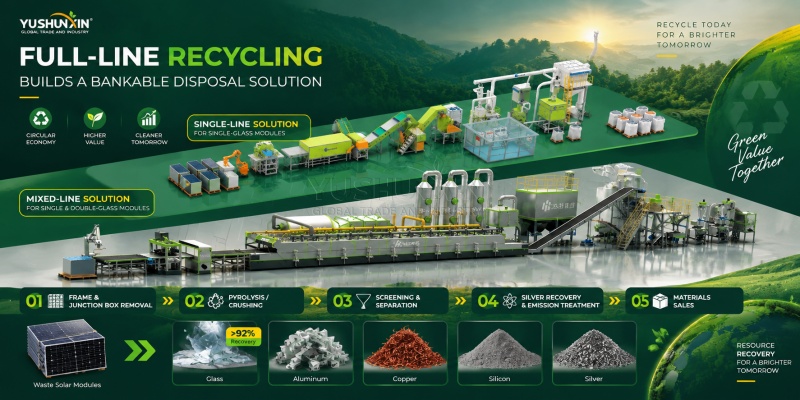
Full-Line Recycling Builds A Bankable Disposal Solution
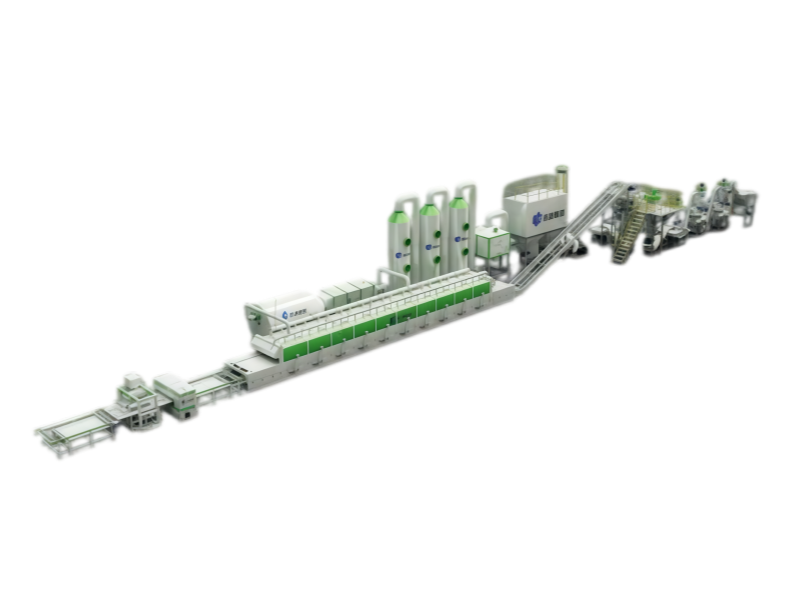
Industrial recycling provides a complete PV disposal path from dismantling to material recovery. The process removes frames and junction boxes, then uses crushing or pyrolysis with screening and separation to recover glass, silicon, copper, and silver-rich materials. Single-glass modules focus on high-value glass recovery, while mixed single and double-glass modules require flexible pyrolysis routes for better material separation and future refining.
Get your Solution!How Can You Match Module Types With A Practical Recycling Line?
03 · TypesModule structure should guide recycling configuration. Therefore, investors should not select one line for every retired solar farm. Single-glass modules need mechanical glass removal and powder separation. However, mixed single-glass and double-glass modules need pyrolysis and screening. Moreover, silver extraction can work as a back-end value module when material volume supports deep recovery.
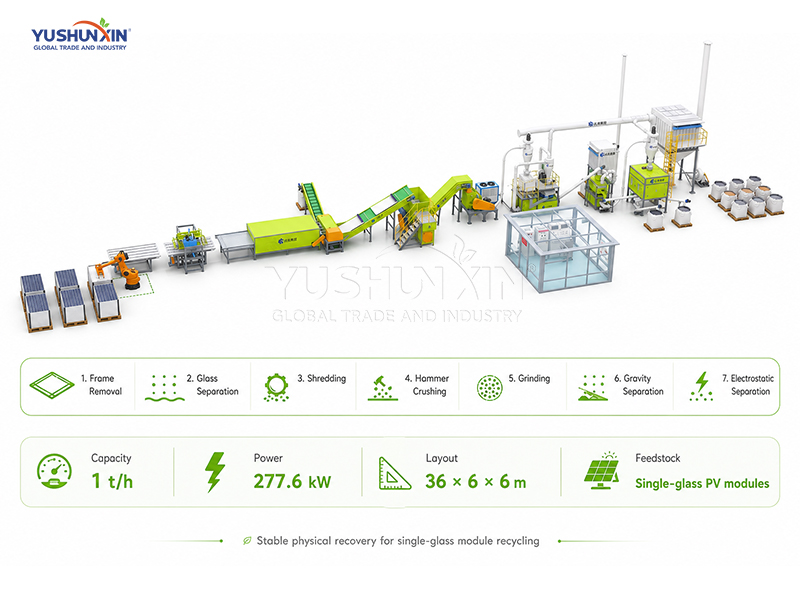
YSX-1000 Mechanical Line Fits
Single-Glass Module Recovery
For single-glass PV modules, YSX-1000 offers a mechanical recovery route. The line reaches 1 t/h, with 277.6 kW total power and 36×6×6 m land requirement. First, the aluminum frame removal machine removes the frame. Then, the glass removal machine separates glass from single-glass modules. Next, the shredder crushes panels into 3–4 cm pieces. After that, the hammer crusher reduces material to 6–8 mm. Then, the grinding mill prepares 10–80 mesh powder. Finally, gravity separation recovers copper from silicon and plastic powder. Meanwhile, electrostatic separation separates silicon powder from plastic powder. This solution suits solar farms with mainly single-glass modules. It also supports you who value glass recovery and stable physical separation.
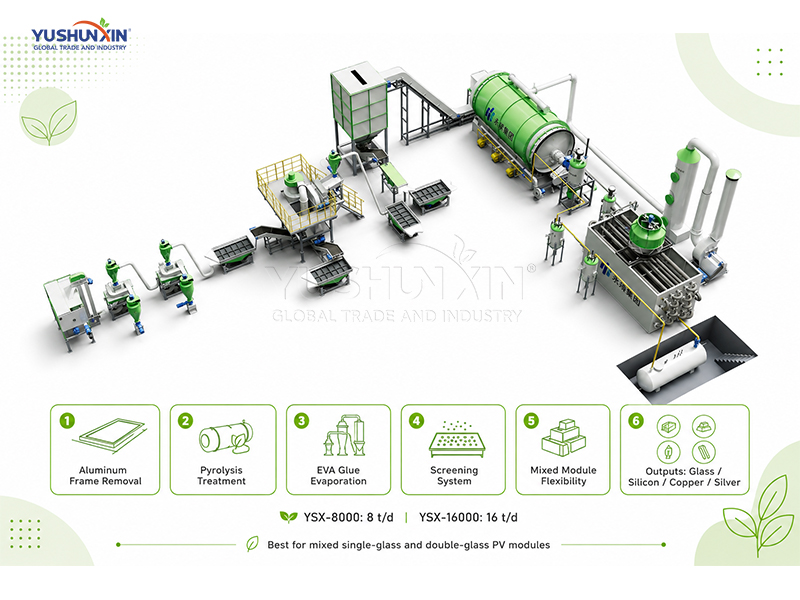
YSX-8000 And YSX-16000 Support
Mixed Module Disposal
For mixed single-glass and double-glass modules, Yushunxin can use pyrolysis treatment. The YSX-8000 handles 8 t/d, while YSX-16000 handles 16 t/d. First, the dismantling machine removes aluminum frames. Then, panels enter the pyrolysis reactor after basic preparation. During heating, EVA glue evaporates and loses adhesion. Afterwards, glass, silicon, copper and silver enter the screening system. Therefore, the line can process mixed module streams more flexibly. This configuration suits utility-scale projects with uncertain module structures. It also helps recycling plants handle future double-glass retirement volume.
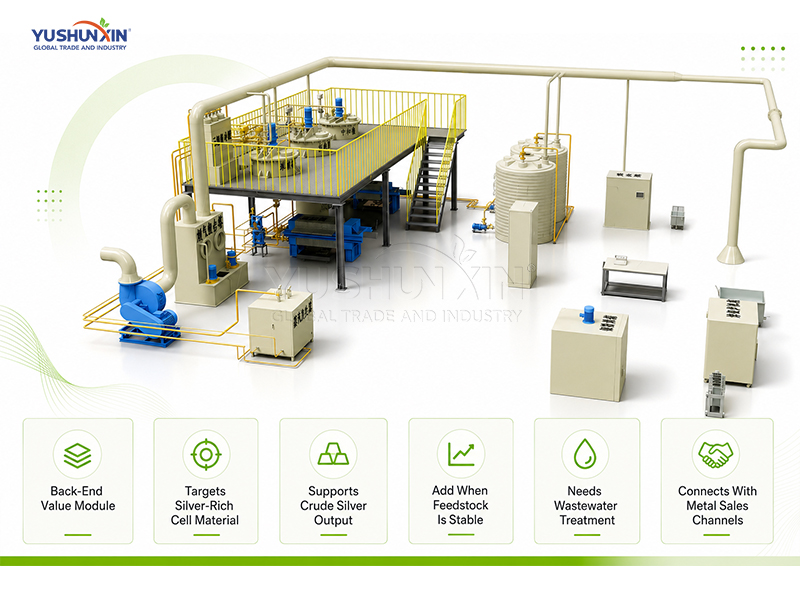
Silver Extraction Can Work As
A Back-End Value Module
Silver should not become the only ROI logic. However, it can improve deep recovery value. In crystalline silicon modules, silver mainly concentrates in cell electrodes. Moreover, silver recovery can reach high levels under mature wet-process routes. For larger projects, investors can add silver extraction after front-end separation. The process can separate silver-rich cell material, produce crude silver, and support further refining. Therefore, silver extraction works better as an optional value module. It should connect with stable feedstock volume, wastewater treatment and metal sales channels.
What Approval Package Helps You Launch A Solar Farm Disposal Project?
04 · Approval Package
Solar farm disposal projects need technical, environmental and financial approval. Therefore, you should prepare certificates, emission systems and layout drawings before procurement. A complete approval package helps EPC teams check risks earlier. Meanwhile, it also helps owners control permitting delays.
Certification Documents Build Procurement Confidence
You should request CE documents, machinery safety files and electrical control documents. Yushunxin CE files cover 2006/42/EC Machinery Directive and 2014/30/EU EMC Directive. They also reference EN ISO 12100:2010 and EN 60204-1:2018. Moreover, the technical file should include equipment models, control cabinet design and safety protection points. For solar panel recycling, this supports supplier review, EPC evaluation and investor due diligence.
Emission Systems Support Environmental Approval
A disposal line should show a clear emission treatment route. Therefore, the solution should include pulse dust collection, gas purification and spray tower treatment. For pyrolysis sections, the system should use micro-negative pressure control. Then, workshop ventilation can reduce odor and gas accumulation. In addition, activated carbon adsorption can support final exhaust polishing. For silver extraction, Yushunxin lists a 5000 m³/h fan and 1800 Pa pressure. The package also includes a Ø600×2000 activated carbon adsorption column.
Plant Layout Makes EPC Planning Practical
Investors should plan the site by process zones. The layout should include storage, frame removal, pyrolysis, sorting, silver extraction and finished product areas. Meanwhile, logistics channels should separate incoming modules and recovered materials. This reduces forklift crossing and improves site safety. For reference, YSX-1000 needs about 36×6×6 m. YSX-8000 needs about 50×30×8 m. YSX-16000 needs about 60×30×8 m. Therefore, the investor should prepare civil works, power supply, water, ventilation and fire protection early. This makes the solar farm module disposal project easier to approve and execute.
How Can A Recovery Plan Strengthen Solar Farm Disposal Returns?
05 · Recovery Plan
A retired solar farm disposal plan should not only calculate treatment fees. Instead, it should build a recovery model around material output, resale channels and operating cost. Therefore, investors need a solution that connects dismantling, separation, thermal treatment and downstream sales.
BULK MATERIALS
Stable Bulk Materials Build The First Revenue Layer
Glass and aluminum create the base return for most PV recycling projects. In standard crystalline modules, glass accounts for about 70%. Meanwhile, aluminum frames usually account for 10%–15% of total module weight. Therefore, the recycling line should protect bulk material quality first. A frame removal machine can recover aluminum frames early. Then, glass removal or thermal delamination can improve glass separation. For high-value projects, stable output matters more than single-batch profit. If the line can supply clean glass and aluminum continuously, investors can negotiate better resale channels.
SILVER
Silicon, Copper And Silver Add The Upside Layer
Silicon, copper and silver improve the project upside. However, investors should not only calculate silver value. A bankable project needs combined material recovery. For one ton of retired modules, copper may reach 8–12kg. Meanwhile, aluminum may reach 100–150kg. Silver content may reach 500–1000g per ton. Therefore, the solution should separate silicon powder, copper ribbon and silver-bearing cell material. Gravity separation, electrostatic separation and silver extraction can work together. As a result, the project gains more value from the whole material chain.
COST
Operating Cost Decides The Real ROI
Material recovery improves revenue, but operating cost decides real ROI. Therefore, investors should review power, fuel, labor and maintenance together. For example, YSX-1000 single-glass mechanical line has 1t/h capacity and 277.6kW total power. Its process includes frame removal, glass removal, crushing, grinding, gravity separation and electrostatic separation. For pyrolysis, you should also calculate external fuel, dust filters and tail gas treatment. In addition, spare parts, operators and scheduled maintenance affect long-term cost. So, the better solution is not only a high recovery-rate line. It should deliver stable running, predictable O&M cost and sellable recovered products.
How Do You Build A Budget Plan Before PV Recycling Procurement?
06 · Budget PlanA retired solar farm recycling project needs a budget model before equipment selection. Therefore, investors should not compare machine prices only. A practical budget plan should cover capacity, equipment scope, civil work, energy use, installation and recovered material value. This helps asset owners judge whether the project fits their disposal schedule and investment target.
Capacity Choice Shapes The First Budget Level
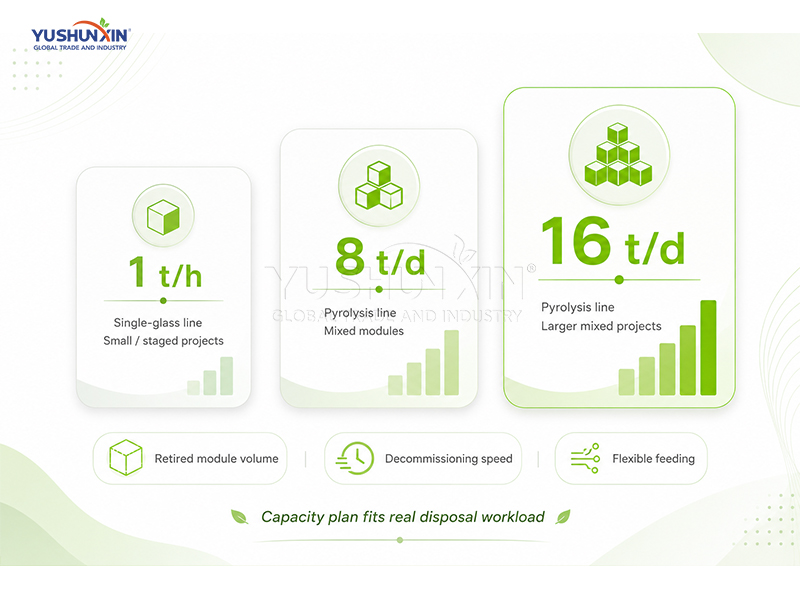
The budget should start from retired module volume. For small or staged projects, you can consider a 1t/h single-glass recycling line. For larger mixed-module projects, you can compare 8t/d or 16t/d pyrolysis recycling lines. Meanwhile, capacity should match the decommissioning speed. A solar farm with concentrated retirement needs faster processing. However, scattered projects may need modular equipment and flexible feeding. Therefore, Yushunxin can help investors compare different capacity plans. This makes the budget closer to the real disposal workload.
Equipment Scope Decides The Main Investment
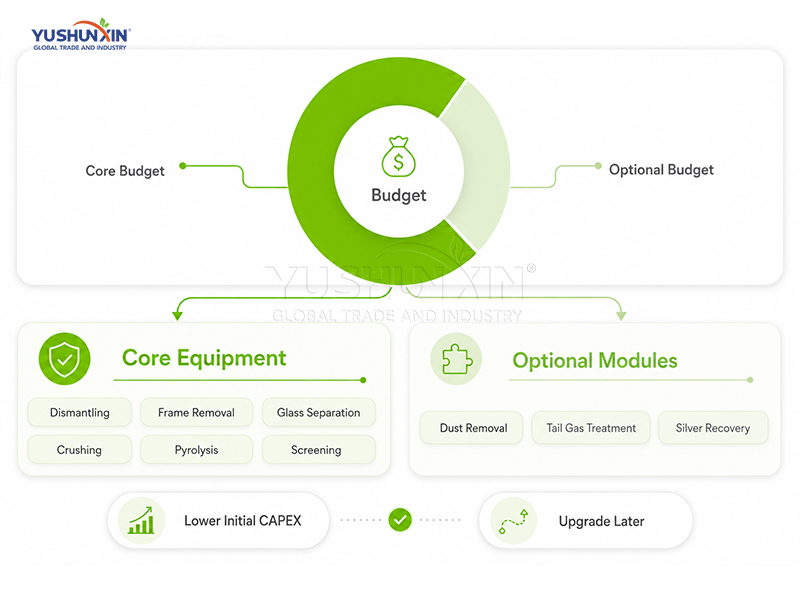
The equipment budget should include more than the main PV recycling machine. A complete solution may include dismantling, frame removal, glass separation, crushing, pyrolysis, screening, dust removal and tail gas treatment. Moreover, some projects need a silver recovery section. This can increase deep recovery value, but it also increases investment and operation requirements. Therefore, investors should divide the budget into core equipment and optional modules. This helps them control early investment and plan future upgrades.
Operating Cost Controls Long-Term Profit
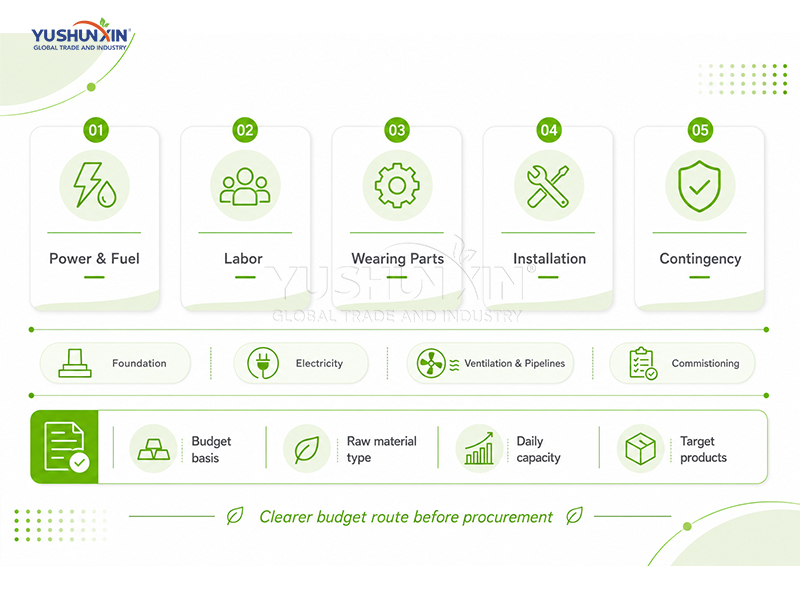
OPEX often decides the real project return. You should calculate power consumption, fuel use, labor, wearing parts and environmental consumables. Meanwhile, installation cost also matters. The budget should include foundation, electricity, ventilation, pipelines, storage areas and commissioning support. In addition, you need reserve a contingency budget. This helps cover local compliance, transportation, spare parts and site adjustments. Therefore, Yushunxin can provide a project budget plan based on raw material type, daily capacity and target products. This helps investors build a clearer financial route before procurement.
Summary
Retired solar farm module disposal should become a planned part of renewable energy asset management. Investors need to confirm module types, recycling routes, equipment capacity, compliance needs and material recovery value before procurement. Therefore, Yushunxin can provide a complete retired PV module recycling solution based on your project scale. Our solution can cover dismantling, mechanical recycling, pyrolysis delamination, material separation, silver extraction, emission treatment and plant layout planning. Moreover, we can help you prepare equipment configuration, budget logic and technical documents. This helps your team move from disposal planning to project execution with clearer cost control.
From Your Needs
to Real Impact


