








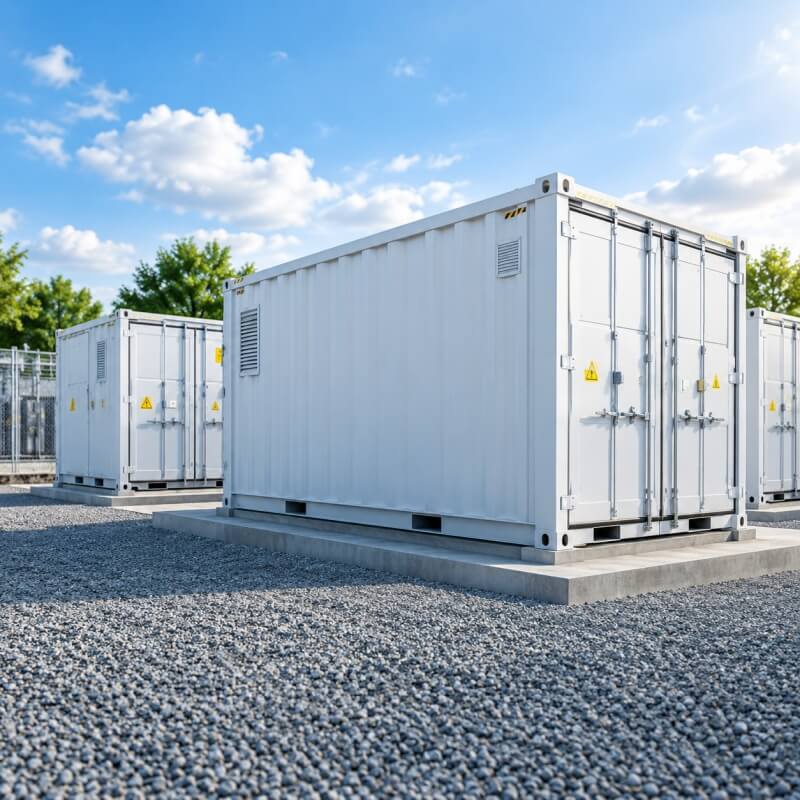





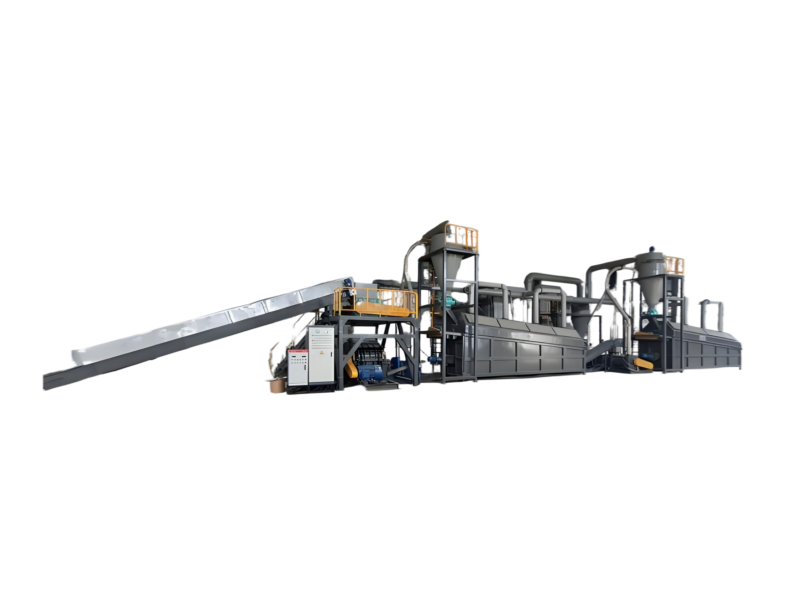


With rapid ESS deployment, more battery cabinets and modules are entering the recycling stage.For battery plants, energy storage operators and recycling investors, the value lies in safe recovery, not simple crushing. A practical ESS battery recycling line should control discharge risk, material routing and black mass quality. It also needs sealed emission control and traceable operation. Yushunxin helps industrial customers plan a scalable recycling solution before equipment investment.
How Can Battery Mapping Decide the ESS Recycling Line?
01 · Battery Mapping
ESS recycling projects should begin with battery mapping. This step helps Yushunxin define safety level, process route and recovery target. It also helps buyers avoid oversized or mismatched line configuration.
Stable Battery Supply Defines Project Scale
ESS recycling projects need stable battery sources from stations, factories, or operators. Supply volume, pack size, and delivery rhythm affect capacity selection and process flexibility.
Battery Chemistry Determines Recovery Strategy
LFP, NMC, and NCA batteries have different recovery values and process needs. The solution should match battery chemistry, downstream markets, and recovery targets.
Battery Condition Affects Front-End Design
Battery status influences discharge, storage, dismantling, and safety systems. Stable batteries need standard processing, while damaged batteries require stricter protection and monitoring.
How Should ESS Batteries Pass Pre-Crushing Safety Control?
02 · Safety ControlESS batteries should not enter the crusher directly. A safer solution starts with receiving, quarantine, inspection, discharge, pack opening and controlled feeding. This route helps industrial battery recycling buyers reduce short-circuit risk. It also supports stable operation before black mass recovery.
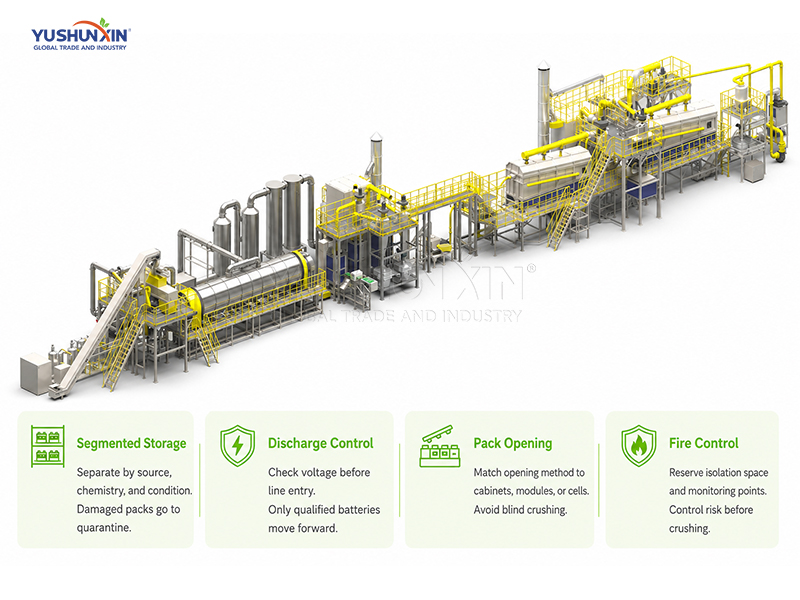
Segmented Storage Creates
the First Safety Layer
Used ESS batteries first need a separated receiving area. The plant can divide batteries by source, chemistry and visible condition. For example, damaged packs should stay away from normal packs. Leaking, swollen or burned batteries need an isolated quarantine zone. Then, operators check voltage, shell damage and connection status. This step helps the line avoid unsafe mixed feeding.
Pack Opening Should
Match Battery Structure
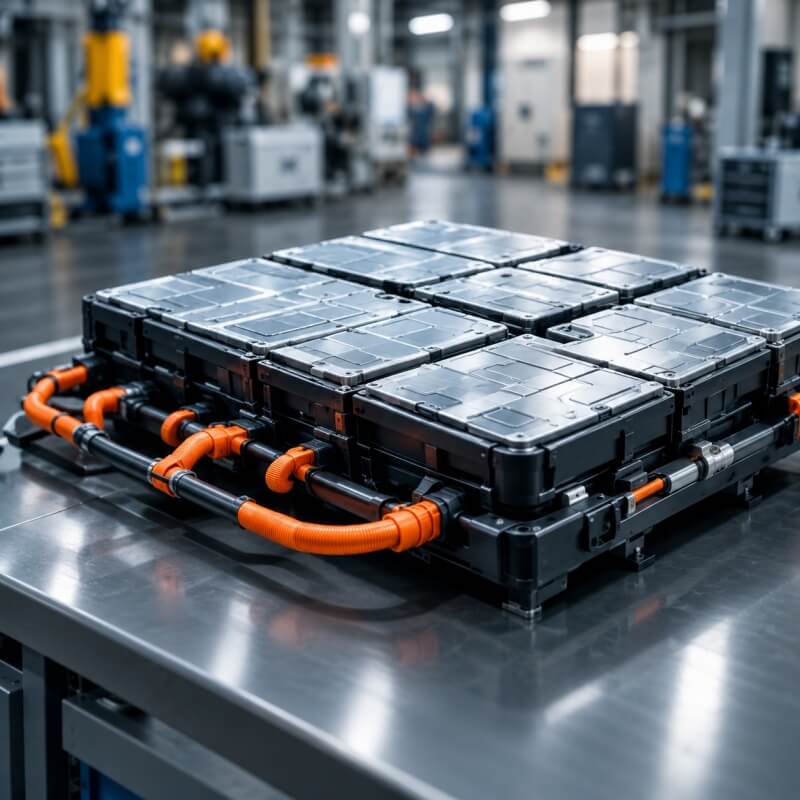
ESS batteries may arrive as cabinets, boxes, modules or cells. So the recycling line needs different opening routes. Cabinet-type batteries may need manual-assisted removal first. Module-type batteries can use semi-automatic dismantling. Cell-level materials can enter the later crushing section. This solution avoids blind crushing. It also reduces metal shell, BMS and cable interference.
Discharge Control Works
As a Line-Entry Gate
Discharge should work as a production entry rule. It should not work as a separate small machine only. Before dismantling, each battery batch needs voltage checking and discharge confirmation. The project can set a safe voltage threshold based on local rules. Then, qualified batteries move to pack opening. Unqualified batteries return to quarantine or secondary treatment. This design helps reduce electrical risk before crushing.
Fire Control Should Stay
Inside the Process Plan
Fire control should follow the whole material flow. Yushunxin can reserve isolation space, negative-pressure areas and monitoring points. Temperature monitoring helps detect abnormal heating early. Dust control also helps reduce secondary risk. For high-standard ESS recycling projects, thermal runaway prevention matters from layout design. Therefore, safety planning should start before equipment quotation.
How Can Route Planning Handle Mixed ESS Battery Inputs?
03 · Planning
Many ESS recycling plants receive cabinets, modules and cells together. So the line should not use one fixed route. Yushunxin can separate the input by structure, chemistry and recovery target. This route planning helps reduce crushing load. It also improves black mass purity and daily operating stability.
Pack and module streams need front-end separation
Some ESS batteries should enter a dismantling route first. Operators can remove metal cases, cables, busbars and BMS parts. Then, cleaner modules move to the next process. This step reduces metal interference before crushing. It also protects downstream separators from unnecessary wear. For industrial projects, this route suits battery cabinets and large modules. It helps customers recover steel, aluminum and copper earlier. Therefore, the main recycling line can focus on active materials.
Chemistry-based routing protects project value
LFP and NMC batteries need different business logic. LFP projects usually depend more on stable volume. NMC projects often focus more on black mass value. So Yushunxin should plan routes by chemistry and target product. Mixed chemistry does not mean mixed operation. The plant can set batch rules for different battery streams. This helps buyers control impurity levels and downstream acceptance. As a result, route planning becomes more valuable than a simple machine list.
Cell streams move to controlled material recovery
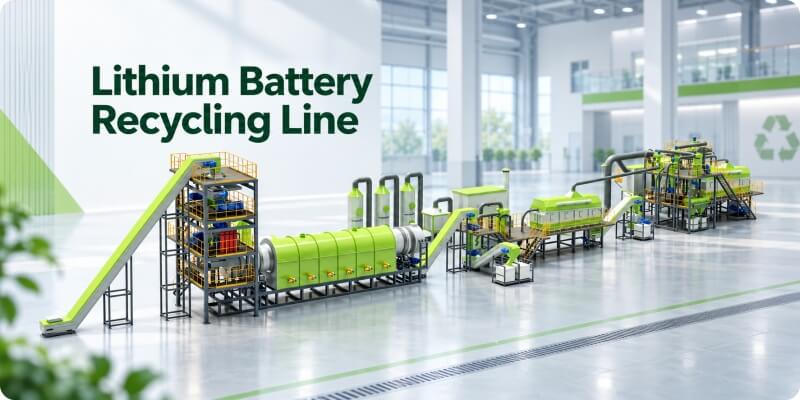
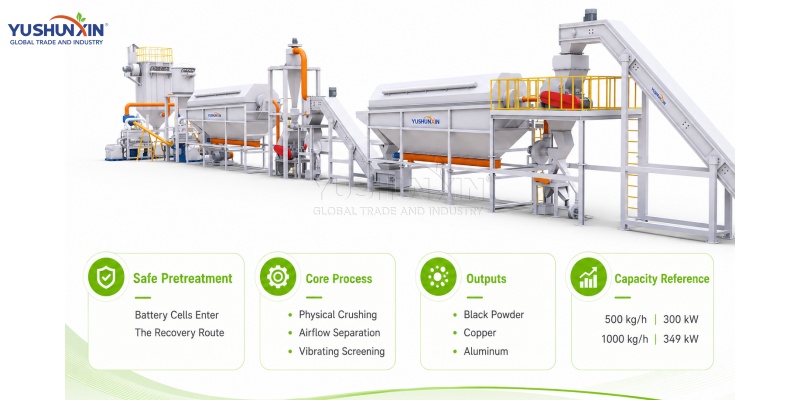
After safe pretreatment, battery cells can enter the recovery route. Yushunxin uses physical crushing with airflow separation and vibrating screening. This process separates electrode powder from valuable metals. The final outputs include black powder, copper and aluminum materials. For capacity planning, buyers can compare 500kg/h and 1000kg/h lines. The 500kg/h line uses about 300kW power. The 1000kg/h line uses about 349kW power. So customers can match capacity with battery supply and plant space.
Get your Solution!How Can an ESS Recycling Line Produce Buyer-Ready Black Mass?
04 · Blass MassFor ESS battery recycling projects, black mass is not only a recovered powder. It is the key product that decides downstream acceptance. So the line should reduce impurities before crushing. It should also control copper, aluminum, iron and moisture. For a 1000kg/h recycling line, even small impurity changes can affect daily settlement value.
Precise separation improves downstream pricing
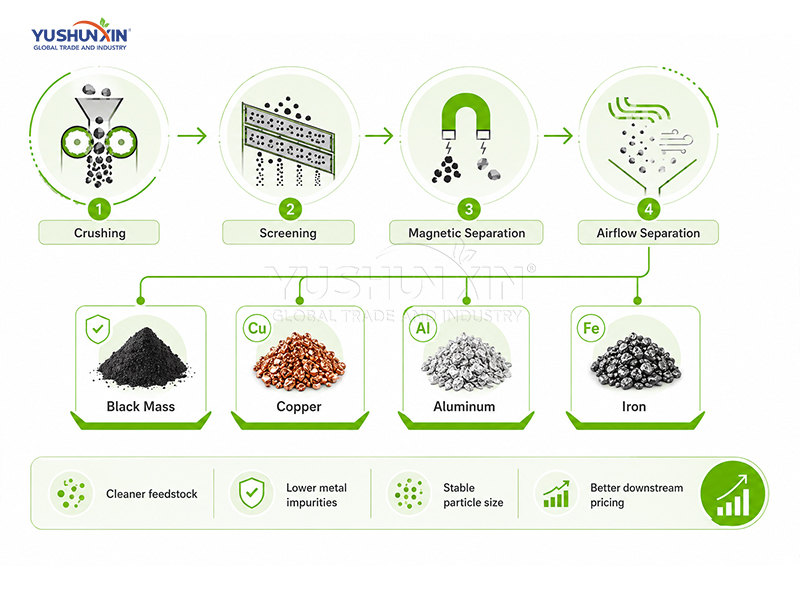
Downstream buyers do not only check black mass weight. They also check copper content, aluminum content, iron impurities and particle size. Therefore, high-quality black mass recovery needs accurate separation. A good solution should combine crushing, screening, magnetic separation and airflow separation. These steps help separate copper, aluminum, iron and active powder. As a result, smelters, hydrometallurgy plants and material recyclers get cleaner feedstock. Cleaner feedstock usually supports better negotiation with black mass buyers.
Early contaminant removal protects black mass purity
ESS battery packs contain plastic shells, iron parts, aluminum cases, copper bars and wires. These materials should leave the process as early as possible. Otherwise, they enter the powder stream and reduce black mass quality. Yushunxin can design front-end sorting around the battery structure. For example, cabinets, modules and cells can follow different feeding routes. Then the crushing section handles cleaner material. This helps the line produce more stable black mass.
Buyer standards should guide the line configuration
The best ESS battery recycling solution should start from the final buyer. If the customer already has a black mass buyer, Yushunxin can study their acceptance standard. Then the line can match the required powder size, impurity level and collection method. This approach reduces trial costs after installation. It also helps customers build a clearer sales route before investment. So the project becomes a black mass recovery solution, not only a battery crushing line.
How Can an ESS Recycling Plant Keep Gas, Dust and Powder Under Control?
05 · Environment
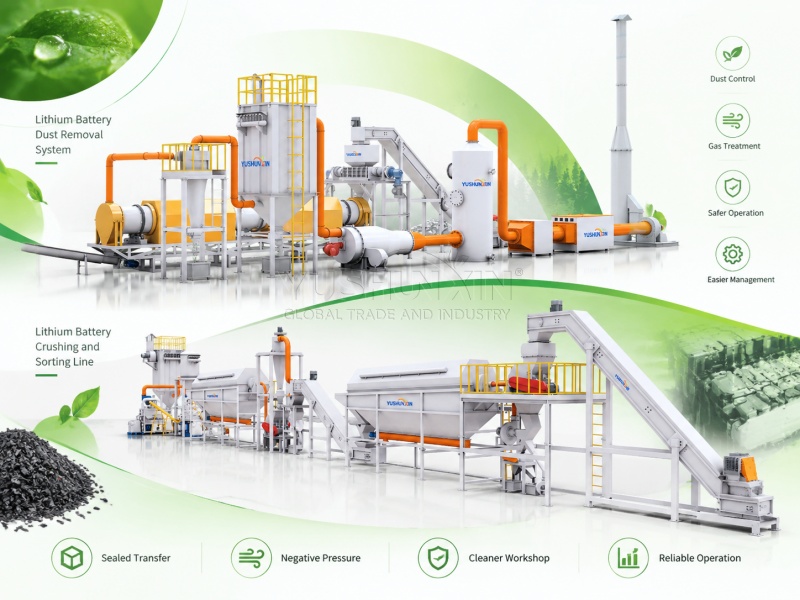
ESS battery recycling creates dust, electrolyte gas and fine black mass powder. So the solution must control air movement, not only material separation. For a 500–1000kg/h line, sealed transfer and negative pressure become important. They help the plant reduce leakage, protect workers and support local approval.
Sealed Transfer Controls Dust
Crushing, conveying, screening and powder collection should use closed structures. This reduces dust escape at each transfer point. It also keeps black mass collection more stable. Yushunxin can design a sealed battery recycling line around the main dust points. The system can connect crushers, conveyors, vibrating screens and powder collectors. As a result, operators reduce direct contact with fine powder. Meanwhile, the workshop stays cleaner during daily operation.
Negative Pressure Improves Safety
Monitoring Ensures Stable Operation
How Can Data-Controlled Operation Improve ESS Battery Recycling Projects?
06 · Operation
Large ESS battery recycling projects need more than stable capacity. They also need clear data from battery intake to final material output. For industrial buyers, this data helps control safety, revenue and compliance. So Yushunxin designs the solution around tracking, mass balance and long-term operation support.
RECORD
Build A Batch Record Before Processing
Each ESS battery batch should enter the plant with clear records. The operator can record source, weight, model, chemistry and battery condition. For example, one batch may include LFP modules from an energy storage station. Another batch may include NMC modules from a battery take-back program. This step helps the recycling plant separate risky materials early. It also helps battery manufacturers and ESS operators trace recycling results. For a battery take-back recycling solution, this record becomes project evidence. It supports customer reports, internal audits and downstream material sales.
TO CHECK MATERIAL
RECOVERY
Use Mass Balance To Check Material Recovery
Mass balance connects input weight with final product output. For example, a 1000kg/h ESS battery recycling line can process 8 tons per 8-hour shift. After processing, the plant should compare black mass, copper, aluminum and steel output. It should also record dust, plastic residue and process loss. This method gives buyers a clearer profit picture. It also helps the plant find material loss points. If black mass output changes sharply, operators can check sorting and crushing settings. If copper or aluminum content rises in black mass, separation needs adjustment. So the project should not only claim high recovery. It should use data to prove recovery performance.
SERVICE
SUPPORT
Plan Service Support For The Full Project Cycle
A mechanical PV recycling line needs regular service. Key parts include cutters, screens, bearings, motors and separators. Operators should also adjust separation parameters during production. Different panel conditions may affect material flow and sorting quality. For industrial buyers, spare parts supply and operator training matter. They reduce downtime and support stable long-term recovery.
Summary
A successful ESS battery recycling line should not only process used batteries. It should help buyers control safety, material flow and black mass quality. Meanwhile, sealed emission control and data-based operation improve long-term project stability. For industrial investors, Yushunxin can support process design, equipment configuration, installation guidance and commissioning. When you prepare to know more details about lithium battery recycling, please contact us.
From Your Needs
to Real Impact


