

















What determines whether black mass remains stable and saleable? The answer depends on feedstock control, effective electrode liberation, and accurate particle classification. A high-throughput line can still produce unstable chemistry or excessive copper and aluminum contamination. Therefore, industrial buyers should verify purity, particle distribution, recovery rate, and batch consistency before selecting the production line.
How Can Feedstock Routing Stabilize Black Mass Chemistry?
Stable black mass starts with controlled battery routing. LFP, NMC, and LCO batteries create different metal balances. Unplanned mixing changes nickel, cobalt, lithium, manganese, and graphite levels between batches. Therefore, the line should separate feedstock before production begins. This approach protects refining performance, contract quality, and saleable value.
Route Each Chemistry Through a Defined Production Campaign
Buyers should first define which chemistries the plant will process. LFP contains no nickel or cobalt, while NMC and LCO follow different metal routes. Mixed campaigns can therefore change downstream reagent demand and product valuation. Instead, the plant should process each chemistry during a defined production campaign. Transfer points should receive cleaning before the next campaign begins. Production scrap and end-of-life batteries should also remain separately recorded.
Can One Line Process Several Battery Chemistries?
Yes, one line can process several chemistries. However, each chemistry needs a separate production campaign. The plant should also clean shared transfer points between campaigns. This approach gives investors greater feedstock flexibility. Meanwhile, it prevents uncontrolled chemistry changes in the final black mass.
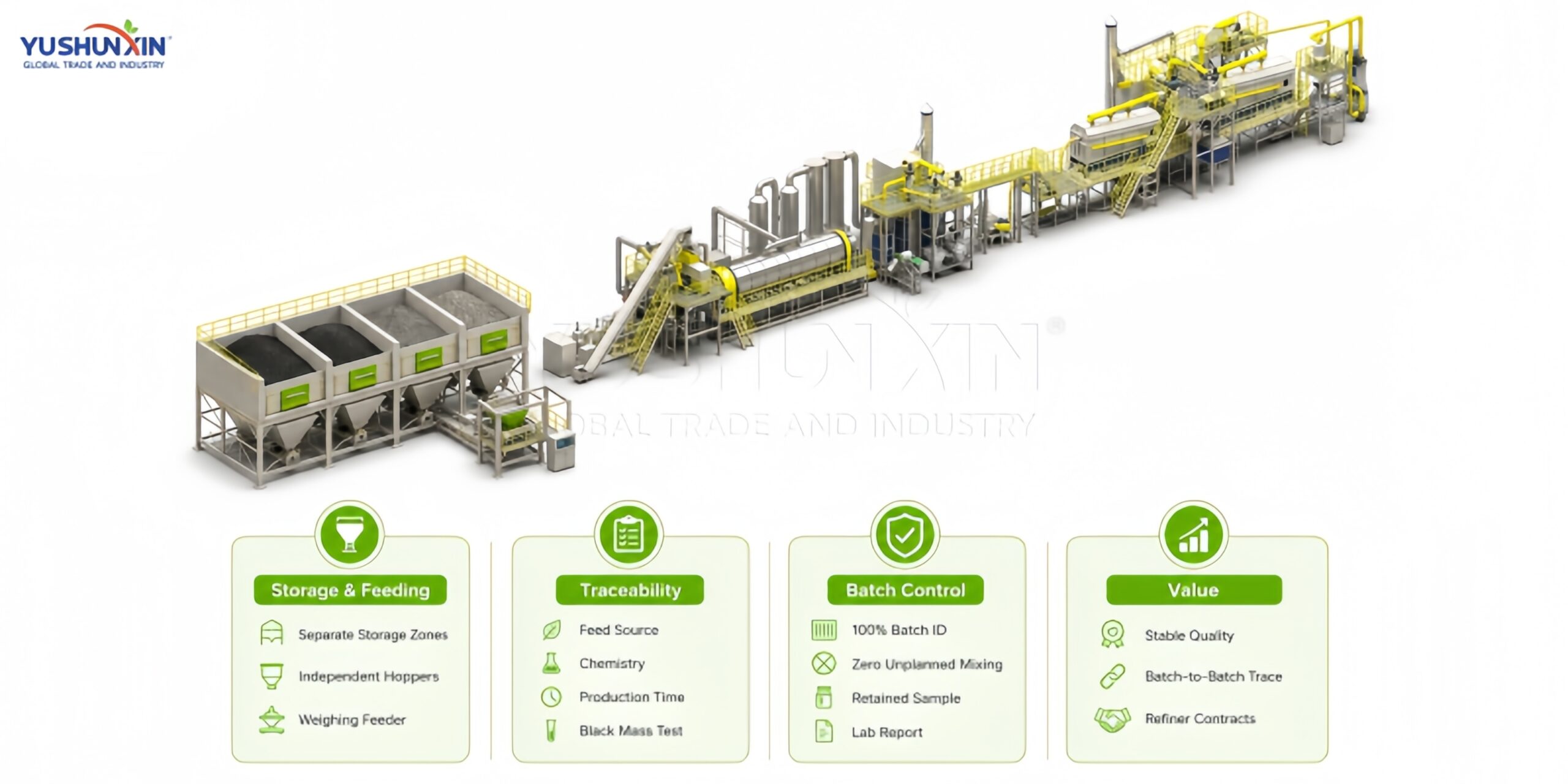
Batch Identification Ensures Quality Traceability
Storage zones and Independent hoppers prevent feed mixing. Weighing feeders and PLC records connect feed source, chemistry, production time and black mass results. 100% batch identification, retained samples and laboratory reports support stable refining contracts.
Get your Solution!How Can a Two-Stage Crushing Strategy Protect Black Mass Purity?
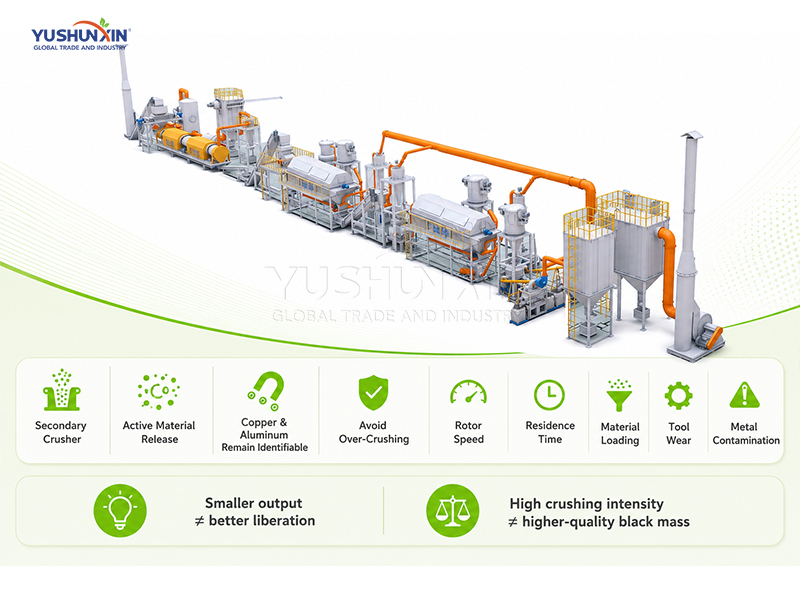
Black mass purity depends on releasing electrode coatings without overgrinding copper and aluminum foils. Excessive impact creates fine metal particles that enter the powder stream. Therefore, the crushing system should separate structural opening from final coating liberation. This approach improves metal recovery while limiting copper and aluminum contamination.
Apply Controlled Secondary Liberation
The second crusher should remove active material from metal foils. It should not grind every fraction into smaller particles. Enough copper and aluminum should remain identifiable for downstream recovery. A single high-speed crushing step often produces excessive fine metals. Likewise, longer residence time can increase foil fragmentation. Smaller output does not always mean better liberation. Therefore, higher crushing intensity does not automatically produce higher-quality black mass. Operators should adjust rotor speed, residence time, and material loading according to actual liberation results. Tool wear also changes particle distribution. Consequently, worn blades can increase metal contamination even when throughput remains stable.
Use Format-Specific Coarse Crushing
The first crusher should open casings and release electrode layers without creating unnecessary fines. However, one fixed speed cannot suit every battery structure. Rotor speed, blade clearance, and feeding rate should match shell strength and internal construction. Otherwise, excessive impact turns copper and aluminum into fine contaminants. A variable-speed drive gives operators more control over different feed conditions. Meanwhile, regulated feeding prevents sudden loads from increasing impact intensity. The system should also allow blade-clearance adjustment as battery structures change.
How Can a Closed-Loop Screening Solution Maintain Black Mass Specifications?
Screening controls which particles enter the final black mass stream. Therefore, screen openings must follow product specifications and representative particle data. Large openings increase copper, aluminum, and plastic contamination. However, very small openings restrict throughput and cause material buildup. A closed-loop screening solution balances purity, recovery, and continuous production.
Define Screen Openings From Product Grade
Screen Openings should match the required Product Grade. Proper openings balance black mass purity, recovery rate and production capacity through material testing.
Control Screening Performance Through Testing
Return Oversized Material Through Controlled Loop
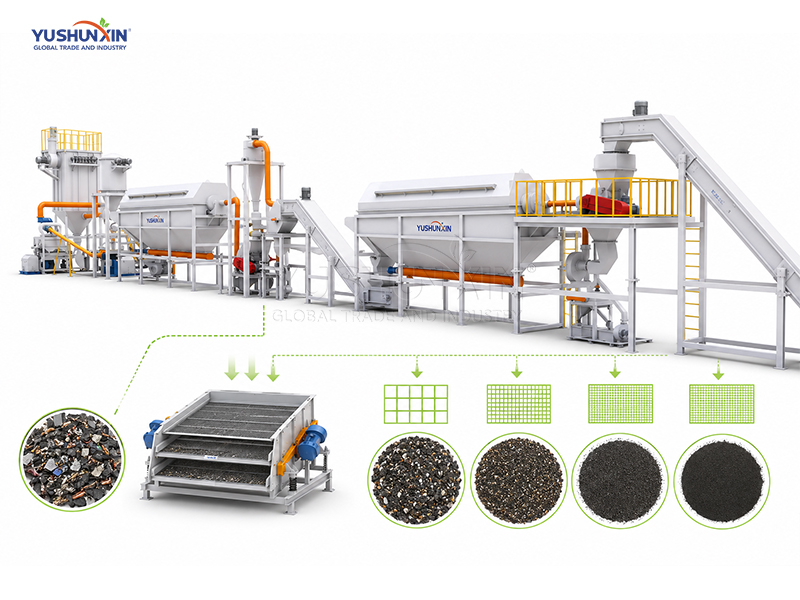
Stable black mass depends on consistent feedstock, controlled liberation, accurate screening, and verified continuous performance. Yushunxin can design a complete solution around your battery types, capacity, purity target, and downstream refining requirements. The solution can include discharge, metered feeding, staged crushing, negative-pressure collection, magnetic separation, and closed-circuit screening. If you want to further plan your solution, we can also provide you with black mass recovery for lithium battery recycling, lithium battery crushing and sorting line.
”
From Your Needs
to Real Impact


