





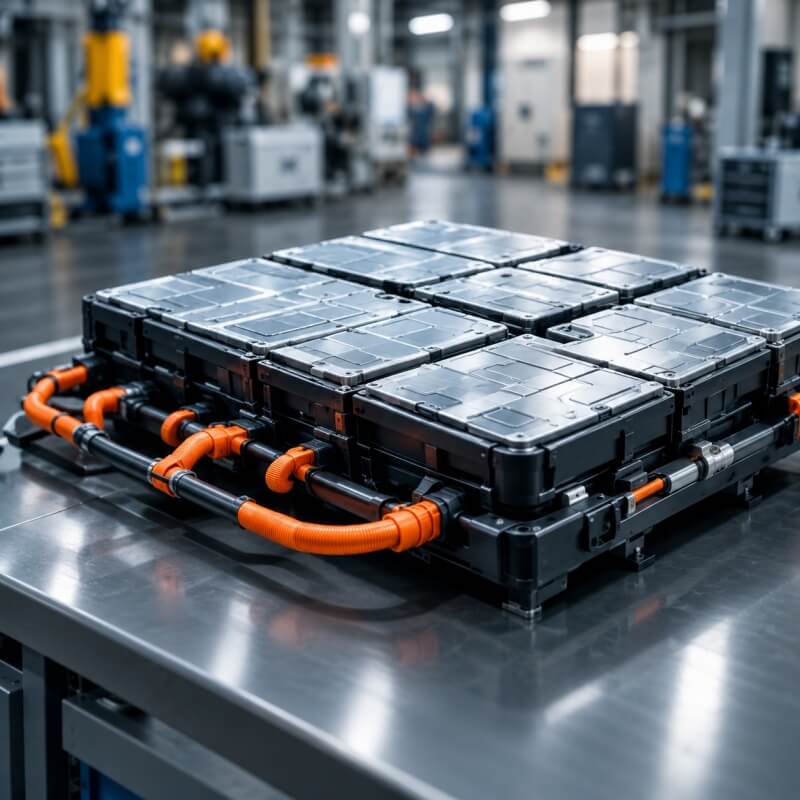

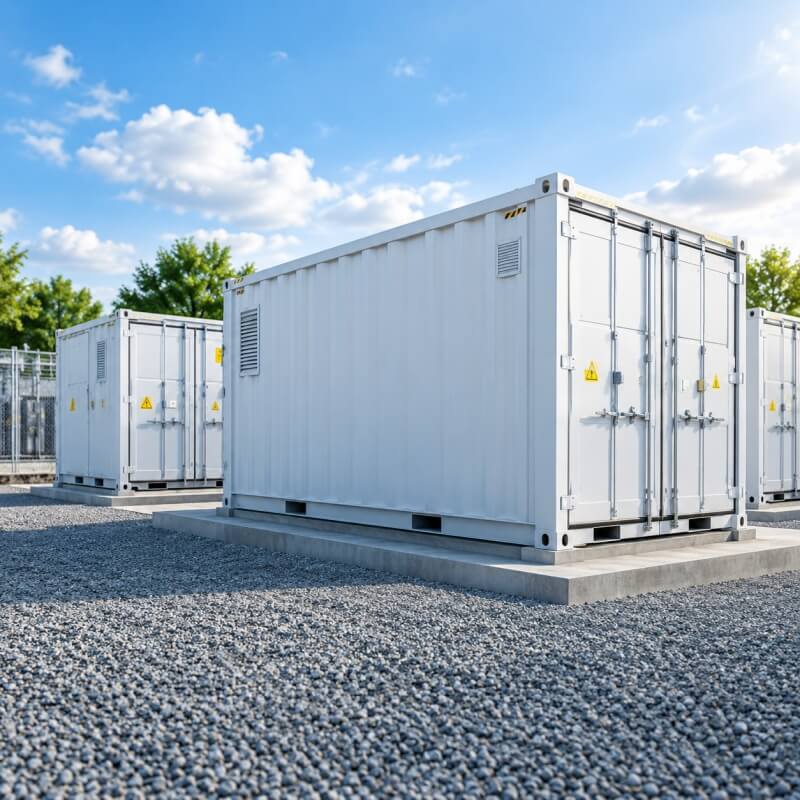





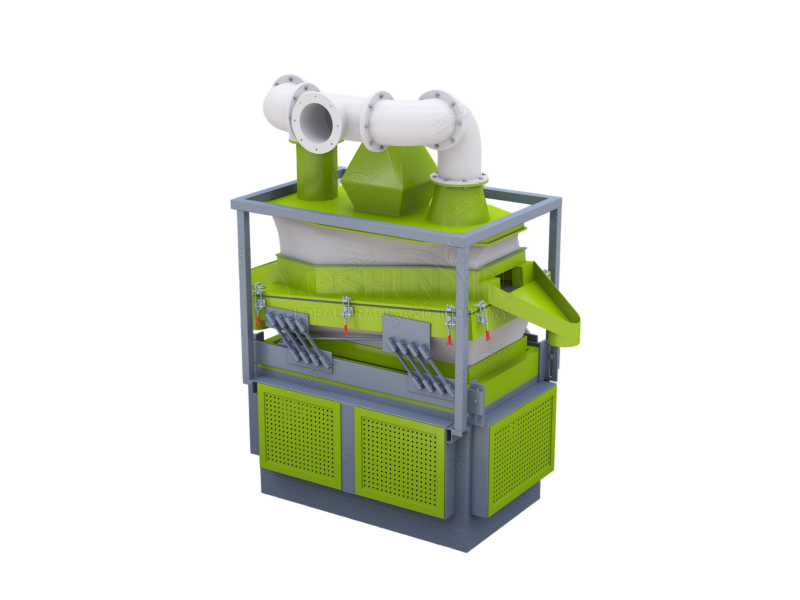


Yushunxin Gravity Separator is designed for continuous separation in solar panel and lithium battery recycling lines. It processes crushed and screened materials, separating heavier metals from silicon, plastics, films, and light powders. Adjustable airflow, vibration, and feeding speed maintain a stable separation bed. The machine handles prepared e-waste fractions at 3–5 t/h, depending on feed conditions. It can also connect with screening, magnetic, airflow, and electrostatic separation systems.
How Can Feed Preparation Stabilize Separation Results?
01 · PreparationStable output starts with controlled feed preparation. Particle size, moisture, fines, and feeding rate directly affect product purity. Therefore, Yushunxin designs each feeding route around the required products and capacity.
Prepare A Consistent Particle Range
Particle Range affects gravity separation performance. Crushing, screening and grinding should prepare suitable sizes before separation to avoid oversized particles and excessive fines.
Control Moisture, Dust And Feeding Rate
Moisture, Dust and Feeding Rate influence separation stability. Drying, enclosed conveying and regulated feeding help maintain a uniform material layer.
Match Separation With Final Products
Separation should follow product targets. Gravity separation, airflow and electrostatic separation work together to recover metals, silicon, plastics and black powder.
How to Configure the Separation Unit for Industrial E-Waste Lines?
02 · ConfigurationIndustrial projects need coordinated airflow, vibration, feeding, discharge, and dust control. These systems keep the material bed stable during continuous operation. Therefore, the separator delivers consistent products and reduces material recirculation.
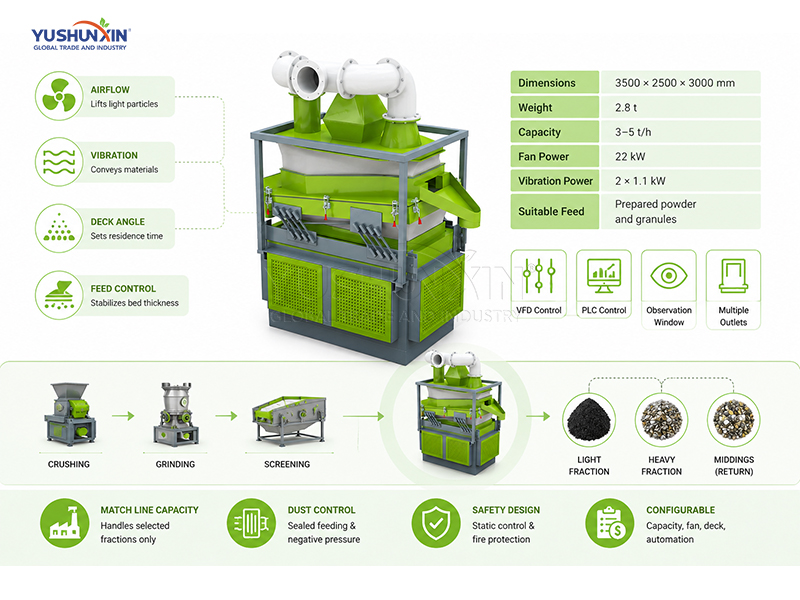
Airflow and Deck Motion Control Material Separation
Dust Control and Configuration Affect Project Value
Capacity Must Match the Complete Recycling Line
How Can Yushunxin Configure Gravity Separation for Two E-Waste Solutions?
03 · SolutionsGravity separation creates value only when each line feeds the machine correctly. Solar panel residue needs controlled grinding before density separation. However, lithium battery residue needs discharge, crushing, screening, and metal removal first. Therefore, Yushunxin configures each separator around feed composition, target products, and required purity.
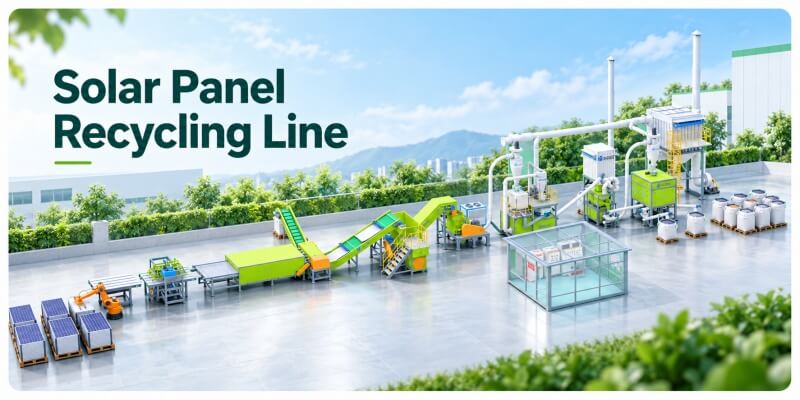
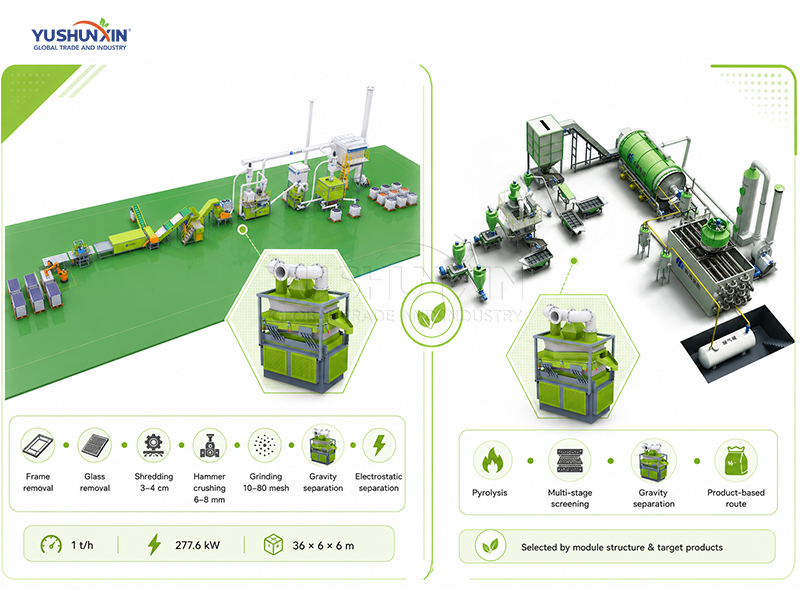
A Solar Panel Solution Places Density Separation After Fine Grinding
In a single-glass line, frame removal first recovers aluminum. Glass removal then preserves larger glass fractions before crushing. The shredder reduces the remaining laminate to 3–4 cm. Next, hammer crushing reduces it to 6–8 mm. Grinding then prepares a 10–80 mesh feed for stable separation. The gravity separator concentrates copper and other dense particles. Electrostatic separation then separates silicon powder from plastic powder. A standard mechanical line handles 1 t/h with 277.6 kW installed power. It requires about 36 × 6 × 6 metres. However, gravity separation is not mandatory for every photovoltaic project. Mixed single-glass and double-glass projects may use pyrolysis and multi-stage screening. Therefore, Yushunxin selects the route according to module structure and target products.
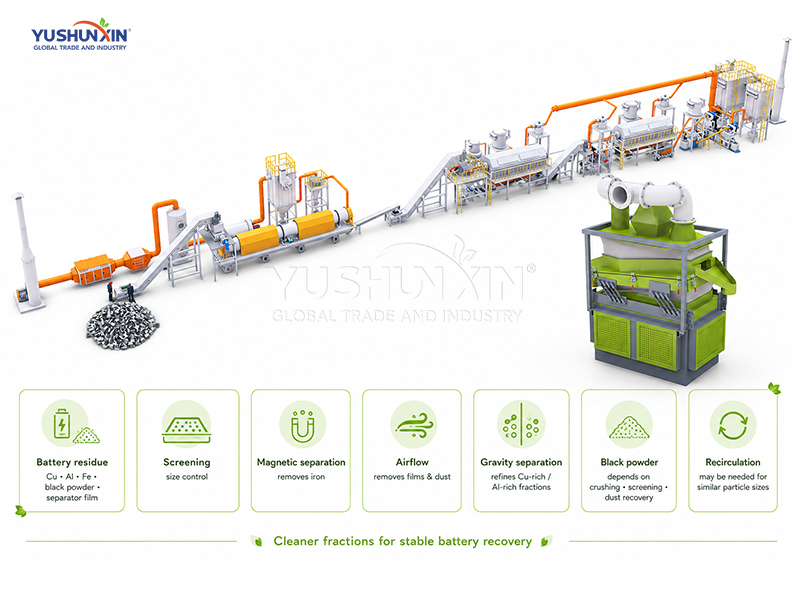
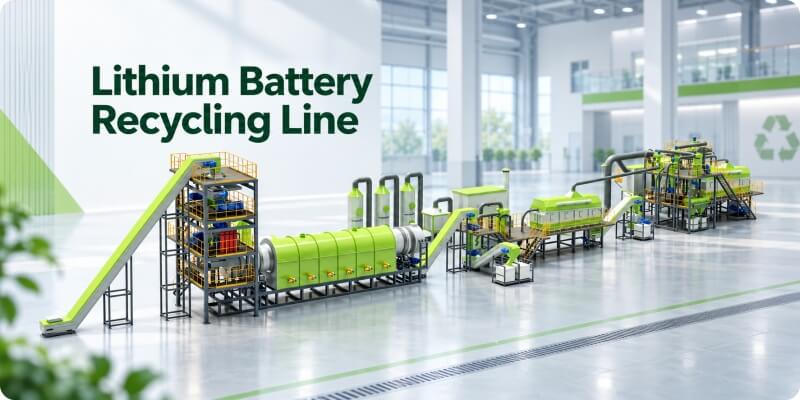
A Battery Solution Uses Density Separation as a Refining Stage
Battery residue contains copper, aluminum, iron, black powder, and light separator films. Therefore, screening first controls particle size. Magnetic separation then removes iron, while airflow equipment removes films and loose dust. Gravity separation can refine copper-rich and aluminum-rich fractions. It can also reduce coarse contaminants entering black powder collection. However, similar particle sizes may require recirculation or repeated separation. Black powder quality still depends on crushing, screening, and dust recovery. These capacities describe complete lithium battery recycling lines, not the gravity separator alone.
Yushunxin Configures the Complete Route Around Saleable Outputs
Yushunxin starts with sample testing and particle-size analysis. Then, engineers match crushing, grinding, screening, airflow, gravity, and electrostatic equipment. They also plan enclosed conveying, dust collection, controls, and workshop layout. Installation, commissioning, and operator training complete the delivery scope. Share your feedstock, hourly capacity, and target products. Our engineers will evaluate the suitable separation route and supporting equipment.
Summary
A gravity separator performs best when feed size, liberation, moisture, airflow, and vibration remain stable. Therefore, the machine must match the complete recycling route. Yushunxin can design full solar panel and lithium battery recycling solutions around your feedstock, capacity, and target products. Our scope includes shredding, grinding, screening, magnetic separation, airflow separation, gravity separation, and electrostatic separation. For further planning, we can provide you with single-glass solar panel recycling plant, lithium battery recycling line for black mass recovery.
From Your Needs
to Real Impact


