

















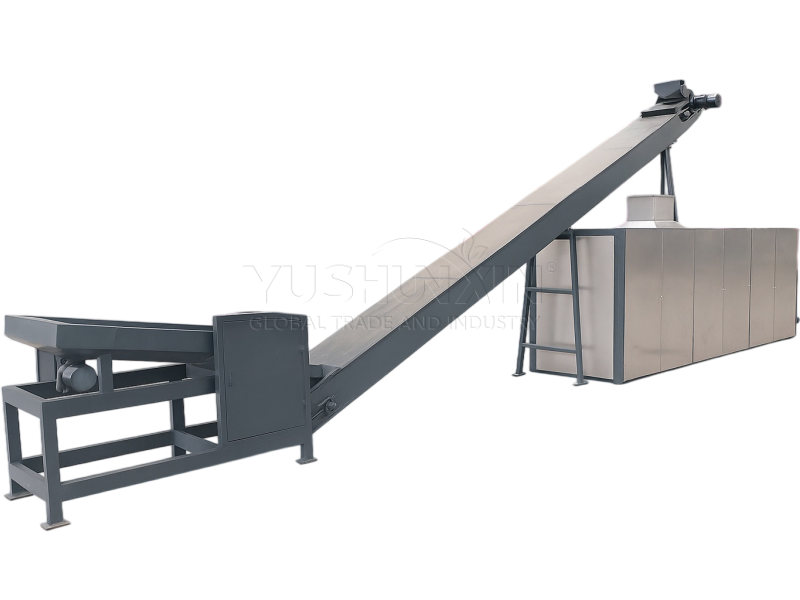


Industrial recyclers need stable discharge before crushing charged lithium batteries. The Lithium Battery Discharging Machine handles pouch, plastic-cased, and cylindrical cells through matched mechanical routes. It integrates controlled feeding, puncture or rotary cutting, water cooling, conveying, and gas treatment. Therefore, plants can reduce uncontrolled energy before crushing and improve downstream stability. Yushunxin configures each system around battery type, dimensions, residual charge, and required capacity.
How Can the Discharge Line Match Different Battery Feedstocks?
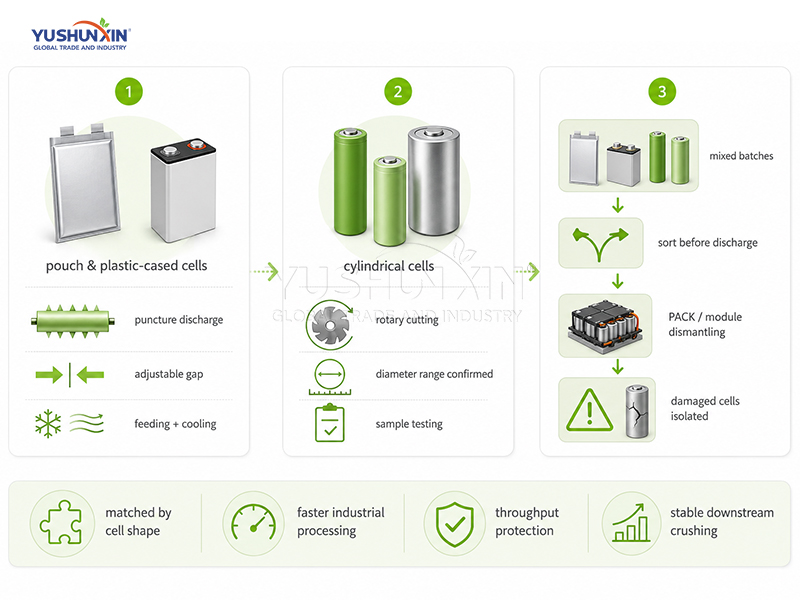
01 · FeedstocksIndustrial battery streams often combine several cell formats and size ranges. Therefore, one discharge structure cannot process every feedstock reliably. Yushunxin matches the machine to cell shape, casing, thickness, and residual charge. The standard route accepts charged single cells after PACK and module dismantling. Unknown or damaged batteries require sample testing before final engineering.
Matched Puncture Rollers Process Pouch and Plastic-Cased Cells
The puncture route handles pouch cells and selected plastic-cased 3C batteries. A controlled feeder sends each cell between a spiked roller and a grooved roller. Steel pins penetrate the casing and create an internal short circuit. This action releases residual energy before crushing and separation. Operators adjust the roller gap for different cell thicknesses. Therefore, the same structure can handle several verified cell sizes. The machine also connects with continuous feeding and cooling equipment. Water discharge may require four to six days. Saltwater discharge may still require one to two days. Therefore, mechanical discharge supports faster industrial processing and reduces soaking dependence.
A Dedicated Cutting Route Stabilizes Cylindrical Cell Discharge
The cylindrical battery discharge machine uses a separate rotary cutting structure. The feeder distributes cells evenly into the grooved roller. Meanwhile, rotating blades open the metal casing and create a controlled short circuit. The lithium cell discharging equipment then releases energy before cooling. Operators adjust the roller gap for the confirmed diameter range. Therefore, the customer must provide minimum and maximum cell diameters. A rotary cutting battery discharge system should not process unverified formats directly. Sample testing confirms feeding stability, cutting depth, and discharge performance.
Feed Segregation Protects Throughput Across Mixed Battery Batches
How Does the Integrated Discharge Solution Control Energy, Heat, and Exhaust?
02 · Discharge SolutionIndustrial discharge requires more than a puncture or cutting unit. The solution must control feeding, energy release, cooling, transfer, and exhaust. Therefore, each stage connects directly with the next. This structure supports steadier operation before crushing and separation.
Metered Feeding Keeps Discharge Stable
Metered Feeding controls battery input speed and load balance. Adjustable conveying matches battery size and charge condition for safer discharge operation.
Matched Roller Paths Release Energy
Matched Roller Paths use puncture or cutting methods for different battery types. Controlled short-circuit release reduces risks before crushing.
Integrated Cooling Stabilizes Transfer
Integrated Cooling uses SS304 mesh conveyors and water cooling after discharge. This reduces temperature rise and prepares batteries for downstream processing.
Negative-Pressure Treatment Controls Emissions
Negative-Pressure Treatment collects smoke and odor through enclosed ducts, activated carbon and UV systems to improve workshop safety and emission control.
How Do You Configure an Industrial Lithium Battery Discharging System?
03 · ConfigurationIndustrial buyers need a configuration that connects discharge, cooling, exhaust treatment, power, and downstream feeding. Therefore, each component must support the same production target. The reference system uses about 25 kW and occupies 9000 × 4000 × 2000 mm. However, Yushunxin adjusts the final layout around your lithium batteries and factory conditions.
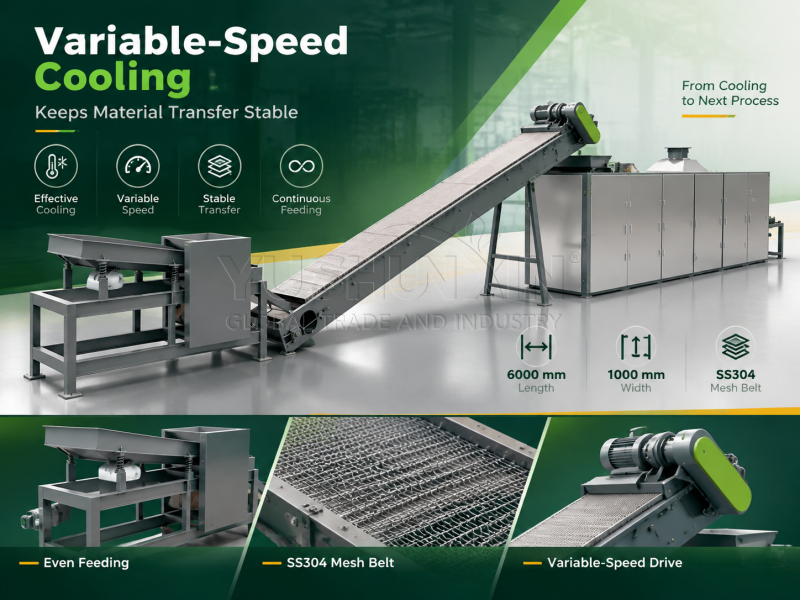
Variable-Speed Cooling Keeps
Material Transfer Stable
A single-layer SS304 mesh belt carries discharged batteries through the cooling section. The belt measures 6000 × 1000 mm. Moreover, variable-frequency control adjusts the conveying speed. Operators can therefore match cooling time with the required production rhythm. Stable transfer also supports continuous feeding into downstream crushing equipment.
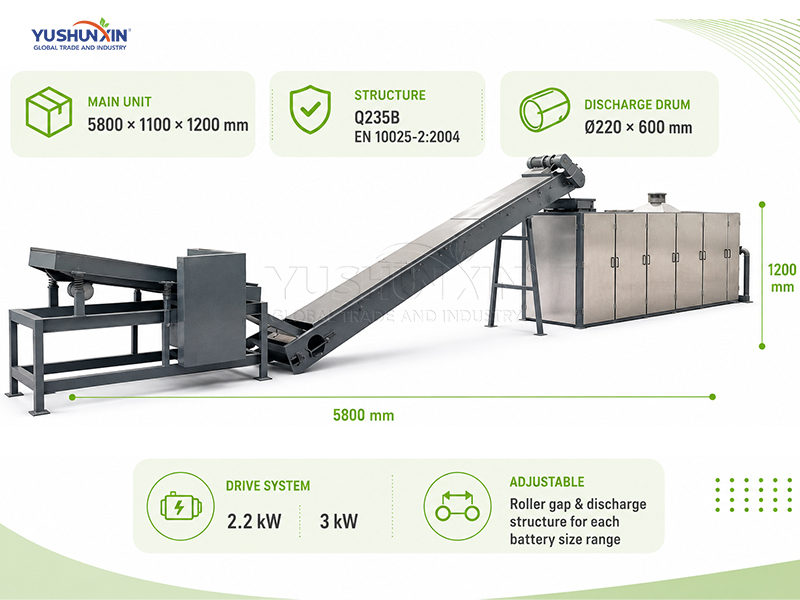
Core Discharge Structure Adapts
to Battery Dimensions
The main unit measures 5800 × 1100 × 1200 mm. Its Q235B structure follows the EN 10025-2:2004 reference standard. Meanwhile, the discharge drum measures Ø220 × 600 mm. The drive system uses 2.2 kW and 3 kW motors. Yushunxin adjusts the roller gap and discharge structure for each battery size range.
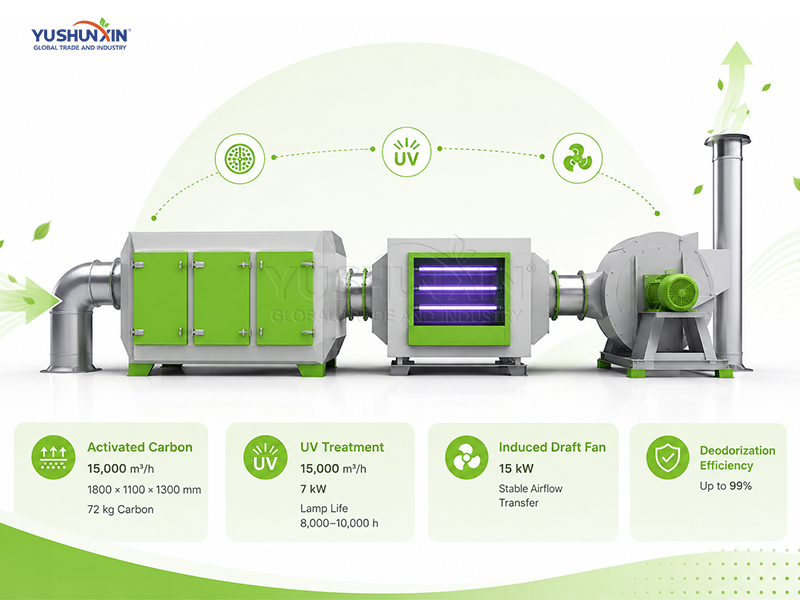
Integrated Air Treatment Handles
Industrial Exhaust Flow
The exhaust system combines activated-carbon adsorption, UV treatment, and induced airflow. The activated-carbon box handles about 15,000 m³/h. Its reference dimensions are 1800 × 1100 × 1300 mm. Meanwhile, the system contains about 72 kg of water-resistant honeycomb carbon. The UV unit also handles 15,000 m³/h and uses 7 kW. Its lamp life reaches approximately 8,000–10,000 hours. Furthermore, a 15 kW induced-draft fan maintains gas transfer through the treatment route. The reference configuration lists a deodorization efficiency of up to 99% under specified operating conditions.
How Can the Discharging System Support Project Approval and Line Integration?
04 · IntegrationA discharging machine must fit the feedstock, site, downstream process, and acceptance scope. Therefore, Yushunxin confirms battery data, utilities, interfaces, and performance targets before production. This engineering step prevents capacity gaps, unsafe transfers, and costly site changes.
Real Battery Data Shapes Discharge Design
Real Battery Data defines discharge structure. Battery type, size, charge level and casing determine roller design, feeding speed and cooling settings.
Site Conditions Define Installation Plan
Matched Interfaces Keep Line Balance
Production Tests Confirm Readiness
Defined Delivery Scope Protects Schedule
Complete Design Connects Safety And Operation
Summary
The lithium battery discharging machine reduces residual energy before crushing and supports safer downstream recycling. It handles pouch and plastic-cased cells through puncture discharge. Meanwhile, cylindrical cells use a matched rotary cutting route. Yushunxin can design the complete solution around your battery types, capacity, site, and environmental requirements. We also provide connected solutions for battery dismantling, crushing, separation, black mass recovery, and dust treatment. If you have other requirements, we can also provide you with lithium battery recycling plant, lithium battery crushing and separation line, black mass recovery equipment. Contact our engineers to discuss your complete recycling project.
From Your Needs
to Real Impact


