

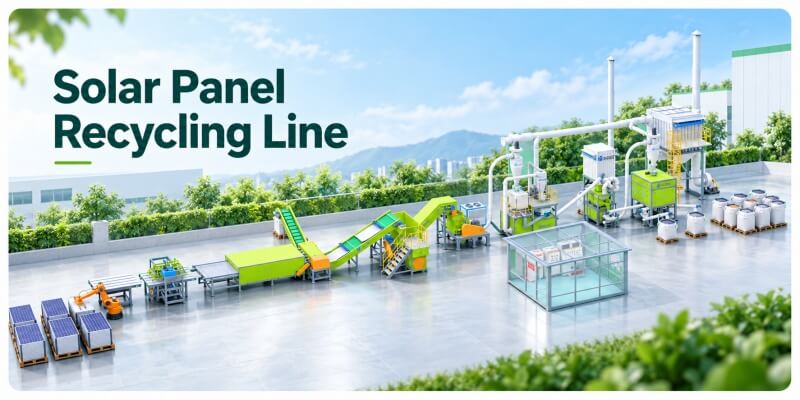












Retired bifacial solar modules create new challenges for industrial recycling facilities. Their dual-glass construction requires controlled separation, reliable material recovery, and consistent processing capacity. For recycling companies, waste management operators, and solar project developers, a double glass solar panel recycling plant offers a dedicated solution. Yushunxin integrates thermal separation, material sorting, and environmental controls to help investors develop commercially viable photovoltaic recycling operations.
Why Do Industrial Recyclers Need a Dedicated Double Glass Solar Panel Recycling Plant?
01 · ReasonRecycling companies increasingly handle glass-glass photovoltaic modules from solar farms, manufacturers, and decommissioning contractors. However, conventional solar panel recycling machines may struggle with their bonded structure. Therefore, investors need a process that separates materials efficiently while protecting their downstream commercial value.
Processing Challenges of Double-Glass Solar Modules
Unlike conventional glass-backsheet panels, double-glass modules contain glass layers on both sides of the solar cells. Encapsulation materials bond these layers into a compact structure. Consequently, aggressive crushing can create mixed glass, polymer, and silicon fractions. This contamination complicates subsequent separation and reduces product marketability. A dedicated double glass solar panel recycling line should address these challenges before selecting crushing and sorting equipment.
Requirements of Industrial Recycling Investors
Different customers approach photovoltaic recycling with distinct commercial objectives. Waste management companies need continuous processing and compliant emissions control. Solar farm operators require reliable treatment for retired modules. Meanwhile, recycling investors prioritize recoverable materials, operating costs, and potential buyers. Therefore, Yushunxin evaluates incoming module types, annual supply, available facilities, and target products before proposing a complete recycling solution.
How Does a Double Glass Solar Panel Recycling Line Separate Materials?
02 · ProcessDouble-glass solar modules require a dedicated recycling process because two glass layers strongly bond with EVA encapsulation materials. Therefore, industrial recyclers must select suitable thermal separation technology according to processing capacity, recovery targets, and material quality requirements. Yushunxin provides two pyrolysis-based solutions, including rotary pyrolysis and continuous tunnel kiln processing, to separate glass, silicon, copper, and other valuable materials.
Rotary Pyrolysis Process for Flexible Material Recovery
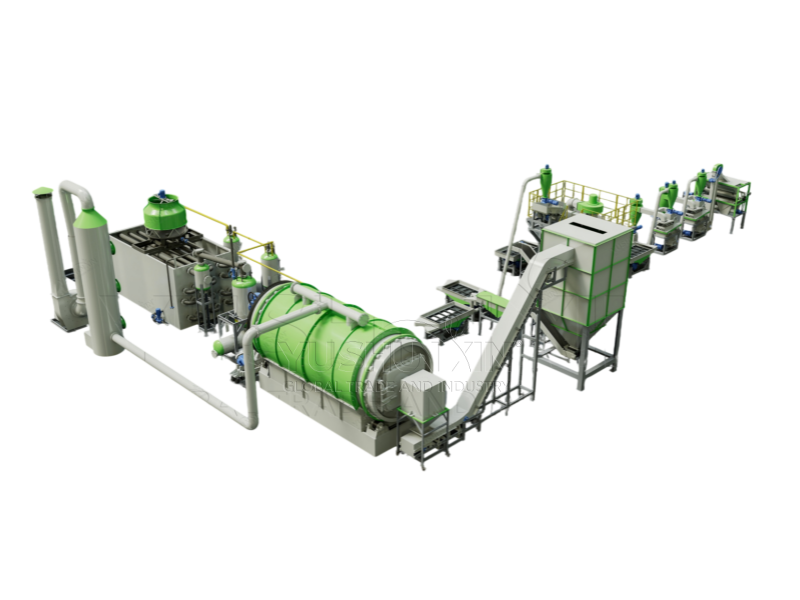
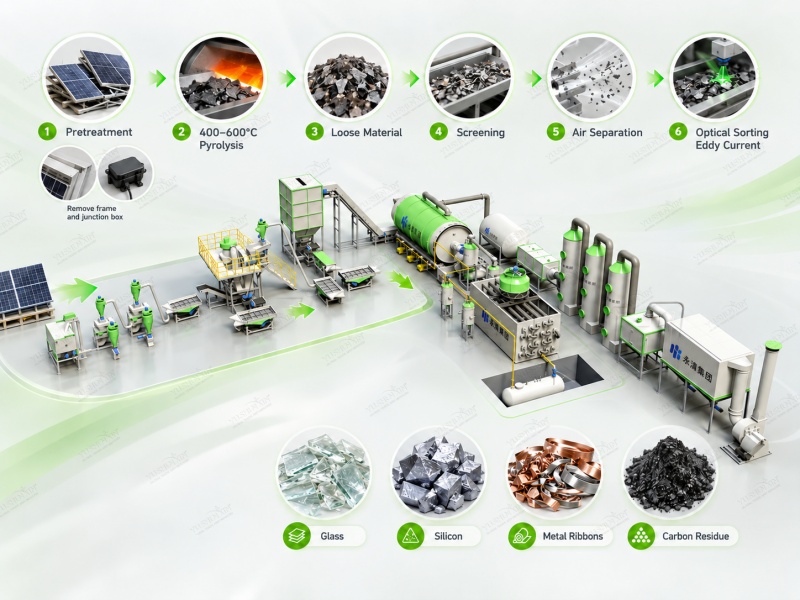
The rotary pyrolysis system starts with module pretreatment, including aluminum frame and junction box removal. After preparation, panels enter a rotary pyrolysis furnace under oxygen-free conditions. At approximately 400-600℃, the furnace decomposes EVA encapsulation and other organic materials. The process separates bonded layers and produces a loose mixture of glass, silicon, metal ribbons, and carbon residues. After pyrolysis, a chain conveyor transfers materials to screening and sorting equipment. Linear screens classify particles, while air separators, optical sorters, and eddy current separators further separate glass, silicon, and metal fractions. This solution offers flexible operation and suits projects requiring adaptable processing.
Continuous Tunnel Kiln Solution for Industrial Production
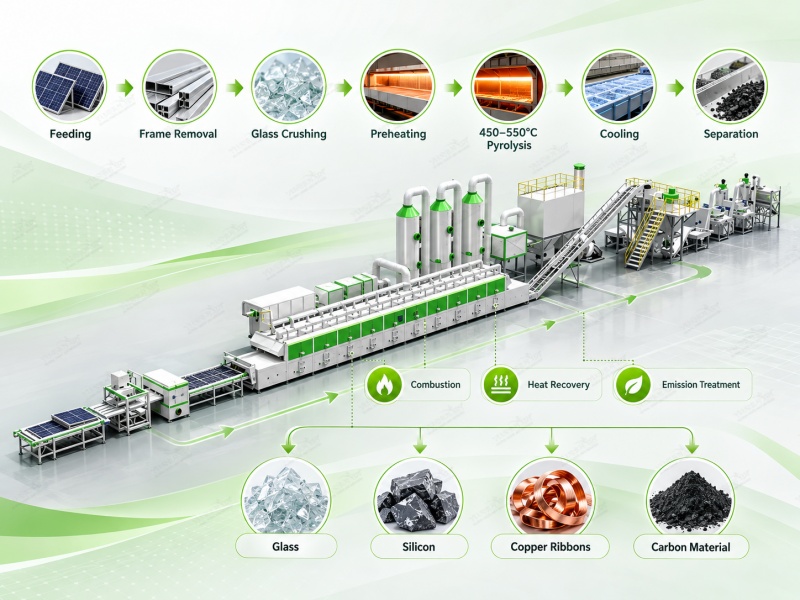
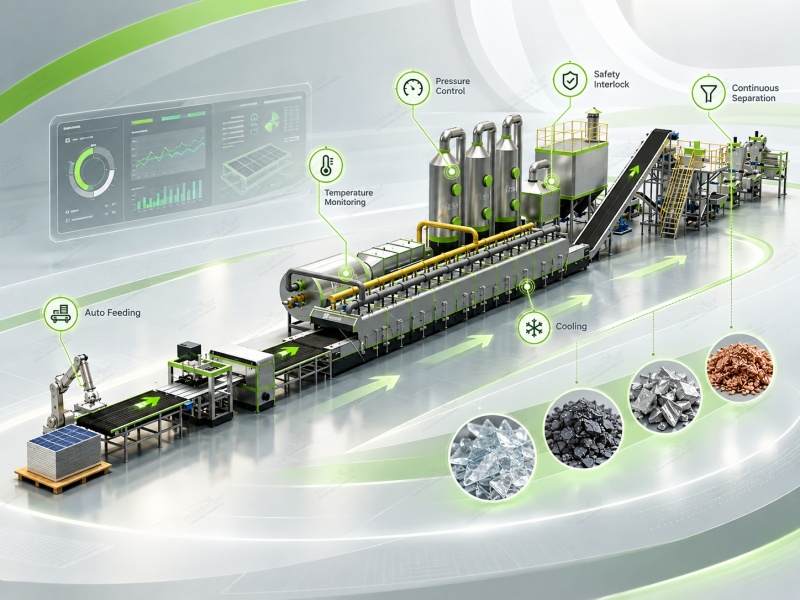
A continuous tunnel kiln provides stable large-scale processing through controlled thermal zones. The production line includes feeding, junction box removal, aluminum frame dismantling, glass crushing, tunnel kiln pyrolysis, cooling, and multi-stage separation. Inside the kiln, materials pass through preheating, pyrolysis, and cooling zones. The main reaction zone operates at 450-550℃ under oxygen-limited conditions to remove EVA and polymer materials. After cooling, equipment such as chain conveyors, airflow separators, vibration screens, gravity separators, and electrostatic separators recover glass, silicon wafers, copper ribbons, and carbon materials. The system also integrates combustion chambers, heat recovery, and emission treatment to support continuous industrial operation.
How Can Recovered Glass, Silicon and Metals Generate Commercial Value?
03 · ValueIndustrial recyclers do not process retired solar modules only for waste reduction. They invest in recycling plants to recover valuable materials and create additional revenue streams. A well-designed double glass solar panel recycling plant can separate glass, aluminum, copper, silicon, and silver-bearing materials. These recovered products can return to different industrial supply chains and improve overall project profitability.
What Valuable Materials Can you Recover from Double Glass Solar Panels?
A complete recycling solution can recover multiple valuable fractions from retired double-glass modules. The main recovered materials include:
- Glass: The largest material fraction, suitable for glass recycling applications after proper separation.
- Aluminum frames: Directly collected after dismantling and returned to aluminum recycling channels.
- Copper ribbons and cables: Valuable conductive metals with stable recycling demand.
- Silicon wafers and silicon-rich materials: Further purification can support photovoltaic and semiconductor-related applications.
- Silver-bearing materials: Collected from solar cells and processed through additional refining systems.
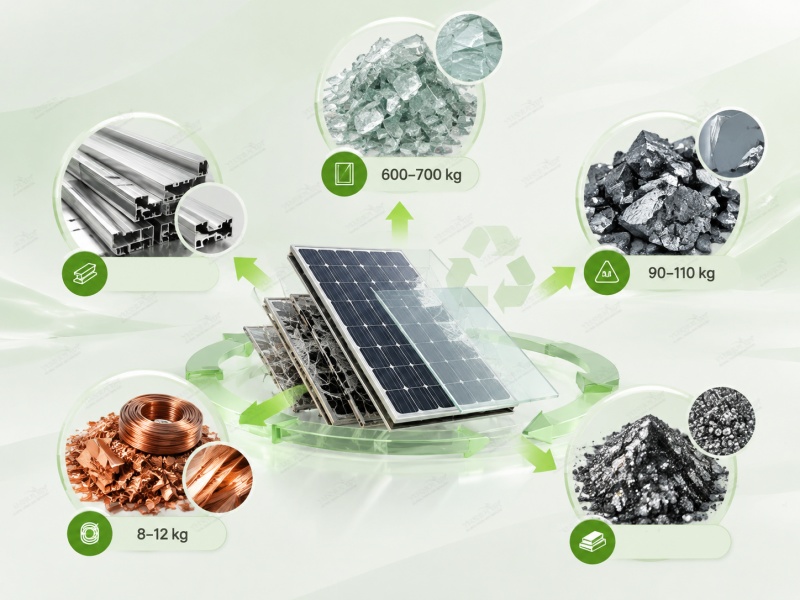
For one ton of retired photovoltaic modules, recovered products may include approximately 600-700 kg of glass, 90-110 kg of silicon materials, 8-12 kg of copper, and valuable silver-bearing fractions. Actual recovery depends on module structure and processing conditions.
How Do Recovered Materials Improve Project Profitability?
The economic value of solar panel recycling comes from selling multiple recovered products instead of relying on a single revenue source. Glass provides stable bulk income because of its large recovery volume. Silicon and silver-bearing fractions create higher-value opportunities because they contain strategic materials. According to project analysis, the total value of recovered materials from one ton of retired crystalline silicon modules can reach approximately $850-1,400 before processing costs. For large-scale recycling operators, combining material sales with efficient operation can significantly improve project returns. Therefore, the recycling plant should focus on both recovery efficiency and product quality to maximize long-term commercial value.
How Can a Solar Panel Pyrolysis Recycling Plant Achieve Safe and Stable Operation?
04 · OperationIndustrial solar panel recycling projects require more than material separation efficiency. They also need reliable gas treatment, temperature control, and continuous operation management. During pyrolysis, EVA, polymers, and other organic materials generate process gases. Therefore, a complete recycling plant must integrate thermal treatment, energy recovery, emission control, and automated operation.
How Does the Pyrolysis System Control Process Gas and Emissions?
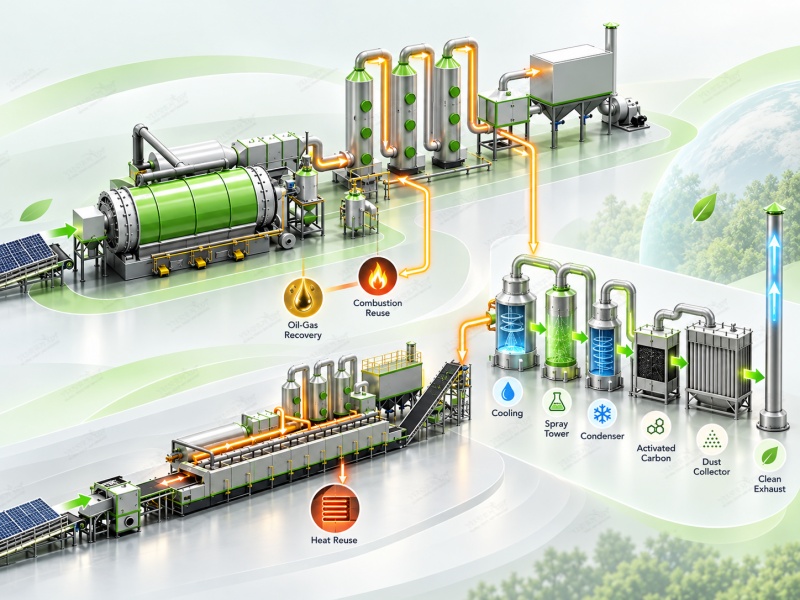
Both rotary pyrolysis and continuous tunnel kiln systems require controlled treatment of pyrolysis gases. In a rotary pyrolysis furnace, organic materials are decomposed under oxygen-free conditions. The generated oil-gas mixture can be recovered, while non-condensable gas can return to the furnace for combustion and energy reuse. For continuous tunnel kiln systems, pyrolysis gas enters a combustion chamber above 850℃ for high-temperature decomposition. The recovered heat can return to the kiln and reduce external energy consumption. After combustion, the exhaust gas requires further purification. The treatment system normally includes an emergency cooling tower, alkaline spray tower, condenser, activated carbon adsorption unit, and pulse dust collector. This combination removes acidic gases, VOCs, and fine particles before discharge.
How Does Automation Support Continuous Recycling Production?
Stable production depends on coordinated operation between feeding, pyrolysis, cooling, and material separation systems. A complete solar panel recycling plant integrates automatic feeding, temperature monitoring, pressure control, and safety interlocks. The tunnel kiln system maintains controlled low-oxygen conditions at approximately 450-550℃ to separate EVA and polymer materials without damaging valuable components. Meanwhile, downstream equipment such as cooling conveyors, screens, gravity separators, and electrostatic separators continuously process recovered materials. Regular maintenance planning and operating parameter monitoring help reduce downtime and improve long-term production stability.
How Much Does a Double Glass Solar Panel Recycling Plant Cost?
05 · CostThe investment for a double glass solar panel recycling plant depends on production capacity, recovery targets, automation level, and environmental configuration. Industrial buyers should evaluate the complete project cost instead of comparing a single recycling machine price. A turnkey recycling solution normally includes pretreatment, thermal separation, material sorting, emission treatment, installation, and commissioning.
What Determines the Investment Cost of a Double Glass Solar Panel Recycling Plant?
For industrial photovoltaic recycling projects, the complete plant investment usually ranges from US$300,000 to over US$1 million depending on capacity and configuration. The main cost components include:
Pretreatment system
Frame removal, junction box removal, feeding, and material preparation.
Pyrolysis system
Rotary pyrolysis furnace or continuous tunnel kiln, including heating and thermal control.
Sorting system
Cooling conveyors, screens, air separators, gravity separators, and electrostatic separators.
Environmental system
Combustion chamber, heat recovery, cooling tower, scrubber, activated carbon adsorption, and dust collection.
Engineering services
Plant layout, electrical control, installation support, and commissioning.
Higher recovery requirements, such as silicon purification or silver recovery, require additional processing units and increase project investment.
How Should Investors Evaluate Operating Costs and Returns?
Beyond equipment cost, investors should consider electricity or fuel consumption, labor requirements, maintenance costs, and recovered material sales. A profitable recycling project depends on stable feedstock supply and product quality. Recovered glass, aluminum, copper, silicon, and silver-bearing materials create multiple revenue channels. According to project analysis, one ton of retired crystalline silicon modules can generate approximately $850-1,400 in recovered material value before processing costs. Therefore, a reliable feasibility study should combine local waste supply, plant capacity, operating costs, and material selling prices before investment decisions.
How Does Yushunxin Deliver a Turnkey Double-Glass Solar Panel Recycling Solution?
06 · SolutionIndustrial customers need a complete recycling project rather than individual machines. A successful double glass solar panel recycling plant requires technical evaluation, process design, equipment integration, and long-term operation support. Therefore, Yushunxin provides a turnkey approach from initial project discussion to final production commissioning.
REQUIREMENTS
How Does Yushunxin Design a Recycling Plant Based on Customer Requirements?
The project starts with a detailed analysis of feedstock conditions, including module types, panel dimensions, annual processing volume, and recovery targets. Engineers evaluate whether customers need a rotary pyrolysis system, continuous tunnel kiln solution, or additional recovery modules such as silicon purification and silver recovery. After confirming the process route, Yushunxin develops the plant layout according to available factory space. The design includes raw material storage, pretreatment area, pyrolysis section, sorting area, finished product collection, and environmental treatment systems. Equipment configuration is then customized based on capacity requirements. The proposal defines major equipment, utility requirements, automation level, and future expansion possibilities.
MANUFACTURING
What Services Are Included After Equipment Manufacturing?
A turnkey project continues beyond equipment production. Yushunxin supports equipment manufacturing, quality inspection, packing, and international transportation arrangements. Before shipment, key equipment details and installation requirements are confirmed with customers. During installation, engineers provide technical guidance for equipment assembly, electrical connection, commissioning, and process adjustment. After startup, operators receive training on production procedures, equipment operation, maintenance schedules, and safety management. Through complete project support, customers can reduce installation risks and establish a stable photovoltaic recycling operation with clear production targets.
Summary
A successful double glass solar panel recycling plant connects reliable separation technology with marketable recovered materials, controlled operating costs, and practical plant engineering. Yushunxin helps industrial recyclers evaluate these factors within one project. For different feedstocks, explore our single-glass solar panel recycling solution, solar panel pyrolysis processing line and mechanical solar panel recycling plant. Contact Yushunxin with your module types, target capacity, and installation country to request a customized technical proposal and equipment quotation.
From Your Needs
to Real Impact


