













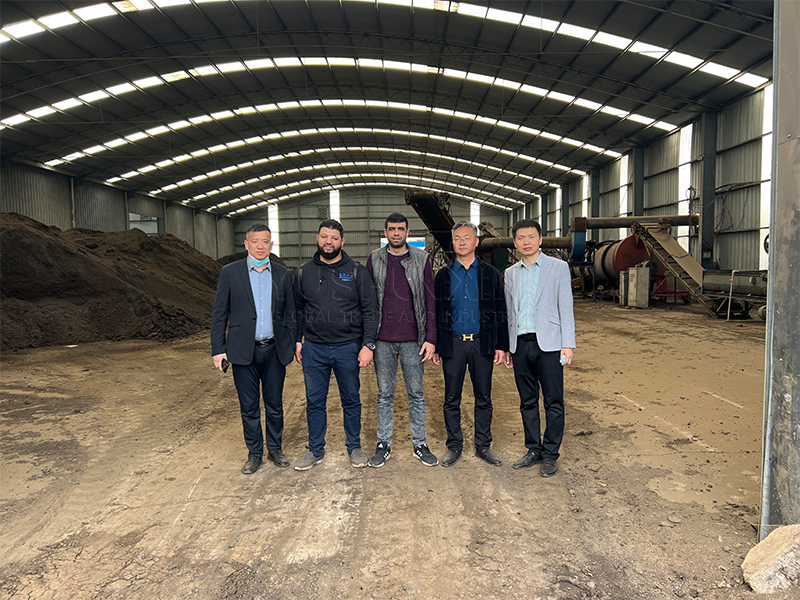

On May 18th , 2026, a Peruvian investor emailed us about a 500kg/h lithium battery recycling plant for Peru. The customer needed a buildable industrial line, not a basic equipment list. Therefore, we focused on battery types, safe discharge, black mass recovery, metal separation, power, and site layout. This case shows how both sides turned the inquiry into a practical project plan.
How Did you Match Peru’s Battery Supply to a 500kg/h Plant Plan?
A 500kg/h lithium battery recycling line needs stable feedstock, not only a larger crusher. Therefore, we first confirmed battery form, charge, chemistry, and supply. These inputs defined discharge, feeding, drying, separation, and collection. They also prevented oversizing and unused capacity.
Battery Data Sets Project Boundary
Battery Data defines the Project Boundary. Cell type, battery format, SOC and composition determine discharge, dismantling and feeding routes.
Feedstock Supply Defines Line Capacity
Feedstock availability determines capacity selection. Daily supply, shifts, storage and contracts decide whether 500kg/h or larger capacity fits the project.
Saleable Outputs Shape Final Configuration
Saleable Outputs guide separation design. Black mass, copper, aluminum and iron targets determine screening, airflow separation and product collection requirements.
How Can a 500kg/h Lithium Battery Recycling Line Reduce Risk and Protect Product Value?
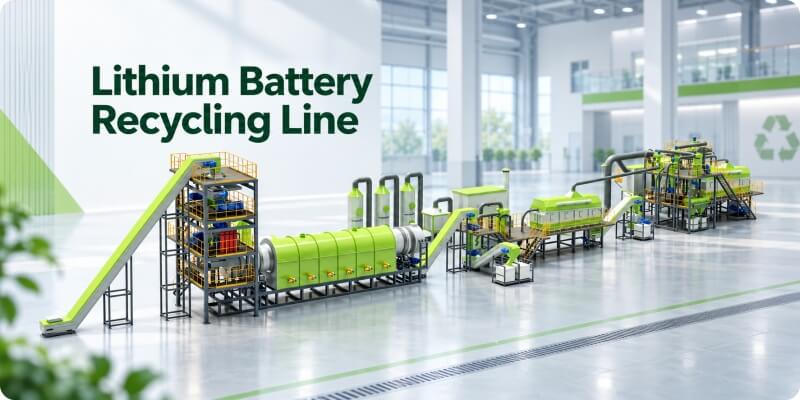
A lithium battery recycling line should control residual electricity before crushing. Therefore, the Peru solution starts with sorting and discharge. It then uses sealed feeding, staged crushing, drying, and separation. This sequence protects operators and improves recovered material quality.
How Should Different Batteries Enter the Discharge System?
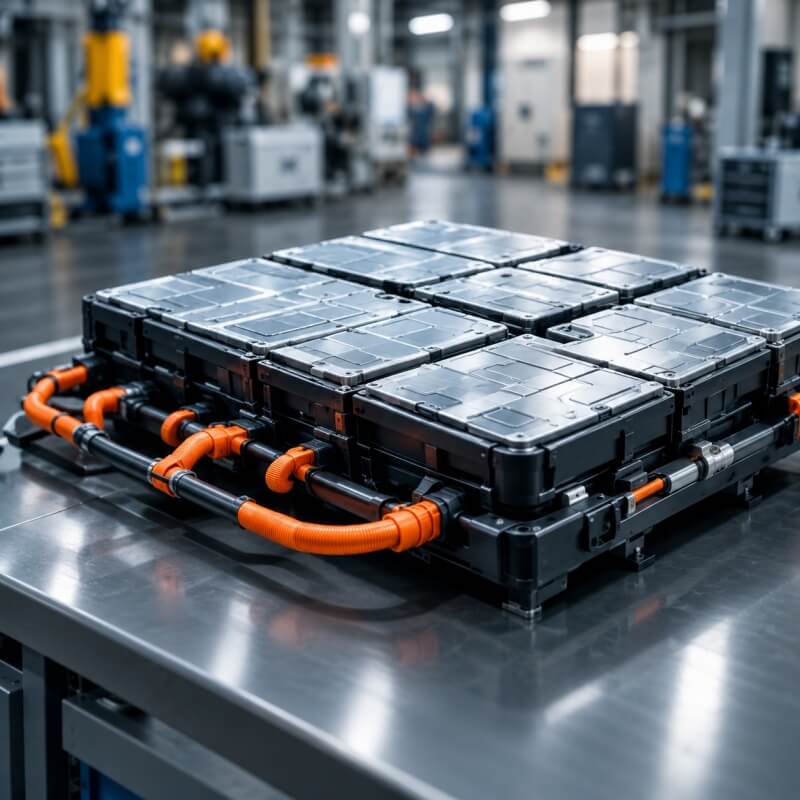
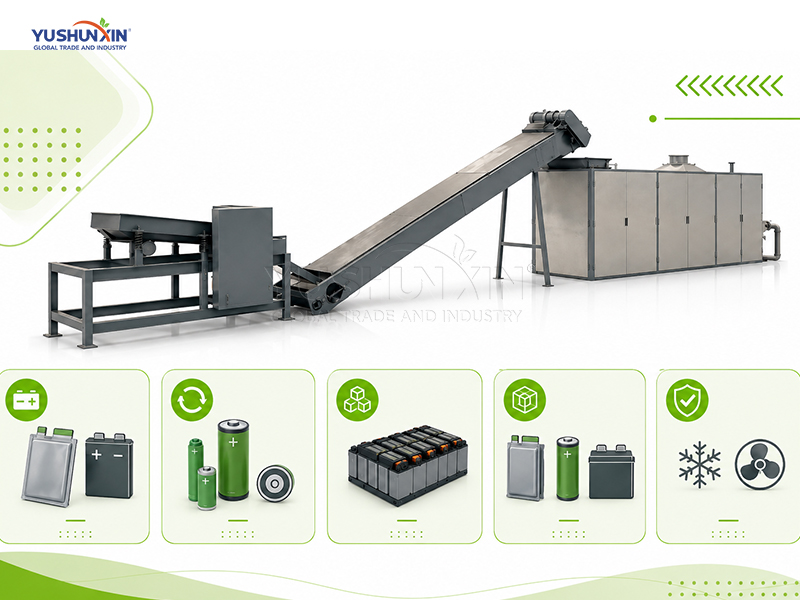
Pouch cells and plastic-shell batteries can use puncture discharge equipment. Needle rollers pierce the casing and release remaining energy. Cylindrical cells require rotary cutting equipment. The cutter opens the metal shell and creates a controlled short circuit. Therefore, the customer should separate battery formats before feeding. Complete modules also need dismantling before discharge. Cables, circuit boards, and steel structures should enter separate recovery routes. The discharge section should include cooling and gas collection. These systems control abnormal heat and smoke before crushing. The available technical solution uses puncture discharge for pouch cells and rotary cutting for cylindrical cells.
How Can Staged Crushing Improve Black Mass Recovery?
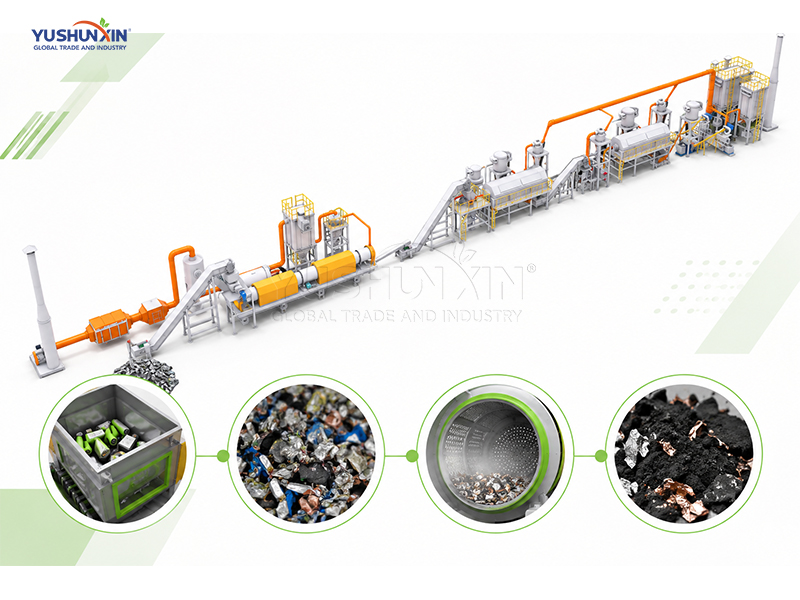
Discharged batteries first enter a sealed feeding system. This system limits manual contact and stabilizes the crusher load. Primary crushing opens the battery shells. However, excessive crushing can mix powder with metal fragments. The material then enters controlled drying. Drying reduces electrolyte effects and improves later screening. The exact conditions should match the customer’s battery composition. Secondary crushing releases electrode powder from copper and aluminum foils. It also creates a stable particle size for separation.
| Stage | Main Purpose | Protected Output |
| Sealed feeding | Stabilize material flow | Operator safety |
| Primary crushing | Open battery structures | Metal fractions |
| Controlled drying | Reduce electrolyte effects | Black mass |
| Secondary crushing | Release electrode powder | Separation quality |
Recover Four Saleable Fractions Through Separation
Saleable Fractions are recovered through Vibrating Screening, Air Separation and Magnetic Separation. Independent outlets protect black mass, copper, aluminum and iron product value.
Safety Systems Protect Continuous Operation
Safety Systems include sealed conveying, negative-pressure dust collection, gas extraction, monitoring and PLC protection. These controls reduce risks and support stable line operation.
How Can the Peru Project Secure Site Readiness Before Shipment?
A reliable project needs more than finished equipment. Therefore, we confirmed the site, utilities, compliance route, and acceptance standards before shipment. This planning reduced installation changes and clarified each party’s responsibilities.
Equipment Data
Builds Site Layout
Equipment Data defines Site Layout requirements. The plan should include receiving, storage, processing, product areas, utilities and access routes beyond the machine footprint.
Compliance Route
Supports Project Approval
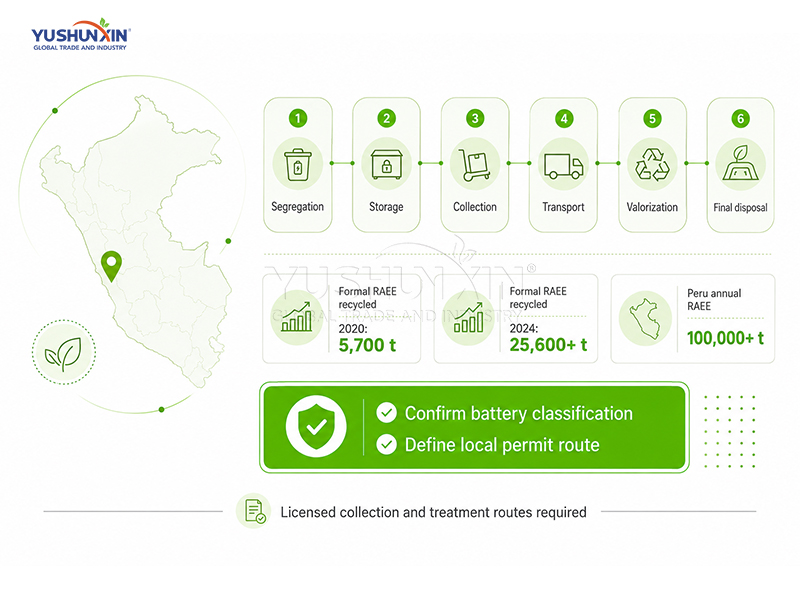
Compliance Route should confirm battery classification, transport, storage, operation and product sales requirements. Local permits and environmental rules must match the recycling process.
Factory Testing Creates
Acceptance Evidence
Factory Testing should verify capacity, product recovery, separation quality, safety controls and documentation. Acceptance Evidence reduces disputes during commissioning and operation.
Project Responsibilities
Define Delivery Scope
Project Responsibilities should separate supplier and customer duties. Clear scope covers equipment, installation, utilities, approvals, training and acceptance requirements.
A successful 500kg/h project starts with verified battery data and confirmed product targets. Next, the line must combine discharge, controlled crushing, drying, screening, separation, and dust control. The Peru site must confirm power, space, fire protection, permits, and acceptance standards. Yushunxin can prepare the process route, layout, utility schedule, and commissioning plan. And if you want to know other solutions for e-waste recycling, please contact us.
”
From Your Needs
to Real Impact


