

















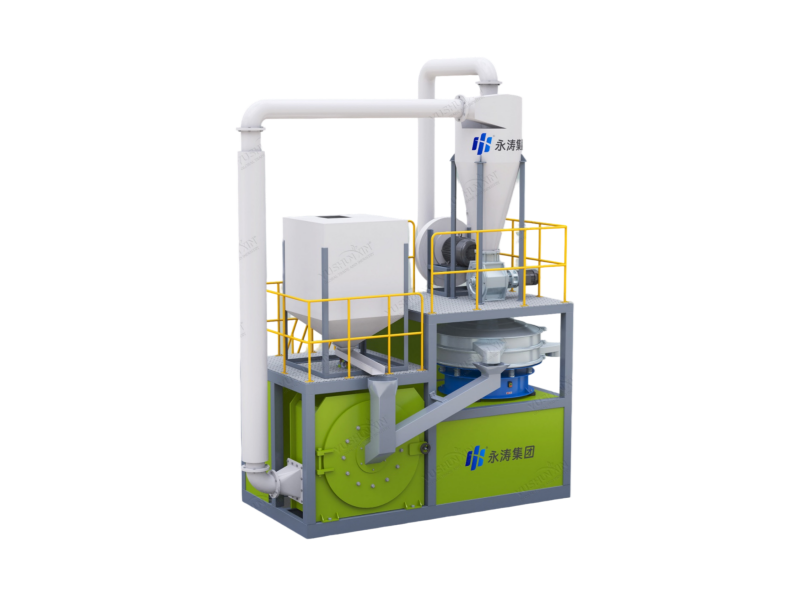


A solar panel shredder is the core crushing section in a mechanical PV recycling line. After frame removal and glass separation, the remaining laminate enters staged size reduction. The single-shaft shredder produces 30–40 mm pieces. The hammer crusher reduces them to 6–8 mm. Then, the grinding mill prepares 10–80 mesh material for gravity and electrostatic separation. Yushunxin matches each stage with your capacity, feed condition, power supply, and recovery targets.
How Does a Prepared-Feed Route Improve PV Crushing Performance?
01 · PerformanceAn industrial PV crushing system should receive prepared laminate, not complete framed modules. The line first removes junction boxes, aluminum frames, and most front glass. Then, the cleaner laminate enters staged crushing and physical separation. This route reduces metal interference, glass loading, and wear across the crushing section. The standard process follows frame removal, glass separation, shredding, hammer crushing, grinding, gravity separation, and electrostatic separation. A reference line processes 1 t/h with 277.6 kW installed power. It requires about 36 × 6 × 6 m.
Recover Valuable Components Before Size Reduction
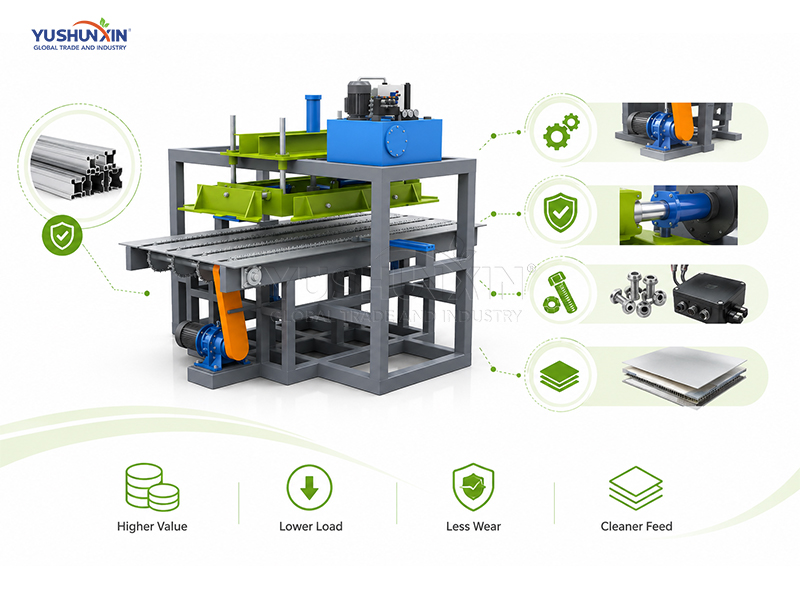
Aluminum frames provide an independent and easily marketable product stream. Therefore, the line recovers them before shredding. This step also lowers the crushing load and protects the hydraulic pusher and cutter shaft. Steel fasteners and junction-box parts can disrupt feeding. Moreover, they may increase local wear inside the shredder. Early removal creates a cleaner and more consistent laminate feed.
Stabilize the Feed Through Front-Glass Separation
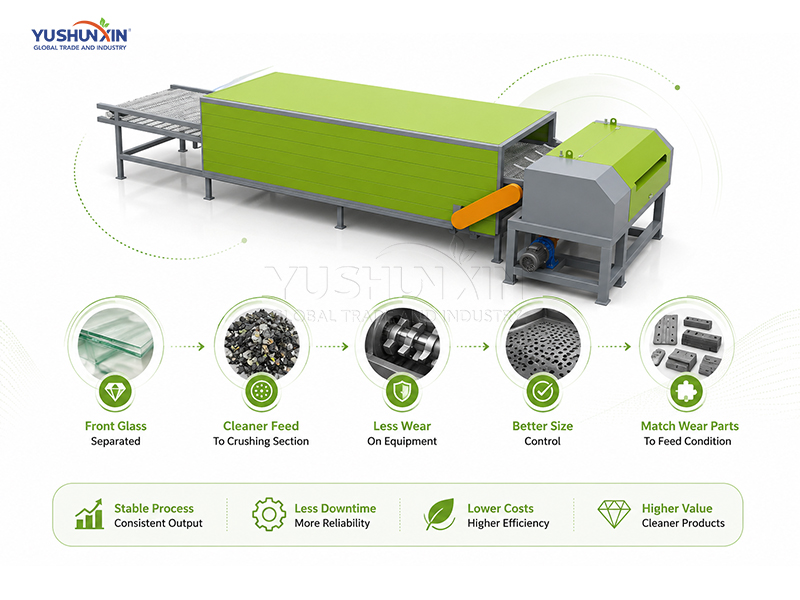
After frame removal, the glass removal unit separates the main front-glass fraction. The crushing section then receives silicon cells, EVA, backsheet, ribbons, and limited residual glass. This cleaner feed improves size control and reduces avoidable abrasion. However, residual glass still affects cutters, hammers, screens, and liners. Therefore, Yushunxin matches wear parts to the tested feed condition.
Link Crushing Output With Final Material Separation
The shredder does not produce the final saleable fractions. Instead, it opens the laminate and creates 30–40 mm pieces. Then, the hammer crusher reduces them to 6–8 mm. Finally, the grinding mill prepares 10–80 mesh material. Gravity separation uses density differences to recover the heavier copper fraction. Meanwhile, electrostatic separation separates silicon powder from plastic powder. This connected route creates defined copper, silicon-powder, and plastic-powder streams.
How Does a Three-Stage Crushing Solution Prepare PV Material for Separation?
02 · Three-Stage CrushingHigh-value PV recycling requires controlled particle reduction across three connected stages. One crusher cannot protect throughput, liberation quality, and downstream separation simultaneously. Therefore, Yushunxin combines primary shredding, secondary crushing, and controlled grinding. Each machine creates the correct feed size for the next process. This staged solution reduces over-grinding and supports stable gravity and electrostatic separation.
Primary Shredding
Stabilizes Material Flow
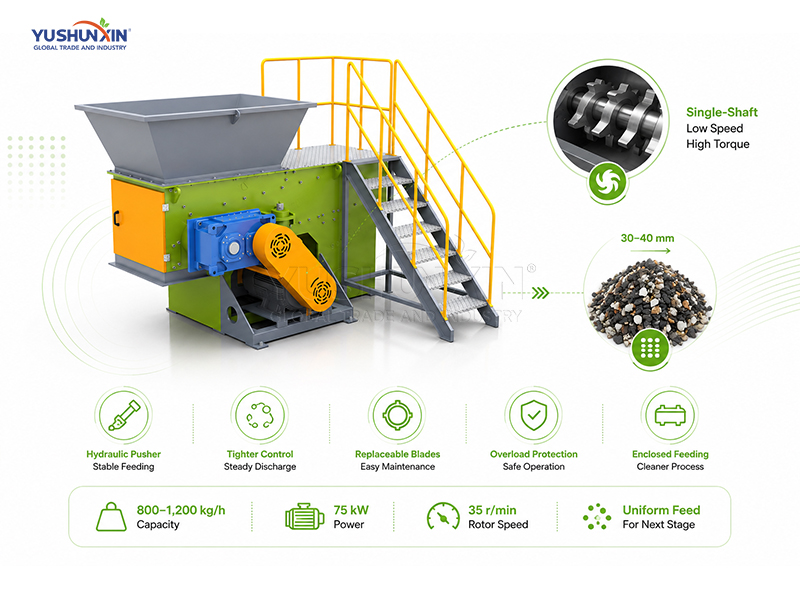
After frame and glass removal, the remaining laminate enters a single-shaft shredder. The machine reduces the material to 30–40 mm pieces. A low-speed, high-torque rotor handles EVA, silicon fragments, backsheet material, and residual glass. Meanwhile, a hydraulic pusher maintains stable feeding and limits material bridging. The single-shaft structure provides tighter particle control and steadier discharge. Replaceable blades, overload protection, and enclosed feeding also simplify maintenance. A reference configuration processes 800–1,200 kg/h with 75 kW power. The rotor runs at 35 r/min and prepares uniform feed for secondary crushing.
Secondary Crushing Releases
Bonded PV Fractions
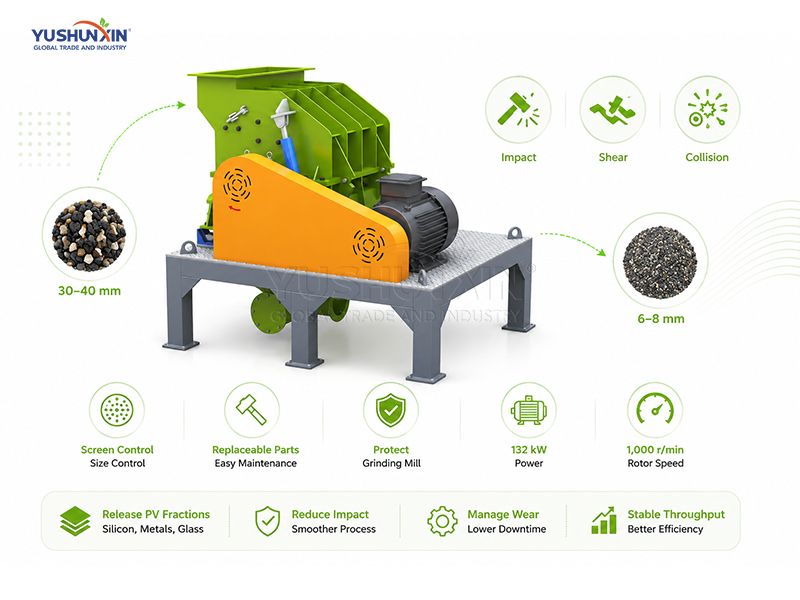
Next, the hammer crusher reduces 30–40 mm pieces to 6–8 mm. High-speed hammers apply impact, shear, and collision forces. This action releases silicon, backsheet, metal ribbons, and remaining glass. A bottom screen controls discharge size and retains oversized material. Meanwhile, replaceable hammers and liners simplify wear management. The reference configuration uses 132 kW power and a 1,000 r/min rotor. This stage also protects the grinding mill from sudden impact loads. Final throughput depends on screen size, residual glass, and feed composition.
Controlled Grinding Matches
the Separation Target
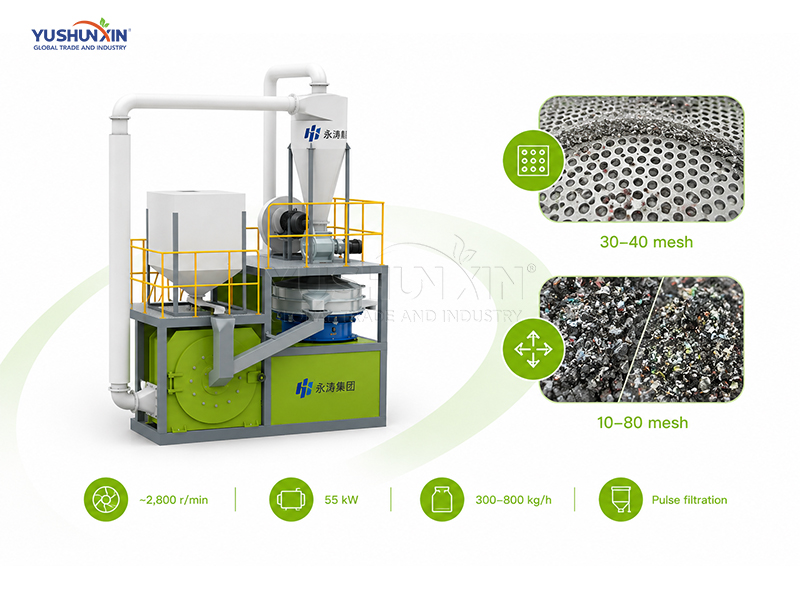
The grinding mill completes the final liberation stage. However, it should not produce the finest possible powder. Instead, the machine matches particle size with downstream separation requirements. A standard setting produces 30–40 mesh material. The process can also adjust between 10 and 80 mesh after testing. A high-speed rotor, alloy cutters, and fixed rings provide controlled shear and friction. Airflow transfer, cyclone collection, and pulse filtration manage fine material. A reference unit processes 300–800 kg/h with 55 kW power. Its rotor operates near 2,800 r/min. For a 1 t/h line, Yushunxin can enlarge or parallel the grinding section. After grinding, the material enters gravity separation and electrostatic separation. Yushunxin’s mechanical line follows a 30–40 mm, 6–8 mm, and 10–80 mesh particle route.
How Can a Balanced Crushing Solution Sustain 500–1,000 kg/h?
03 · 500–1,000 kg/hA stable crushing line depends on balanced flow, not one machine’s maximum capacity. Each stage must receive and discharge material continuously. Residual glass, screen openings, grinding fineness, and feeding stability also affect output. Therefore, the solution needs matched equipment, controlled feeding, and sufficient buffer capacity. Yushunxin configures each section around stable production and final separation targets.
EVERY STAGE
Balance Every Stage Around the System Bottleneck
The single-shaft shredder can process 800–1,200 kg/h. It reduces the laminate into 30–40 mm pieces. Then, the hammer crusher reduces the material to 6–8 mm. However, the grinding stage handles about 300–800 kg/h. Therefore, this stage may limit the complete line output. For a 1 t/h project, Yushunxin may use a larger grinder or parallel grinding units. An intermediate buffer bin can absorb temporary feed peaks. Meanwhile, variable-speed feeders can stabilize the grinding load. Representative material tests confirm the final capacity before equipment production.
QUALITY
Feed Quality Sets the Real Hourly Output
Residual glass directly changes the actual processing capacity. Higher glass content increases knife, hammer, and screen wear. It also raises dust volume and electricity consumption. Meanwhile, EVA content and backsheet structure change the material’s crushing resistance. Moisture, module size, and feeding consistency also influence production. Therefore, the same shredder can deliver different hourly outputs across different PV materials. Efficient front-end glass removal reduces abrasive material entering the crushing section. As a result, the line needs fewer maintenance stops. It also maintains more stable power consumption and particle size.
UTILITIES
Configure Particle Size Around Product Recovery
The final particle size should follow the required recovered products. Smaller particles do not always improve separation results. Excessive grinding can mix copper with silicon powder. It can also deform metal into thin flakes. Moreover, excess fine powder increases dust collection loads. It may also reduce electrostatic separation stability. Therefore, Yushunxin adjusts screens and grinding fineness after material testing. These figures help buyers plan power supply, foundations, conveyors, dust ducts, and product storage. They also leave space for later capacity expansion.
PLANNING
Use Whole-Line Data for Site Planning
The standard mechanical line processes 500–1,000 kg/h. A 1 t/h configuration requires about 277.6 kW. Its reference installation area measures about 36 × 6 × 6 m. The crushing route moves from 30–40 mm to 6–8 mm. Grinding then prepares 10–80 mesh material. Gravity and electrostatic systems complete the downstream separation. These figures help buyers plan power supply, foundations, conveyors, dust ducts, and product storage. They also leave space for later capacity expansion.
Summary
A solar panel shredder performs best within a complete mechanical recycling solution. Frame removal and glass separation first prepare cleaner laminate for controlled crushing. Then, the single-shaft shredder, hammer crusher, and grinding mill create suitable particle sizes for separation. Yushunxin can design the crushing section or provide a complete 500–1,000 kg/h PV recycling line. We match equipment capacity, conveyors, dust control, wear parts, and final product targets.
From Your Needs
to Real Impact


