

















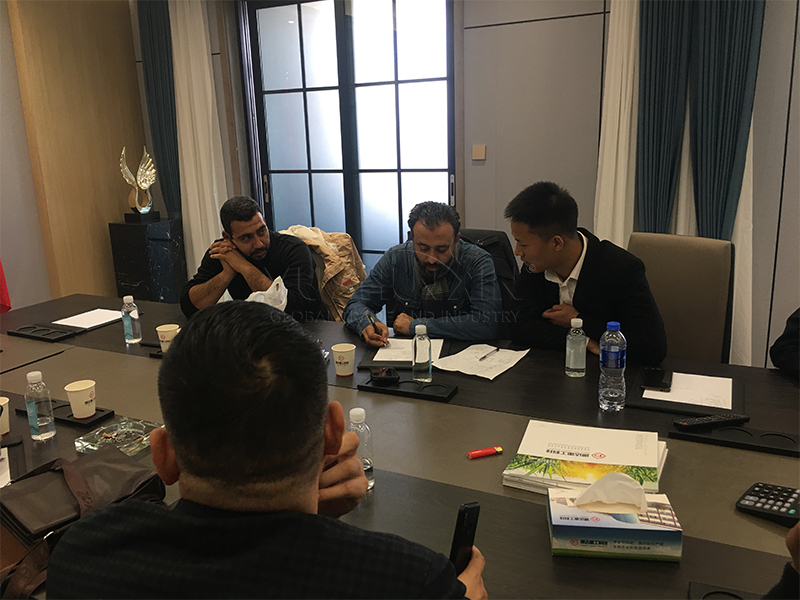

On April 20th , 2026, a Peruvian recycling company sent us a new project inquiry about 500 kg/h lithium battery recycling line for black mass recovery. The customer wanted stable black mass, copper, and aluminum recovery from spent lithium-ion batteries. They also asked about safe crushing, plant power, floor space, and local installation. After checking the battery types and daily supply, we proposed a 500 kg/h physical separation line. This case explains the equipment decisions behind the project plan.
How Did Feedstock Data Define the Peru Recovery Solution?
The Peruvian buyer first described the available batteries and planned product outlets. We then reviewed chemistry, cell format, residual charge, and monthly supply. These inputs defined the discharge, dismantling, crushing, and separation equipment.
Battery Mix Shapes Front-End System
Battery Mix determines the Front-End System. Cell type, chemistry, SOC and battery condition define discharge, dismantling and feeding design.
500 kg/h Capacity Matches Real Production
500 kg/h Capacity depends on supply volume, working hours, storage and sales plans. Continuous output matters more than peak capacity.
Target Black Mass Defines Separation
Target Black Mass controls particle size, copper and aluminum limits. Screening, dust recovery and packaging must match the final product requirements.
How Did the 500 kg/h Lithium Battery Recycling Plant Protect Product Purity?
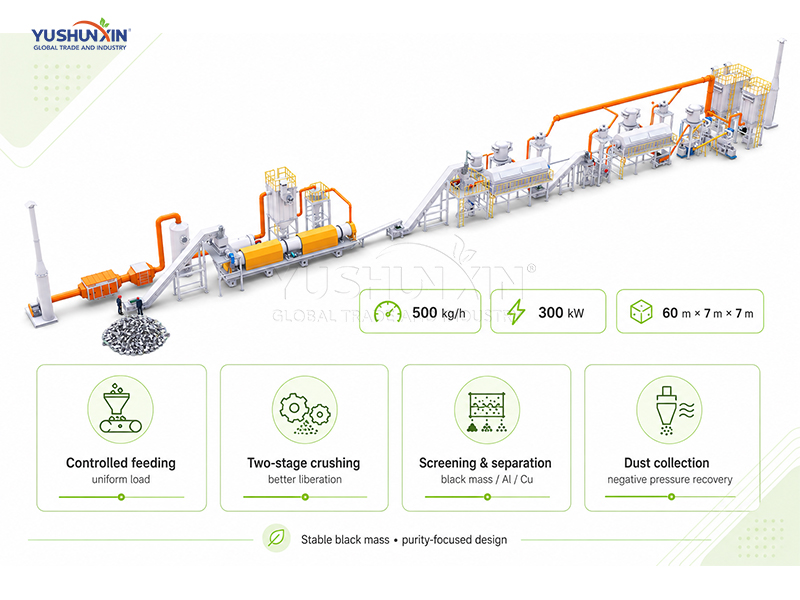
The Peruvian buyer valued stable black mass more than simple processing speed. Therefore, we configured each machine around liberation, purity, and material recovery. The proposed line processes 500 kg/h with about 300 kW installed power. Its reference layout measures 60 m × 7 m × 7 m.
Controlled Feeding
Stabilizes Crushing Load
Controlled Feeding matches battery size and discharge condition. Buffer hoppers and metered feeders maintain stable loading and reduce blockage risks.
Two Crushing Stages
Improve Liberation
Crushing Stages open casings, foils and electrode layers step by step. This reduces excessive metal fines and improves black mass quality.
Screening Produces
Saleable Fractions
Screening classifies particle sizes before airflow and metal separation. The system recovers black mass, copper, aluminum and other valuable fractions.
Dust Collection
Protects Product Recovery
Dust Collection uses sealed ducts and negative pressure to capture fine black mass. Quality checks allow collected powder to return to production.
How Did We Convert the 500 kg/h Line Into a Site-Ready Peru Solution?
A lithium battery recycling process flow alone cannot secure project approval or stable operation. Therefore, we reviewed the Peruvian site, utilities, safety plan, and acceptance method. The review also covered RAEE storage, material tracking, and compliant handling routes.
Can the Existing Workshop Support the Complete Line?
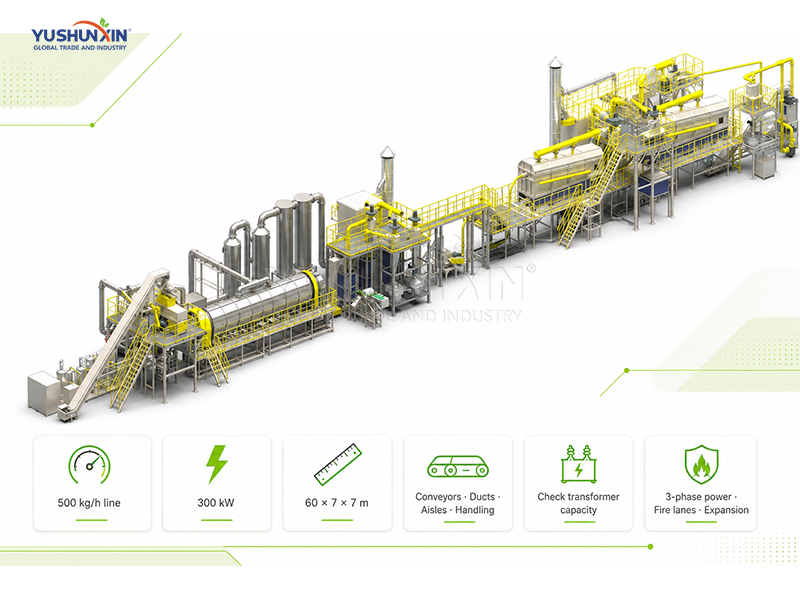
The customer first asked whether the line could fit inside the existing workshop. The 500 kg/h reference line needs about 300 kW and a 60 × 7 × 7 m layout. However, this footprint includes conveyors, dust ducts, access aisles, and product handling areas. We also checked transformer capacity, three-phase power, fire lanes, and future expansion space.
How Does the Safety Plan Control Battery and Dust Risks?
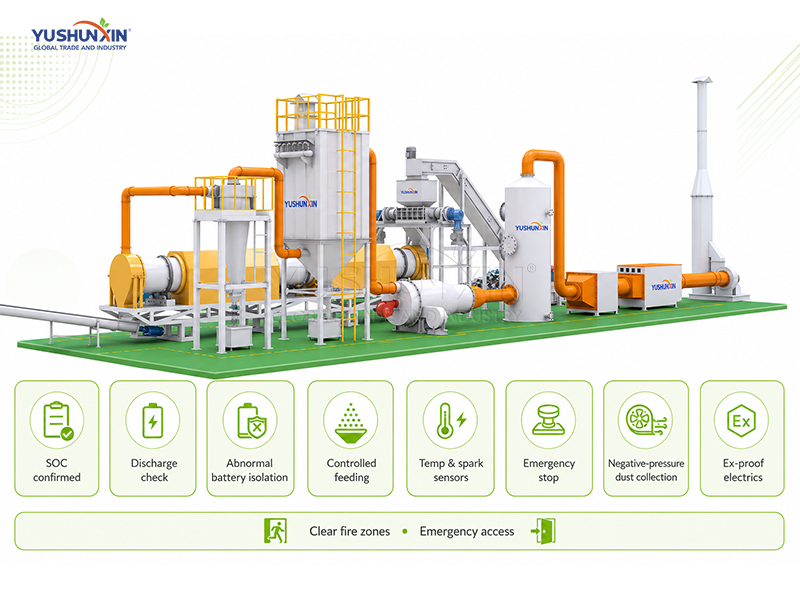
The buyer then asked whether charged or damaged batteries could enter normal crushing. We required SOC confirmation, discharge checks, abnormal-battery isolation, and controlled feeding before shredding. Temperature sensors, spark detection, emergency stops, negative-pressure dust collection, and explosion-protected electrics reduce operating risk. Fire zones and emergency access must remain clear during production.
Acceptance Trial Confirms Product Recovery
Acceptance Trial should verify product recovery through throughput, black mass yield, purity, power use and continuous operation data, not only equipment running.
Yushunxin Support Ensures Local Operation
Yushunxin Support includes layout drawings, installation guidance, operator training, maintenance procedures, diagnostics and spare-parts planning for long-term operation.
This Peru project focused on three decisions. First, the buyer defined the battery stream and final product targets. Second, we configured each machine around black mass and metal recovery. Finally, we checked power, layout, safety, acceptance, and service conditions. The 500 kg/h line can recover black mass, copper, aluminum, and other separated fractions. However, final equipment depends on chemistry, residual charge, and product requirements. Yushunxin can also configure discharge, larger-capacity, and downstream refining solutions. Besides lithium battery recycling, we can also provide you with other e-waste recycling solutions, such as solar panel recycling plant, waste tire pyrolysis line and waste plastic pyrolysis plant.
”
From Your Needs
to Real Impact


