

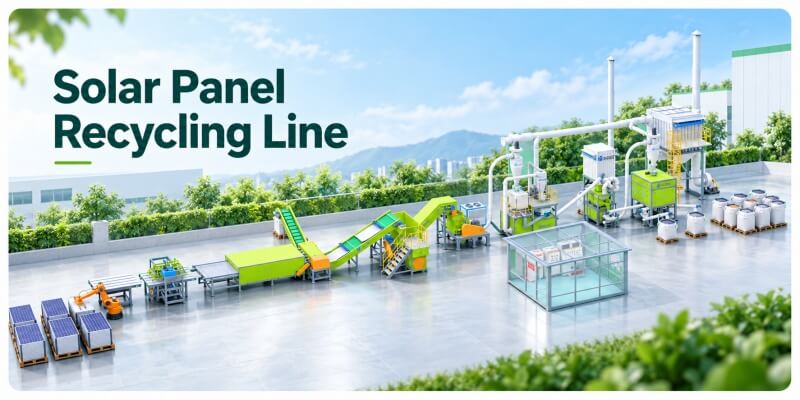



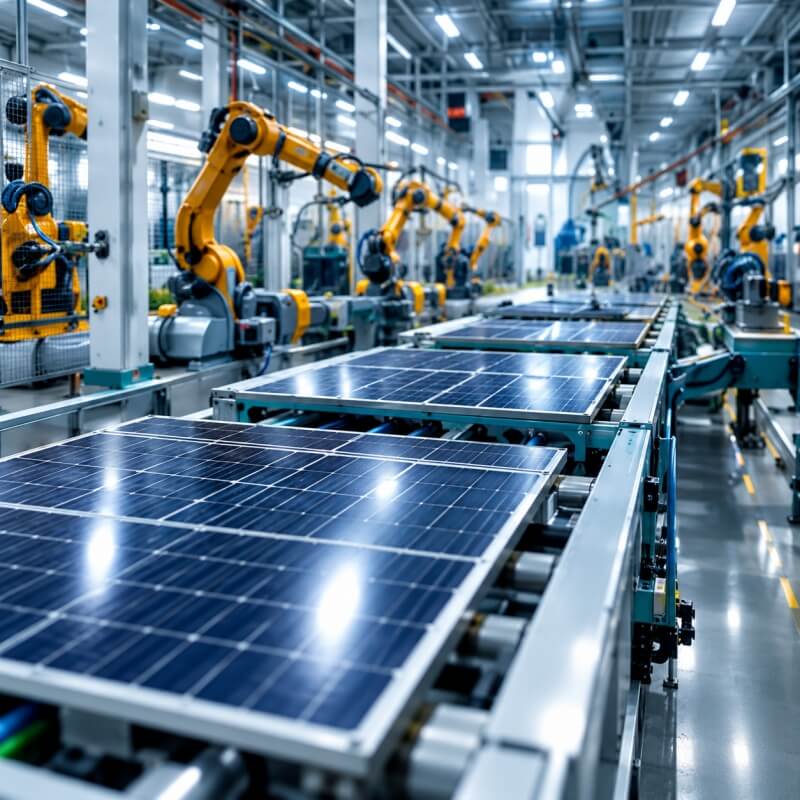







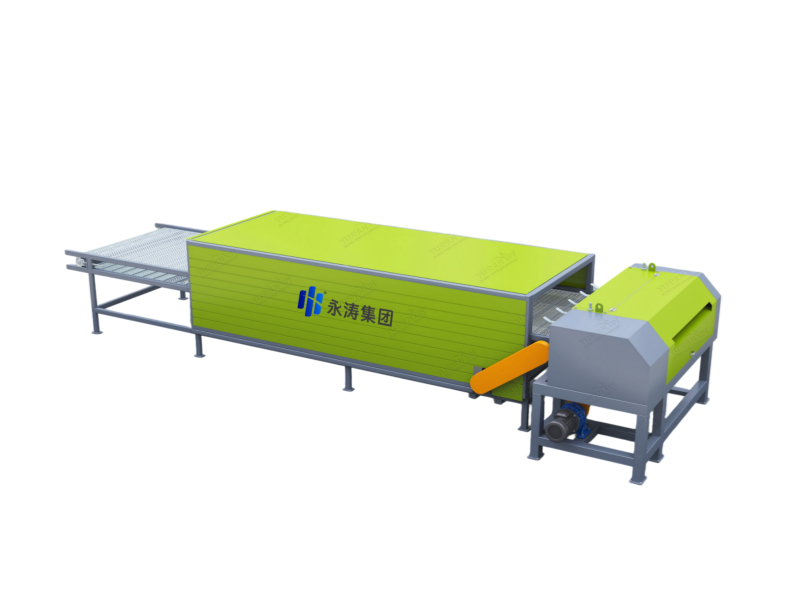


The Yushunxin solar panel glass removal machine supports industrial single-glass module recycling. It removes glass before crushing and reduces material mixing in downstream processes. Buyers can use it independently or integrate it into a 1 t/h mechanical recycling line. We configures the machine according to module size, feed condition, automation level, and final recovery targets. And if you want to upgrade your machine to solution, please contact us.
How Can Pre-Crushing Glass Removal Stabilize Downstream Processing?
01 · Pre-CrushingA stable glass removal stage prevents excess glass from entering crushers and mills. The machine processes deframed single-glass modules before intensive size reduction. It separates glass first and creates a controlled laminate stream for downstream treatment. Therefore, the line handles cleaner material and maintains steadier production.
Controlled Surface Contact Separates Glass Before Size Reduction
After frame removal, the panel enters the working section through a regulated feeding system. Mechanical contact gradually releases glass from the laminated structure. Then, the separated glass falls into a dedicated collection zone. Meanwhile, the remaining laminate leaves through an independent outlet. This design avoids crushing the complete module during the first stage.
Variable Working Controls Match Real Module Conditions
Panel dimensions, glass thickness, aging condition, and residual adhesion affect separation stability. Therefore, Yushunxin configures each machine around representative modules. Variable-frequency control also adjusts the production rhythm during commissioning. Moreover, overload protection stops abnormal material before it damages the working section.
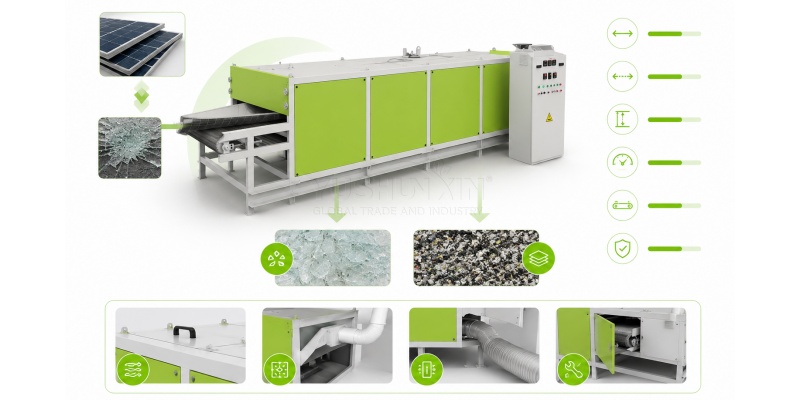
Enclosed Transfer Supports Cleaner Glass Handling
The machine can use protective covers, sealed transfer points, and a dedicated glass collection box. These structures limit fragment escape around the working area. A negative-pressure interface connects the machine with the plant’s central dust system. Cleaning doors and inspection access also simplify routine maintenance. Yushunxin can connect the machine with deframing, conveying, crushing, separation, and material collection equipment. This configuration supports cleaner glass handling and more stable downstream feeding.
Get your Solution!How Can Feedstock Data Define a Stable Glass Removal Solution?
02 · SolutionA reliable glass removal solution starts with real module data. Panel structure, size, weight, damage, and surface condition affect feeding stability. Therefore, Yushunxin evaluates representative modules before confirming the machine layout. This approach protects throughput and supports consistent separation during continuous operation.
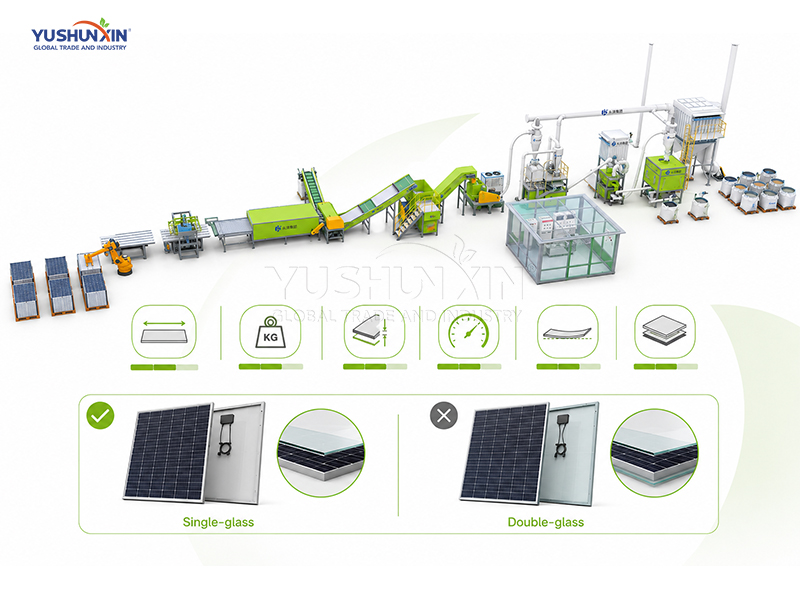
Standardized Pretreatment Improves Feeding Stability
Module Geometry Determines the Mechanical Design
Module Condition Sets the Operating Window
How Does Controlled Heating Improve PV Glass Separation?
03 · HeatingThe glass removal machine combines controlled heating with mechanical cutting. Hot air first softens the EVA bond. Then, reciprocating cutters remove the glass layer. This two-stage design supports cleaner separation and stable industrial output.
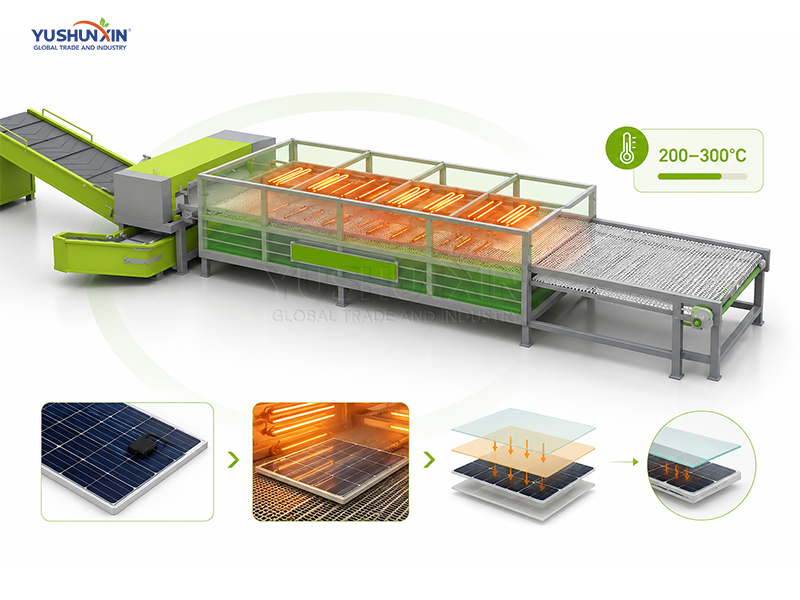
Controlled Heating Softens the EVA Bond
Deframed panels enter the heated chain conveyor after junction box removal. The chamber maintains 200–300°C through a circulating hot-air system. Uniform heating weakens the EVA bond across the panel surface. Therefore, the cutter head faces lower resistance during glass removal.
Reciprocating Cutters Remove the Glass Layer
The removal head carries 44 high-speed steel milling cutter sets. The cutters move repeatedly across the softened glass surface. They remove glass while the conveyor controls panel movement. Meanwhile, the remaining laminate exits for later crushing and separation. This structure keeps most glass away from downstream fine-processing equipment. It also reduces material mixing before crushing, milling, and physical separation.
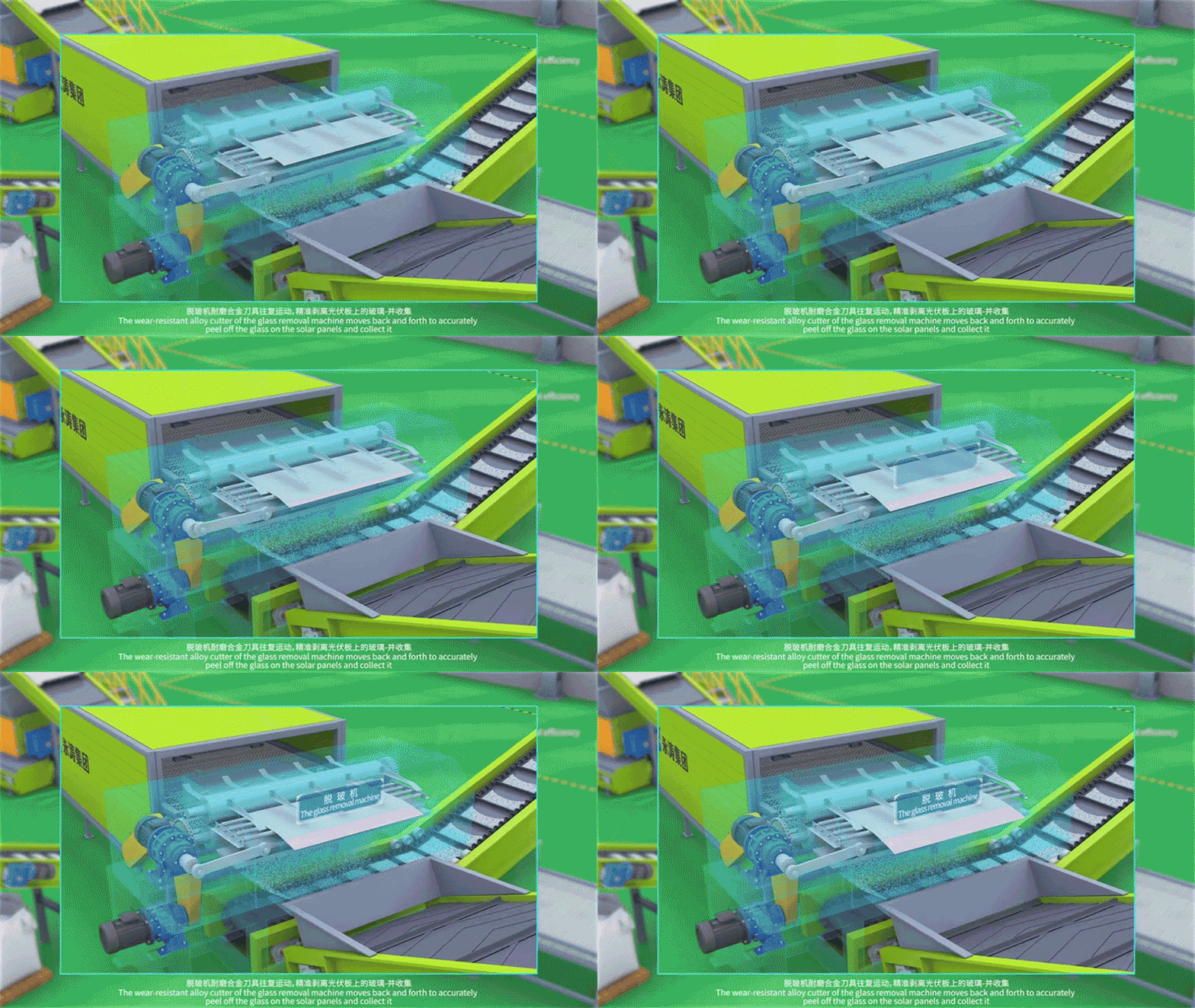
Solar Panel Glass Removal Machine
| Technical Item | PTR-150 Reference |
| Working method | Heating and mechanical glass removal |
| Heating temperature | 200–300°C |
| Cutter configuration | 44 milling cutter sets |
| Processing capacity | 60–80 panels/h |
| Installed power | 36 kW |
| Machine dimensions | 6,120 × 4,945 × 3,500 mm |
| Machine weight | About 5 t |
Final output depends on panel dimensions, glass thickness, and EVA aging. Therefore, Yushunxin confirms heating time and cutter settings through sample testing.
How Can a Glass Removal Unit Anchor a Complete 1 T/H Recycling Solution?
04 · AnchorA reliable glass removal solution starts with real module data. Panel structure, size, weight, damage, and surface condition affect feeding stability. Therefore, Yushunxin evaluates representative modules before confirming the machine layout. This approach protects throughput and supports consistent separation during continuous operation.
Front-End Preparation Protects Glass Separation
Front-End Preparation removes junction boxes and aluminum frames before glass removal. Stable feeding and PLC control improve positioning and separation efficiency.
Staged Crushing Builds Controlled Feed
Product-Specific Separation Protects Value
Closed Conveying Reduces Material Loss
Engineering Deliverables Support Commissioning
YSX-1000 Defines Complete Line Parameters
Summary
These figures describe the complete line, not the standalone glass removal machine. The documented process uses 3–4 cm shredding, 6–8 mm crushing, and 10–80 mesh milling. CE documentation also covers the YSX-M-1t/h solar panel recycling model. It references machinery and electromagnetic compatibility requirements. However, final compliance depends on the contracted configuration and destination market. Pyrolysis temperatures, burners, and oil condensation systems belong to another processing route. Therefore, they should not appear in this machine’s core parameter table.
From Your Needs
to Real Impact


