













As EV batteries enter large-scale retirement, industrial recyclers need more than basic dismantling capacity. A profitable recovery center must connect battery sourcing, déchargement en toute sécurité, pack dismantling, écrasement, séparation, black mass recovery and environmental control. For operators, early planning decides safety, output purity, approval difficulty and ROI. This article focuses on how to plan an EV battery recovery center by feedstock type, disposition de l'usine, configuration de l'équipement, compliance needs and downstream material sales.
Which Operators Should Plan A Complete EV Battery Recovery Center?
01 · PlanificationEV battery recovery centers fit operators with stable battery flow and industrial processing goals. These buyers usually need more than one crusher. They need discharge, démantèlement, écrasement, séparation, dust control and black mass recovery in one project. Donc, the solution should match battery source, safety level, output target and daily capacity. For 500-1000kg/h projects, un complete EV battery recycling line can support higher material value and safer plant operation.
EV Dismantlers Need Battery Recovery
EV dismantling companies need more than pack removal. A complete recovery line adds discharge, démantèlement, and separation to recover black mass, cuivre, aluminium, and steel.
E-Waste Recyclers Can Expand Value
E-waste recyclers can upgrade existing businesses with battery-specific processing. Controlled discharge, écrasement, séparation, and dust treatment help recover valuable battery materials safely.
Metal Recyclers Need Safer Processing
EV batteries cannot enter normal metal recycling lines directly. Dedicated systems add discharge, contrôle de sécurité, and dust treatment before material recovery.
Waste Contractors Need Compliance Systems
Industrial waste contractors need traceable recycling processes, not only equipment. Receiving, tri, traitement, and storage systems support approval, sécurité, et un fonctionnement à long terme.
How Can Feedstock-Based Planning Improve Recovery Center Configuration?
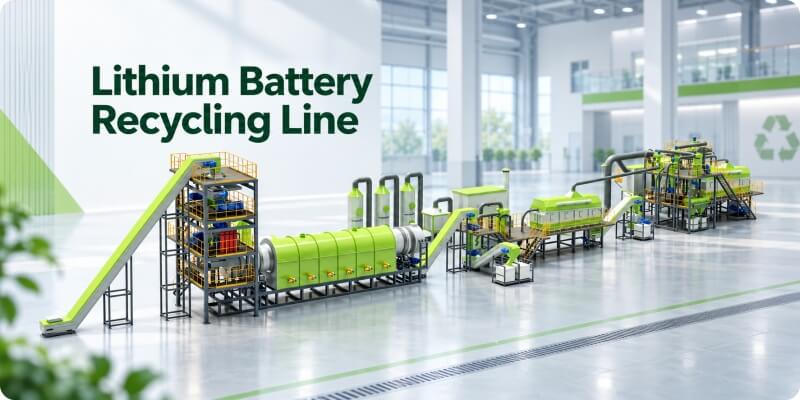
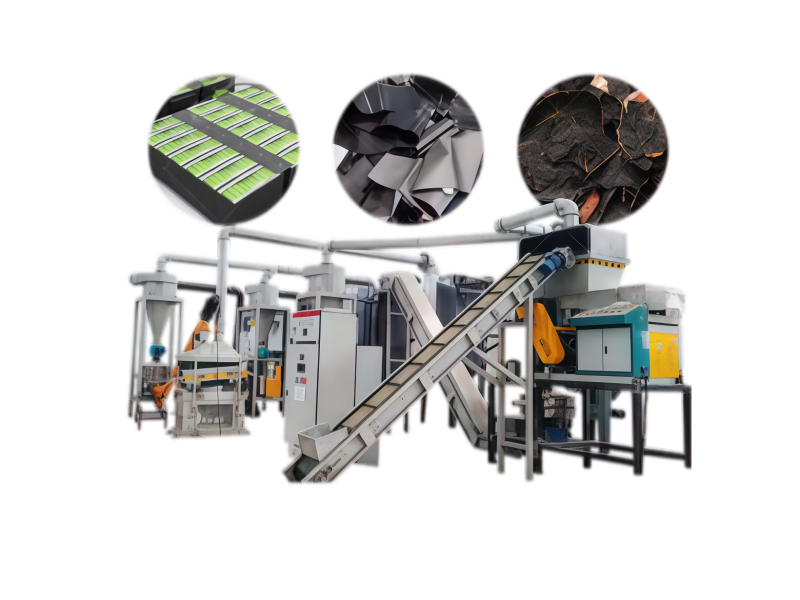
02 · ConfigurationBattery sources decide the whole recovery route. Packs de batteries pour véhicules électriques, modules, cellules, damaged batteries, LFP, NMC and energy storage batteries need different handling methods. Donc, operators should confirm material form before choosing capacity. Alors, the line can match discharge, démantèlement, alimentation, écrasement, separation and storage zones. Yushunxin’s ligne de recyclage de batteries au lithium has 500kg/h and 1000kg/h options. The main power references are 300KW and 349KW. The floor area references are 60m×7m×7m and 80m×7m×7m.
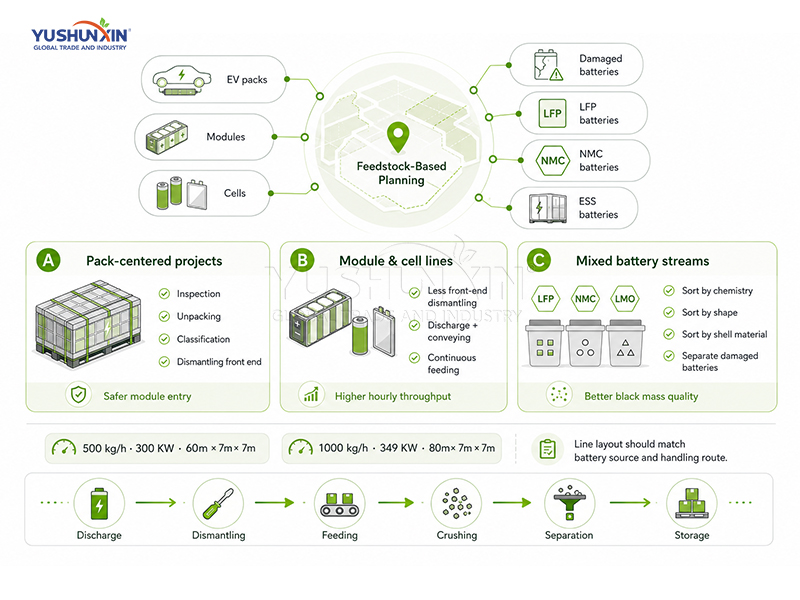
Pack-Centered Projects Need A Separate Dismantling Front End
Module And Cell Lines Need A Faster Feeding Route
Mixed Battery Streams Need Stronger Sorting Control
How to Recycle Black Mass And Recyclable Metals?
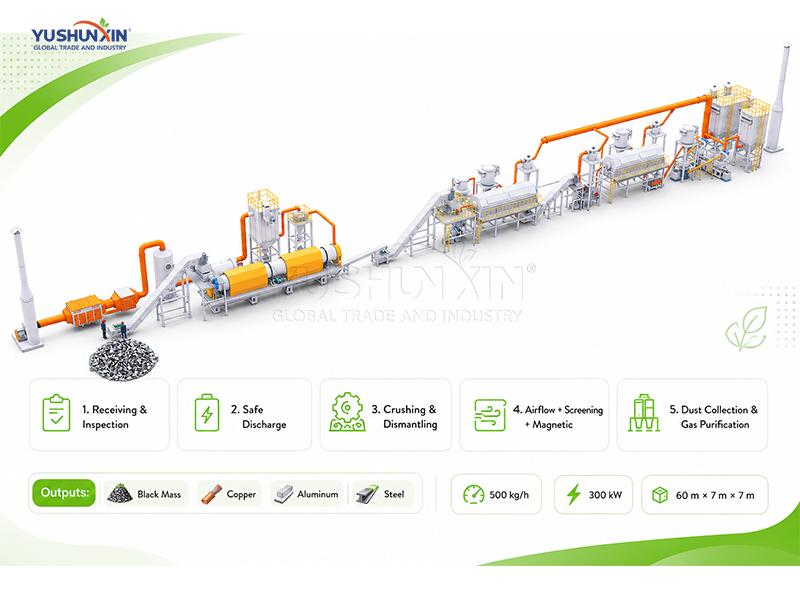
03 · RecyclingAn EV battery recovery center needs a process route with clear output targets. Donc, operators should connect every step with black mass quality, metal recovery and plant safety. A typical Yushunxin lithium battery recycling line uses physical crushing, airflow separation and vibrating screening. Par exemple, un 500 kg/h line can use about 300 kW power and a 60m × 7m × 7m layout.
Controlled Receiving
Ensures Safety
Battery receiving should include registration, inspection, and classification. Sorting packs, modules, and cells before discharge reduces risks and improves later processing efficiency.
Dismantling Prepares
Materials For Recovery
Après la sortie, dismantling removes shells, câbles, and modules. Proper crushing and shredding release black mass while improving copper and aluminum separation.
Separation Creates
Saleable Products
Airflow, dépistage, and magnetic separation recover black mass, cuivre, aluminium, and steel. Stable separation improves powder purity and product value.
Contrôle environnemental
Supports Operation
Battery recycling requires dust collection, traitement des gaz, and negative pressure control. These systems improve workshop safety and help meet industrial compliance requirements.
How Can A Zone-Based Layout Improve EV Battery Recovery Operation?
04 · LayoutIndustrial operators need a recovery center that moves batteries safely and efficiently. The layout should connect storage, décharge, démantèlement, écrasement, séparation, dust control and product packaging. Donc, operators should plan the plant by working zones, not by separate machines.
Battery Intake Area Ensures Safety
The front area includes storage, inspection, tri, and discharge zones. Battery classification and safe discharge reduce risks before dismantling and crushing.
Processing Flow Reduces Handling Risk
The processing area follows discharge, démantèlement, écrasement, and separation steps. Physical separation recovers black mass, cuivre, aluminium, and iron materials efficiently.
Product Area Supports Stable Output
The rear area manages black mass packaging, metal storage, et chargement. Separate storage, maintenance space, and utility areas support continuous operation.
How Can A Compliance-Ready Safety Package Reduce Project Risk?
05 · Risque
EV battery recovery projects face stricter approval pressure than ordinary scrap recycling. Donc, operators should plan safety and compliance before equipment purchase. A 500kg/h lithium battery recycling line may require about 300kW power, so electrical safety, dust control and emergency response cannot stay as later additions. The project should include CE or local machinery compliance, layout drawings, process flow diagrams, equipment lists and commissioning documents. De cette façon, investors, EPC teams and industrial park owners can review the project faster.
Safety Control Starts At Battery Receiving
Battery safety should begin before processing. The plant needs receiving inspection, battery classification, déchargement en toute sécurité, and isolated storage for damaged batteries. These measures reduce electrical, feu, and handling risks during dismantling and crushing.
Dust And Gas Systems Support Compliance
Battery crushing and separation generate fine powder and process gas. A complete system should include dust collection, épuration des gaz, protection incendie, and noise control. These systems improve workshop safety and support environmental approval.
Project Documents Simplify Delivery Process
Industrial buyers need more than equipment supply. A complete project package should include layout drawings, flux de processus, configuration de l'équipement, and installation guidance. Yushunxin supports design, mise en service, and training to ensure smoother project delivery.
How Should Operators Build A Profit Model Before Equipment Selection?
06 · Profit ModelROI planning should start before equipment selection. Machine price matters, but it cannot show project payback alone. Operators should first calculate daily battery supply, battery chemistry ratio, product outlets and operating cost. Yushunxin‘s lithium battery recycling line data lists 500kg/h with 300KW and 60m×7m×7m, and 1000kg/h with 349KW and 80m×7m×7m. Donc, ROI should combine recovery value, uptime, labor plan, permits and land cost.
Black Mass Sales Build
The Main Revenue Route
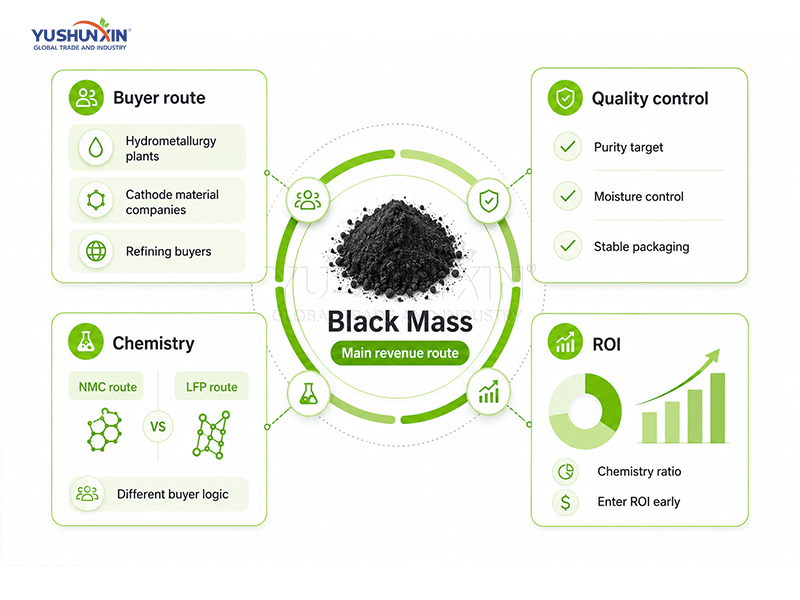
Messe noire usually drives the main revenue plan. It should match hydrometallurgy plants, cathode material companies or refining buyers. Cependant, operators should not only count black mass weight. They also need purity targets, moisture control and stable packaging. NMC batteries may bring different buyer logic from LFP batteries. Donc, the feedstock chemistry ratio should enter ROI calculation early.
Recovered Metals Support
Faster Cash Turnover
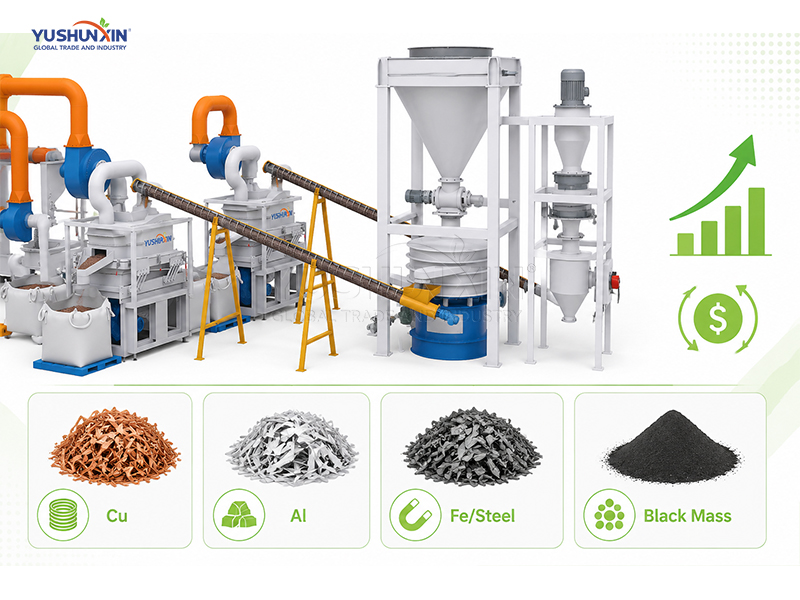
Cuivre, aluminum and steel shells can improve daily cash flow. These materials often have clearer local sales channels. So the center should separate metals cleanly after crushing and screening. Better separation lowers impurity penalties and improves buyer acceptance. Operators should calculate metal income and black mass income together.
Operating Stability Secures
Long-Term Payback
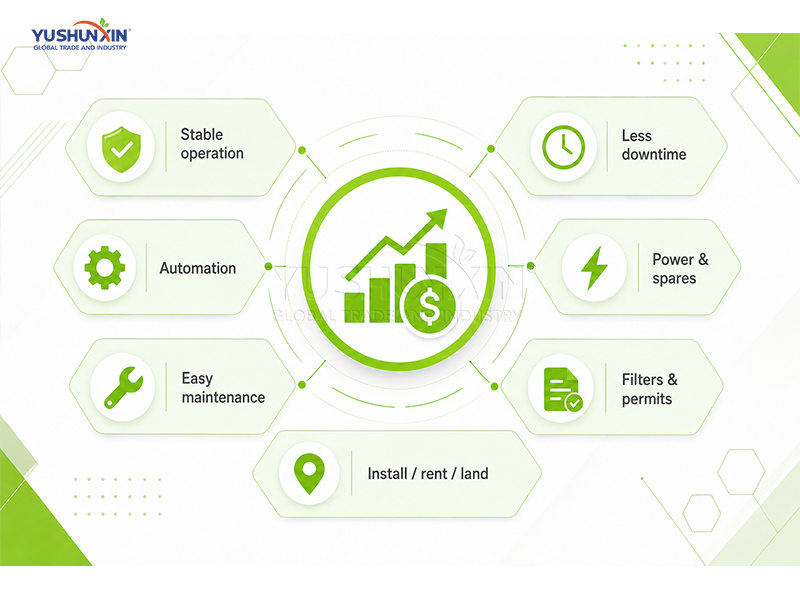
Payback depends on stable operation, not only recovery price. Automation reduces labor pressure and improves sorting consistency. Easy maintenance reduces downtime during crusher, screen and dust collector service. Entre-temps, power use, des pièces de rechange, filters and permits affect real profit. Installation, plant rent and land cost also shape the final payback period.
Résumé
Planning an EV battery recovery center should start with safe handling, reliable layout and clear material outlets. Operators need stable discharge, démantèlement, écrasement, séparation, récupération de la masse noire and environmental control. Alors, the project can match real battery supply, objectifs de pureté, automation level and ROI goals. Yushunxin can review your battery type, espace végétal, capacity target and compliance requirements. We can then provide a suitable lithium battery recycling plant solution, including process design, equipment configuration and layout support.
De vos besoins
à un impact réel


