













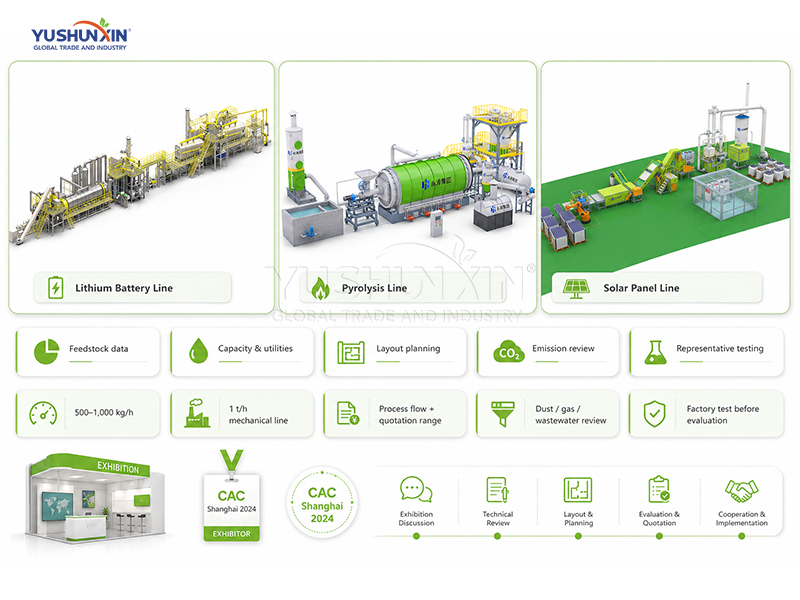

At CAC Shanghai 2024, YUSHUNXIN met recycling investors planning industrial projects across several waste streams. Discussions centered on feedstock conditions, capacité requise, cibles de produits, utilitaires, émissions, and site limits. Buyers compared pyrolysis, solar panel and lithium battery. The meetings then moved from single-machine questions to complete line configuration and project scope. Buyers also defined the technical data needed for further evaluation.
Which Project Variables Shaped Equipment Talks at CAC Shanghai 2024?
At CAC Shanghai 2024, buyers first described feedstock, throughput, outputs, and site limits. These factors narrowed each project before any machine discussion. Some needed one core unit. Others required pretreatment, séparation, systèmes de sécurité, et manipulation des produits.
Raw Materials Set Engineering Direction
Raw Materials determine feeding, chauffage, safety and separation design. Different projects require different routes for EVA, verre, silicium, black powder and pyrolysis products.
Operating Plans Define Capacity Selection
Operating Plans decide capacity based on supply, working hours and expansion needs. Capacity should match material flow, maintenance requirements and future growth.
Saleable Outputs Define Process Boundary
Saleable Outputs determine crushing, separation and post-treatment requirements. Huile, verre, silicium, black powder and metals need different equipment combinations.
Why Did CAC Buyers Move Beyond Single-Machine Quotations?
At CAC Shanghai 2024, many visitors first asked about one core machine and its price. Yet discussions soon covered feeding, séparation, consommation d'énergie, émissions, automation, et manipulation des produits. Buyers wanted to understand each machine’s role within the complete process. Donc, quotations needed clear supply boundaries and interface responsibilities.
Pyrolysis Talks Shifted Toward Process Integration
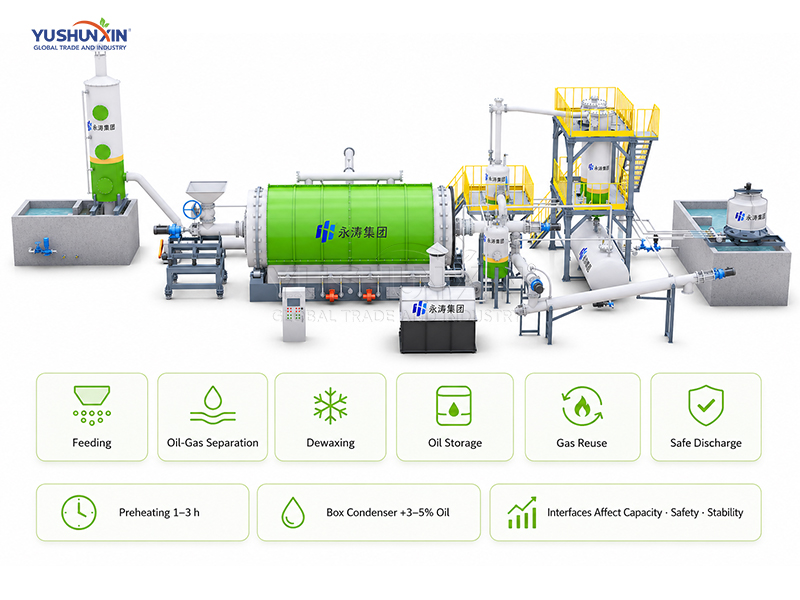
Pyrolysis buyers initially compared reactor capacity, heating fuel, oil yield, and operating cycles. Cependant, these figures could not define the full project. One visitor asked, “Can the reactor work with our existing feeding and oil-storage systems?” The answer depended on material preparation, manipulation de gaz, condensation, stockage, décharge, and emissions control. Reference data place typical preheating at one to three hours for tires, plastiques, and oil sludge. Box-type condensers can also improve collected oil by 3-5% under suitable conditions. Donc, YUSHUNXIN connected the reactor with feeding, séparation pétrole-gaz, dewaxing, stockage, réutilisation du gaz, and safe discharge. Each interface affected capacity, sécurité, and long-term operating stability.
Lithium Battery Projects Added Safety and Black-Powder Recovery
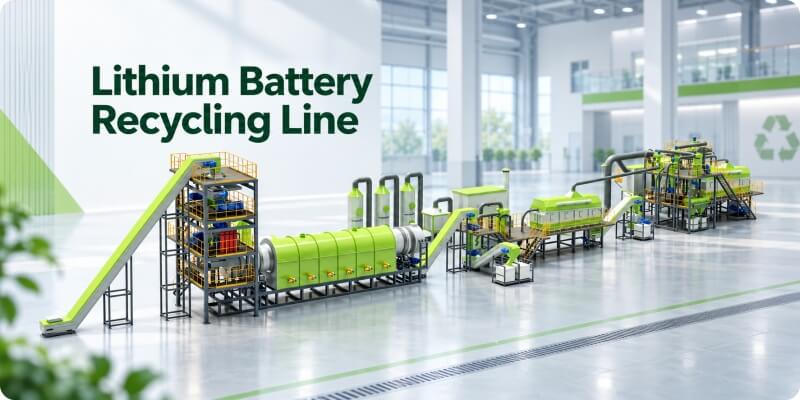
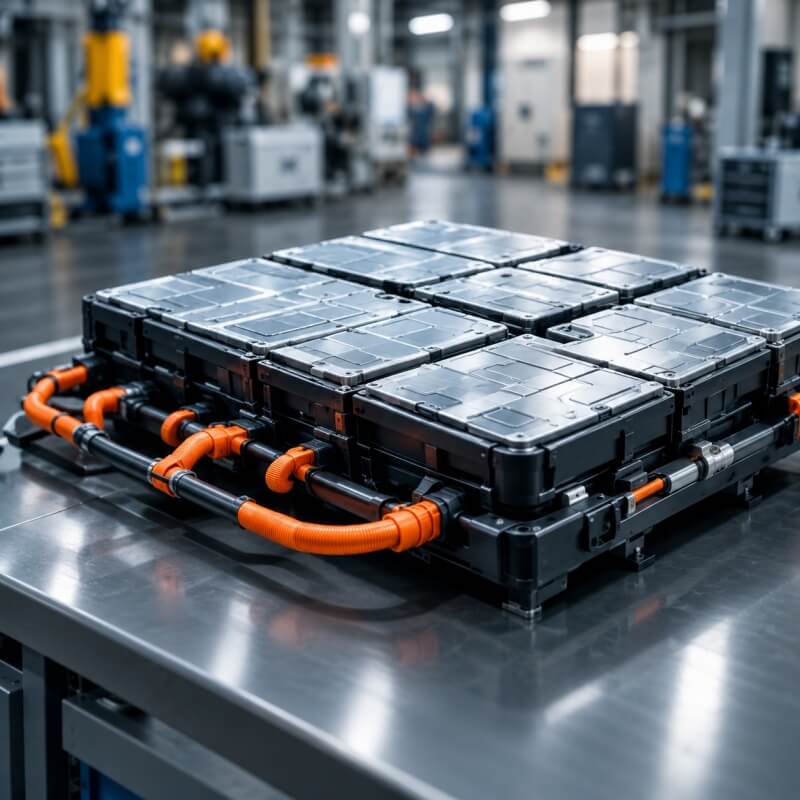
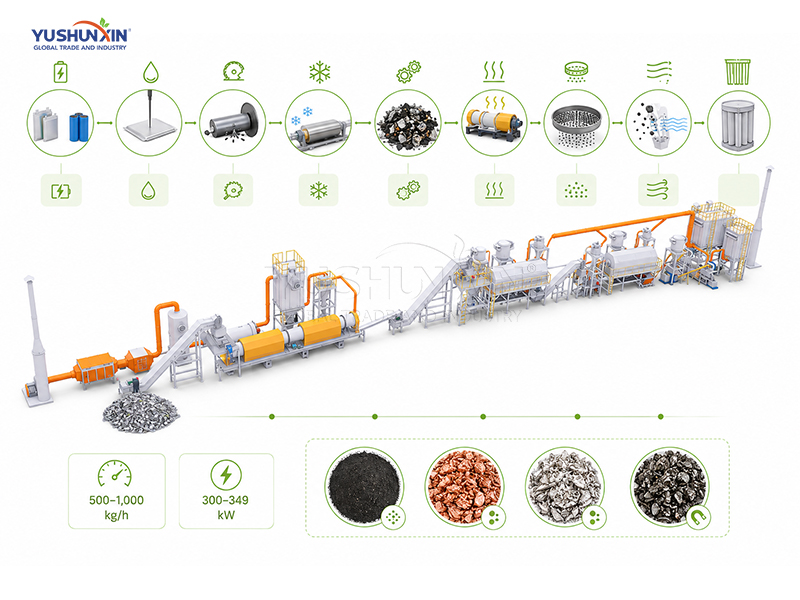
Recyclage des batteries au lithium discussions began with crushers and separators. Cependant, battery condition and discharge safety quickly changed the project scope. Different cells required different discharge methods before crushing. Pouch and plastic-shell cells used puncture discharge. Entre-temps, cylindrical cells used rotary cutting. Après la sortie, the line needed cooling, concassage contrôlé, séchage, dépistage, séparation du flux d'air, et dépoussiérage. Industrial reference capacities ranged from 500 à 1,000 kilograms per hour. Recorded power demand ranged from about 300 à 349 kilowatts. The recovered outputs included black powder, cuivre, aluminium, et fractions de fer. Donc, buyers evaluated recovery purity and safety controls together.
Solar Panel Buyers Compared Recovery Routes
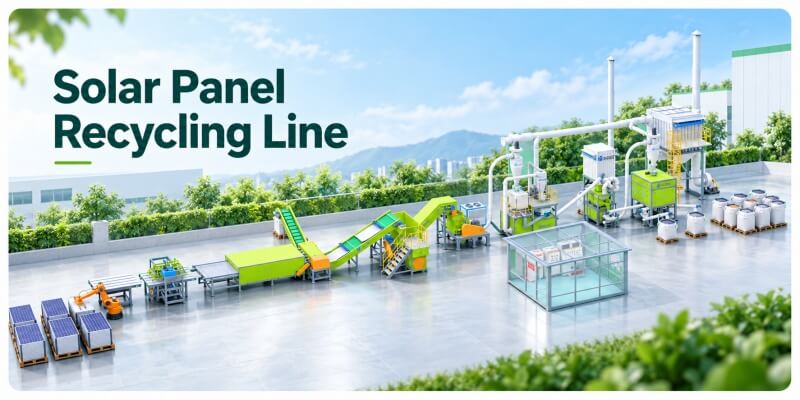
Solar panel buyers discussed mechanical separation, délaminage thermique, et silver recovery routes. Each route required different upstream and downstream equipment. Mechanical PV recycling lines connected frame removal with glass separation, écrasement, affûtage, séparation gravitaire, et séparation électrostatique. One documented configuration processes about one tonne per hour. Mixed single-glass and double-glass projects often required thermal delamination and downstream sorting. Available project references cover approximately eight or sixteen tonnes per day. Entre-temps, silver recovery added concentration, lessivage, filtration, remplacement, and refining stages. Donc, feedstock structure and product targets determined the final equipment boundary. Buyers compared glass condition, silicon purity, récupération des métaux, and silver concentration before selecting a process.
These discussions showed why a single-machine price could misrepresent the real investment. A complete quotation needed defined inputs, outputs, utilitaires, controls, and environmental interfaces. Without these boundaries, installation teams could face capacity gaps and material-transfer problems.
How Did Buyers Move From Exhibition Talks to Technical Review?
CAC Shanghai 2024 started many project discussions. Cependant, industrial buyers needed verified data before engineering review. Matière première, capacité, utilitaires, mise en page, and product targets shaped every preliminary proposal.
Project Data Defined the First Configuration
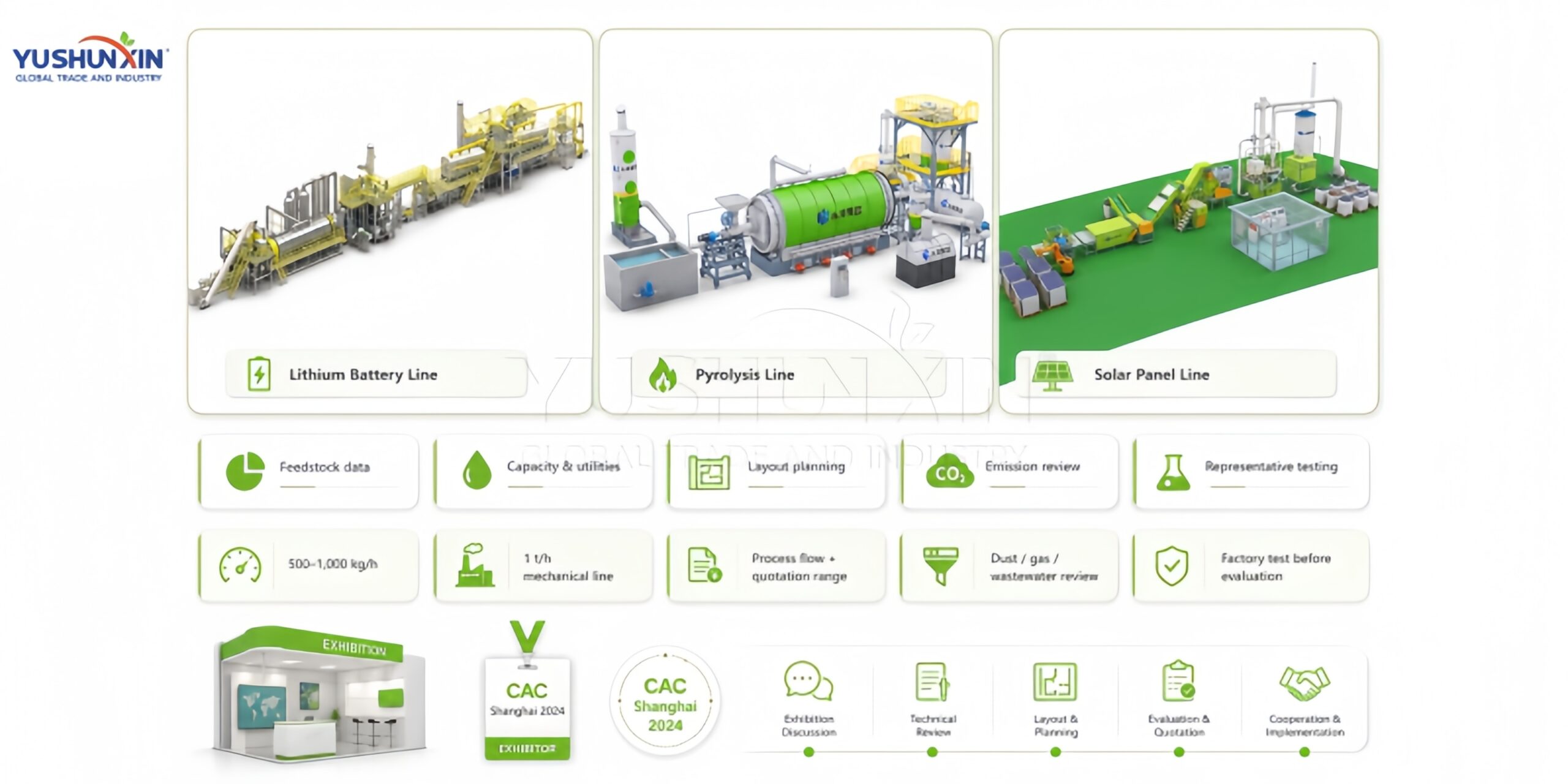
Buyers needed to provide material composition, humidité, taille des particules, and daily supply. They also confirmed factory space, heures d'ouverture, tension, carburant, and cooling water. These details affected equipment capacity and process design. Reference lithium battery lines process 500–1,000 kg/h. Mechanical solar panel lines can reach about 1 ème. YUSHUNXIN then prepared the initial process flow, portée de l'équipement, utility estimate, mise en page, and quotation range.
Environmental Requirements Entered Early Discussions
Buyers asked how the system would control dust, gaz, eaux usées, and solid residues. Solar panel projects focused on EVA residues and process dust. Lithium battery projects focused on black powder collection and crushing emissions. Pyrolysis projects focused on gas treatment, condensation, pression, and cooling water. Donc, each proposal required local emission limits and site information.
Representative Materials Defined Factory Testing
Empty running could confirm mechanical movement. Cependant, it could not prove recovery results or operating stability. The exhibition ended, but engineering work continued. Formal evaluation began after buyers submitted complete project data.
Obtenez votre solution!CAC Shanghai 2024 showed that industrial buyers evaluate complete projects, machines non isolées. Matière première, capacité, final products, utilitaires, émissions, and site conditions shaped every discussion. YUSHUNXIN used these project inputs to define suitable pyrolysis, e-waste recycling configurations. Buyers planning the next stage can also review our guides on pyrolysis plant selection, total project cost, recyclage de panneaux solaires, lithium battery processing.
»
De vos besoins
à un impact réel


