



















As PV module manufacturing expands, defective panels are becoming a factory-level waste stream. They are no longer just production loss. Rejected modules still contain glass, алюминий, кремний, copper and silver. Однако, poor handling creates storage pressure, compliance risk and value loss. For industrial PV manufacturers, a controlled recycling route is becoming necessary. This article focuses on defect classification, предварительная обработка, термическое расслоение, разделение материалов, safety compliance and ROI planning for in-plant PV waste management.
How Can PV Factories Turn Defective Modules Into A Controlled Waste Stream?
01 · StreamPV module plants generate scrap from EL failure, low-power output, lamination defects, cracked glass, frame deviation and failed repair. Поэтому, these panels need a fixed waste route, not temporary storage. A typical crystalline module contains valuable glass, алюминий, кремний, copper and silver, so unmanaged scrap also means value loss. Glass can reach about 70%, while aluminum frames can reach 10%–15%. The solution should connect defect labeling, storage zones, recycling equipment, compliance records and material recovery.
Classify Defects Before Storage
PV scrap should be classified by defect type, размер, and disposal route before storage. A clear coding system reduces mixed batches and improves recycling planning.
Build A Factory-Level Recycling Route
Production scrap needs a dedicated recycling system based on daily volume and factory layout. Pretreatment, расслаивание, and separation can recover glass, кремний, и металлы.
Connect QC, EHS And Recycling
A complete scrap route requires cooperation between quality, безопасность, оборудование, and finance teams. This improves compliance, cost control, and long-term waste management.
How Should Factory Defect Points Shape The Recycling Solution?
02 · РешениеА PV module disposal plant should map defect sources before equipment selection. Поэтому, the recycling plan should follow the manufacturing process. Cell defects, lamination defects and final test rejection create different waste forms. Тем временем, each form affects dismantling, pyrolysis and material separation. A typical crystalline module contains about 70% стекло, 10%–15% алюминий, 3%–5% silicon, 1%–2% copper and 0.05%–0.1% silver. Так, accurate waste classification directly improves recovery value.
Lamination Defects Need Pyrolysis Planning
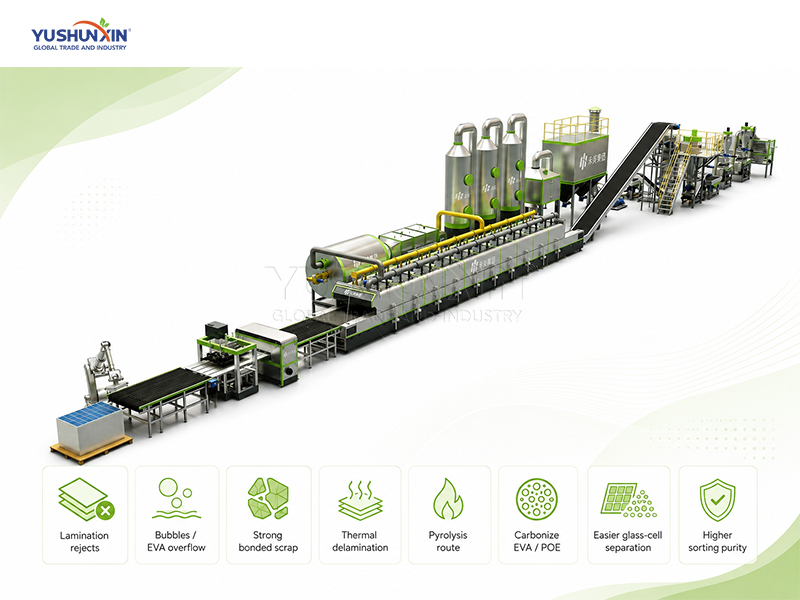
Lamination creates many high-volume rejects. Например, factories may face bubbles, EVA overflow, uneven curing and backsheet wrinkles. Тем временем, failed delamination during repair also creates bonded waste. These modules usually keep strong glass-cell-backsheet adhesion. Поэтому, simple crushing may reduce recovery value. The better solution uses термическое расслоение or pyrolysis equipment. The system can carbonize EVA or POE adhesive. Затем, стекло, silicon cells and metal ribbons separate more easily. This route helps factories reduce mixed waste and improve downstream sorting purity.
Final Assembly Rejection Needs Front-End Dismantling
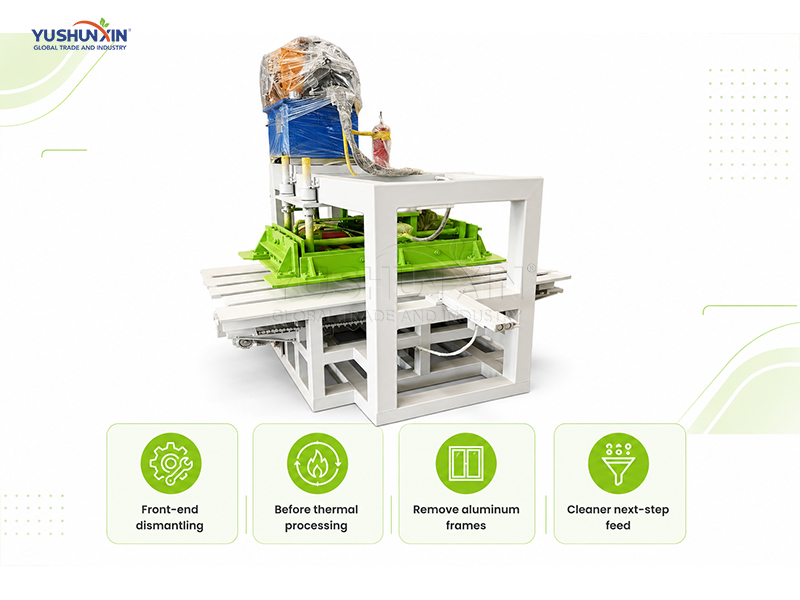
Framing, junction box installation and final testing also create scrap modules. Common issues include frame mismatch, junction box failure and insulation test failure. Более того, low power grading may turn finished modules into non-saleable inventory. This waste stream needs front-end dismantling before thermal processing. Первый, operators or machines снять алюминиевые рамы и распределительные коробки. Затем, the line sends laminate sections into thermal delamination. После этого, скрининг, air separation and электростатическое разделение recover glass, silicon and metals. This solution helps PV factories manage finished rejects as a structured recycling flow.
Cell And Ribbon Defects Need Value-Oriented Sorting
Cell stringing and soldering lines often generate cracked cells, broken busbars and ribbon offset. Более того, poor soldering may create weak connections or detached ribbons. These rejected semi-finished modules still contain valuable silicon and silver paste. Поэтому, factories should separate this waste from general broken panels. The solution should focus on silicon-rich and silver-rich material recovery. Первый, the plant can collect rejected cell strings separately. Затем, the recycling line can use crushing, screening and fine separation. Окончательно, silver-bearing cell powder can connect with a silver extraction process.
How Should Defective PV Modules Enter Different Recycling Systems?
02 · SystemsDefective PV modules should not enter one mixed recycling route. Different panel structures need different equipment logic. Поэтому, PV plants should classify modules before line design. Single-glass panels usually match mechanical separation. Однако, double-glass panels need thermal delamination or pyrolysis. This routing protects glass value, improves metal recovery and reduces operating waste.
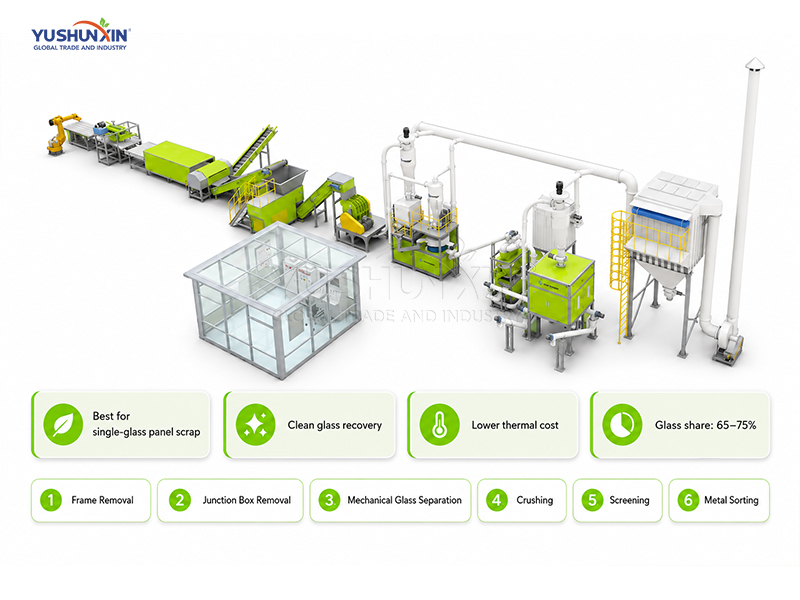
Route Single-Glass Modules
Modules To Pyrolysis
Single-glass modules are suitable for механическое разделение. Удаление рамы, разделение стекла, сокрушительный, and sorting recover glass, кремний, and metals with lower thermal cost.
Route Double-Glass
Modules To Pyrolysis
Double-glass modules need stronger separation due to two glass layers and tight encapsulation. Pyrolysis delamination helps separate glass, кремний, медь, и материалы, богатые серебром.
Separate Repairable
Panels Before Recycling
Not all defective panels need recycling immediately. QC sorting can separate repairable modules from scrap, reducing unnecessary processing and improving resource utilization.
Prioritize High-Value
Material Recovery
Defective modules contain valuable fractions such as copper, кремний, и серебросодержащие материалы. Separate collection improves material tracking and supports future refining options.
How to Configure a Defective PV Waste Line?
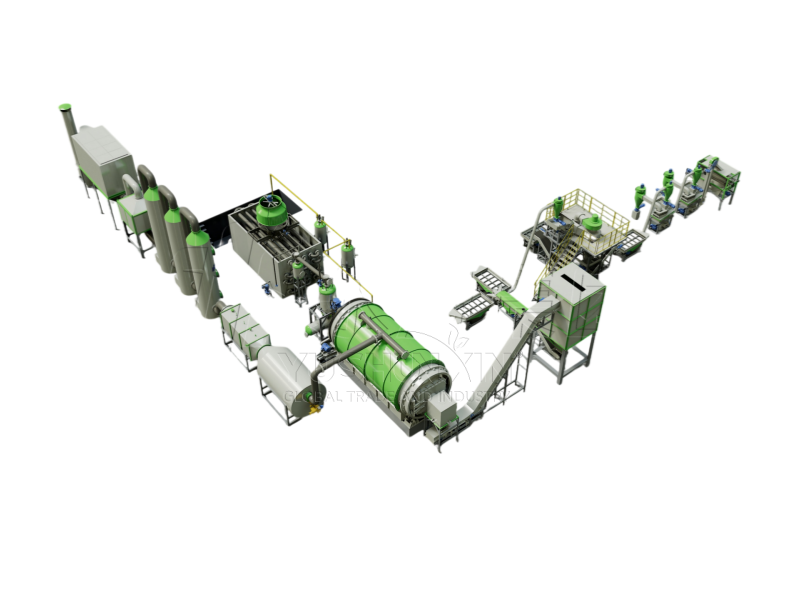
04 · КонфигурацияA PV module factory should not rely on one recycling machine. Вместо, it needs a connected waste management line. The line should match defect volume, module type and recovery target.
Pretreatment Section
Pyrolysis Section
Sorting And Collection Section
How Does A Pyrolysis Recycling Line Protect Recovery Value?
05 · ЦенитьDefective PV modules still carry commercial value. Однако, direct crushing often mixes glass, кремний, metals and carbon residue. Поэтому, PV module plants need a pyrolysis recycling line before fine sorting. This solution helps release bonded layers, protect clean fractions and prepare silver-rich material for deeper recovery.
ПРОЦЕССНАЯ ЗОНА
Pyrolysis Opens The Bonding Layer First
Ева, POE and backsheet films bind glass, cells and ribbons tightly. Однако, this bonding layer creates mixed material during direct crushing. Поэтому, the furnace should focus on delamination, not simple size reduction. A tunnel furnace can use preheating, main pyrolysis and cooling zones. Например, the main reaction zone often runs at 450–550℃. Затем, EVA loses adhesion and releases glass, silicon cells and ribbons. In a matched line, EVA degumming can reach ≥99%.
FRACTIONS
Clean Fractions Create More Sales Channels
После пиролиза, the plant can separate higher-value material streams. Для одинарных стеклянных модулей, полное восстановление стекла может достигать ≥92%. Тем временем, separated glass purity can reach ≥98% in suitable line. Поэтому, factories gain options beyond low-value mixed glass cullet. Silicon pieces and powder can enter silicon upgrading channels. Также, copper ribbons and junction-box copper can enter metal recycling channels. In one ton of modules, glass may reach 600-700kg. Тем временем, silicon may reach about 90-110kg.
ENTRY
POINT
Silver-Rich Fines Build The Refining Entry Point
Pyrolysis method makes silicon-silver fractions easier to collect. Затем, скрининг, color sorting and gravity separation reduce material dilution. This step creates a better feed for silver extraction. One ton of PV modules may contain 500-1000g silver. Более того, mature wet processes can reach 98%-99% восстановление серебра. После этого, electrolysis can produce high-purity silver for valuable resale. Поэтому, pyrolysis method becomes the front-end solution for silver recovery.
How Can PV Plants Match Recycling Budget With Recovery Depth?
06 · BudgetBudget planning should start from waste volume and recovery depth. A simple disposal route only reduces factory pressure. Однако, a matched recycling line can recover glass, алюминий, кремний, copper and silver. Поэтому, PV plants should compare equipment cost with material value, energy use and long-term compliance savings.
Basic Budget Should Cover Front-End Waste Control
PV plants should first calculate monthly defective module volume. Затем, they can choose manual, semi-automatic or automatic pretreatment. The budget should include storage, умение обращаться, dismantling and labor. Например, aluminum frames can reach 10%–15% of module weight. Copper usually accounts for 1%–2% of module weight. These fractions can create early cash recovery.
Higher Budget Supports Deeper Material Recovery
A complete route should include pretreatment, thermal delamination and sorting. This route needs higher investment, but it improves recovery value. One ton of modules may contain 600–700kg glass. Its glass value may reach about USD 45–75. Тем временем, silicon recovery may reach 90–110kg per ton. Its value may reach about USD 150–295. Silver can add about USD 295–735 per ton. So total recovered value may reach about USD 880–1,470 per ton.
ROI Depends On Capacity, Energy And Silver Recovery
Industrial buyers should not only ask equipment price. They should calculate capacity, власть, labor and product outlets. A tunnel furnace line can process about 1–5t/h. Its installed power may reach 300–800kW. Unit energy use may reach 150–220kWh/t. Однако, pyrolysis gas reuse may reduce external energy by 30%–50%. For silver refining, electrolysis equipment can process 30kg silver per day. The final silver purity can reach 99.9%.
Краткое содержание
Defective solar panel waste management should become part of PV factory planning. From waste classification to pretreatment, термическое расслоение, сортировка, emission control and silver recovery, each step affects recovery value and compliance results. Юшуньсинь can provide a complete in-plant recycling solution for PV module manufacturers. Our engineers can review your defective module volume, panel type, factory space and recovery target. Затем, we can design a suitable process route, equipment configuration and layout plan for your production plant.
Из ваших потребностей
к реальному воздействию


