













As early solar farms reach retirement, PV waste is becoming a compliance and recovery challenge for owners. Decommissioning projects now need more than dismantling contractors. They need documented waste flow, suitable recycling equipment, emission control and clear material outlets. This article focuses on how power plant owners, EPC companies and recyclers can plan a compliant PV waste strategy with mechanical recycling, thermal delamination and silver recovery.
How Can PV Decommissioning Projects Keep Waste Flow Traceable?
01 · Flow Traceable
PV decommissioning compliance starts before panel removal. Поэтому, owners need a clear chain from site dismantling to final recycling. The plan should define waste ownership, storage rules, transport records, recycler responsibility and material destination.
Owner Responsibility
Power plant owners should not only sell retired panels to traders. Вместо, they should confirm the final recycler, treatment method and material outlet. IPP investors, EPC contractors and asset managers need proof of disposal. Поэтому, each batch should have weighing records, transfer documents and recycling reports.
Site Handling Control
The site team should classify intact panels, broken panels and contaminated panels. Тем временем, broken panels need separate storage to avoid glass scattering and pollution. Panels should stay dry, labeled and ready for batch loading. Затем, transport records can match later recycling records.
Compliance Document Package
A project-level file should include: Waste list, batch records, transport documents, recycling contract, treatment report and material destination proof. Для дорогостоящих проектов, the recycler should also provide equipment flow, plant layout and emission plan. This helps owners pass audits and shows real resource recovery value.
How Can Module Mapping Decide The Right PV Recycling Line?
02 · Module MappingBefore equipment selection, you should map module type, уровень повреждения, и целевые продукты. Поэтому, this step avoids wrong capacity planning. Также, it links site layout, power demand, heat load, and downstream outlets. For decommissioning projects, classification is not paperwork. It becomes the first engineering decision.
Solution A: Single Glass Panels Enter A Mechanical Recovery Line
Solution B: Mixed And Double Glass Panels Use Thermal Delamination
Solution C: Silver-Bearing Fractions Move To Refining
How Can Buyers Match PV Waste Streams With The Right Recycling Line?
03 · Streams
Utility-scale PV waste projects need route selection before equipment quotation. Поэтому, you should first check module type, daily volume, plant space and product outlets. Затем, they can choose a mechanical line, thermal delamination line or silver recovery line. The right route should protect throughput, reduce mixed-feed risk and improve material sales value.
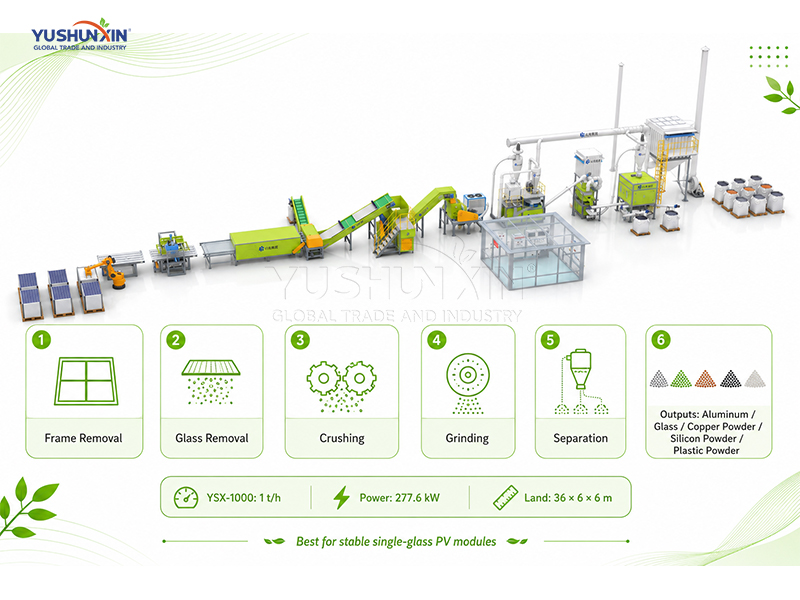
YSX-1000 Mechanical Separation Plan For Single-Glass Modules
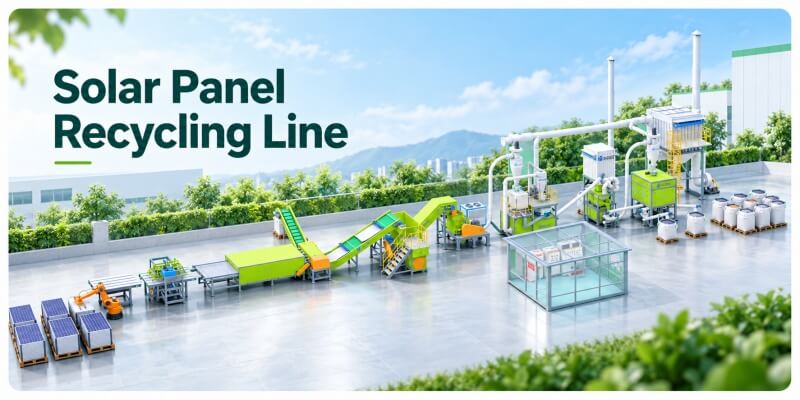
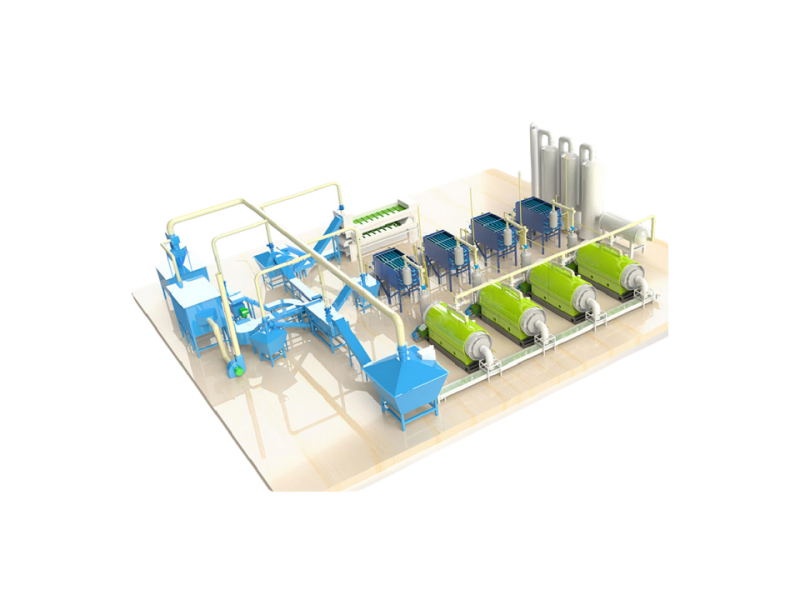
If your waste stream mainly contains single-glass panels, YSX-1000 can support stable mechanical recycling. This line processes about 1 т/ч, с 277.6 kW total power and 36×6×6 m land requirement. Первый, the system removes the aluminum frame and front glass. Затем, измельчение, crushing and grinding reduce the remaining material. После этого, gravity separation recovers copper from silicon and plastic powder. Окончательно, электростатическое разделение отделяет порошок кремния от порошка пластика. This route suits power plant decommissioning projects with clear single-glass module batches.
Pyrolysis Plan For Mixed Single And Double Glass Panels
If your project receives mixed single-glass and double-glass modules, pyrolysis method gives more flexibility. The system removes frames first. Затем, panels enter the pyrolysis reactor for EVA decomposition and layer separation. During this process, EVA glue volatilizes under controlled heating. Тем временем, exhaust gas enters separation, condensation and purification units. Затем, syngas returns to heat the reactor and helps reduce fuel demand. После выписки, стекло, кремний, copper and silver-bearing fractions enter screening and separation steps. This route suits large dismantling centers and regional PV waste collection projects.
Silver Recovery Plan For Higher Material Value
If you control stable retired module supply, silver recovery can raise project value. The recycling route should not stop at glass, aluminum and silicon. Вместо, it should further recover silver-bearing cell material. A complete silver extraction line can include acid washing, фильтрация, замена, wastewater neutralization and electrolysis. Например, the silver refining process can obtain high-purity silver through electrolysis. Поэтому, this route suits investors with continuous feedstock, chemical handling capacity and downstream precious metal outlets. It also works better when the project already has material sorting and environmental treatment plans.
How Does A PV Recycling Plant Build Its Permit-Ready Environmental System?
04 · Permit-ReadyPermit reviewers do not approve a plant only because it can recycle panels. Поэтому, the environmental system should enter the design stage early. For utility-scale PV waste projects, the solution should cover gas, пыль, сточные воды, residue and safety logic. Затем, buyers can submit a clearer package for environmental review and investment approval.
Closed Gas Loop Improves
Thermal Separation
Pyrolysis systems should control gas flow and heat reuse. Tunnel routes use 450–550℃ thermal separation, while gas treatment and heat recovery reduce emissions and fuel demand. Rotary routes require gas purification and safety devices.
Dust Collection Protects
Material Quality
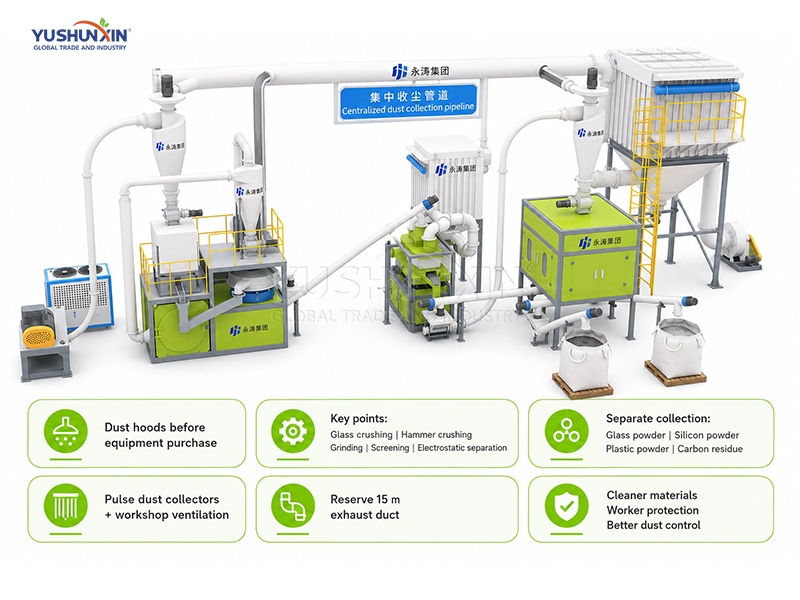
Mechanical separation creates dust during crushing, шлифование, и скрининг. A complete dust control system should collect different powders separately and use pulse collectors to improve workshop safety and product purity.
Wastewater Treatment
Supports Silver Recovery
Silver extraction requires wastewater planning after chemical processing. Neutralization, фильтрация, and adsorption systems help manage acidic liquids and metal-containing wastewater while controlling operating costs and compliance risks.
Safety Control Supports
Project Approval
Industrial PV recycling lines need temperature, кислород, and pressure monitoring. Safety interlocks, emergency systems, and complete pollution-control documents help customers meet operation and approval requirements.
How Can Material Outlets Turn PV Decommissioning Into A Payback Plan?
05 · Material Outlets
PV decommissioning ROI should start with three calculations. Первый, recovered materials can offset removal and disposal costs. Затем, stable product sales can create project income. Тем временем, compliant recycling can reduce audit, landfill and transfer risks. Поэтому, owners should not only ask about silver. They should plan glass, алюминий, кремний, copper and silver outlets together.
Bulk Recovery Builds The Revenue Base
A practical solution should first secure large-volume material recovery. Glass usually takes the highest weight share. Алюминиевые рамы, silicon powder and copper also support steady revenue. For one ton of retired PV modules, the line may recover about 618–713 kg glass. It may also recover 98–147 kg aluminum, 7.8–11.8 kg copper and 90–114 kg silicon. Поэтому, bulk materials decide cash flow stability. Для одинарных стеклянных модулей, full-panel thermal separation can improve glass value. The process can reach ≥92% intact glass recovery. Тем временем, silicon recovery can reach ≥98% under proper separation.
Silver Adds Margin, Not The Whole Business
Silver has a small weight share. Однако, it can raise the profit ceiling. A ton of retired PV modules may contain about 500–1000 g silver. Извлечение серебра в зрелых мокрых породах может достигать 98–99%.. Поэтому, silver extraction suits larger projects. It also suits recyclers with stable PV waste supply. Более того, buyers need acid washing, фильтрация, замена, wastewater treatment and electrolysis systems. Without these units, silver value stays inside mixed powder.
Downstream Sales Decide Real Payback
Recovered products need confirmed buyers. В противном случае, material recovery only creates inventory. Поэтому, the solution should match each output with a sales channel. Glass can go to glass recyclers or building material plants. Aluminum can go to metal smelters. Copper can go to copper refineries. Silicon can go to silicon material processors. Тем временем, silver-rich powder can go to precious metal refiners. For industrial clients, ROI comes from a full outlet plan. The plan should combine disposal cost reduction, material sales and compliance risk control. Затем, the recycling line can support long-term decommissioning contracts.
Краткое содержание
PV power plant decommissioning requires more than waste removal. It needs classification, safe handling, documentation, compliant recycling and stable material outlets. Поэтому, project owners should connect site management with the right recycling equipment. We can provide a complete PV waste recycling solution, including mechanical separation, термическое расслоение, material sorting and silver extraction. Более того, our team can support equipment layout, проектирование процесса, emission control and project proposal documents. This helps industrial clients reduce compliance risk, recover material value and move projects toward approval.
Из ваших потребностей
к реальному воздействию


