













As solar panel production expands, factory scrap is becoming a measurable cost and recoverable resource. Rejected modules, broken cells, glass scrap, tabbing ribbons and laminated defects can no longer be treated as ordinary waste. For large PV manufacturers, an in-house recycling line can support material recovery, cleaner workshops, ESG reporting and compliant disposal. This article focuses on factory-side recycling planning. It covers mechanical separation, термическое расслоение, material sorting and optional silver recovery.
How Should PV Factories Build A Scrap-To-Recovery System?
01 · SystemSolar panel factories produce stable scrap every day. Поэтому, scrap recycling should follow a factory-side recovery plan. Rejected modules, broken cells, trimming waste and failed laminates can become recoverable material streams. Более того, the system should reduce disposal cost and improve production waste control.
Map Scrap Sources Before Recycling
PV manufacturing scrap is cleaner and more stable than retired panels. Classifying defective modules, стекло, алюминий, кремний, and copper scrap helps define the right recycling route.
Separate Materials For Higher Value
Factory recycling can recover glass, алюминий, медь, кремний, and silver-bearing materials separately. Clear material classification improves resource value, ESG tracking, and production waste management.
Match The Line With Scrap Flow
The recycling system should match scrap type, объем, и цели восстановления. Mechanical separation suits clean scrap, while thermal routes support laminated materials and deeper material recovery.
How Does Each PV Scrap Type Match The Recycling Process?
02 · PV Scrap TypePV factories generate different scrap streams every day. Поэтому, one recycling route cannot handle all materials well. Clean glass, laminated rejects, broken cells and metal parts need separate treatment. Since glass can account for about 70% of a standard PV module, early classification directly affects recovery value.
Laminated Rejects Need Thermal Delamination
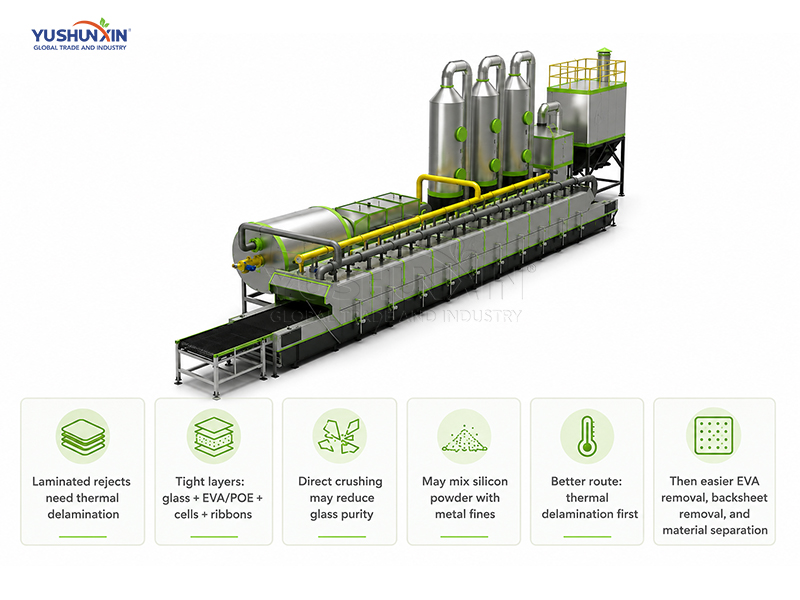
Laminated rejects combine glass, ЕВА или ПОЭ, cells and ribbons tightly. Поэтому, direct crushing may reduce glass purity. It can also mix silicon powder with metal fines. A better route uses thermal delamination first. Затем, EVA removal, backsheet removal and material separation become easier.
Cell And Silicon Scrap Need Fine Sorting
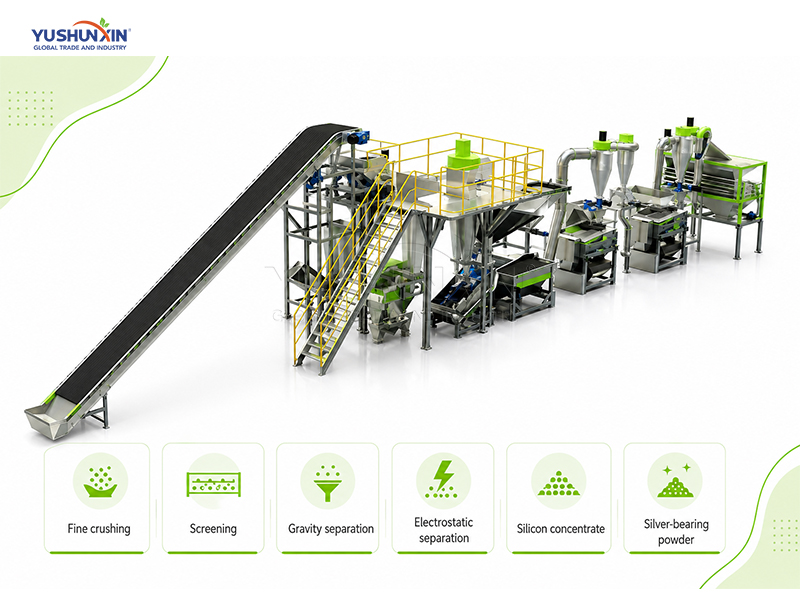
Сломанные клетки, wafer scrap and silicon powder need precision separation. Поэтому, heavy crushing is not the main step. The route should include fine crushing, скрининг, гравитационное разделение и электростатическое разделение. Более того, this process can concentrate silicon and silver-bearing powder.
Metal Parts Need Early Removal
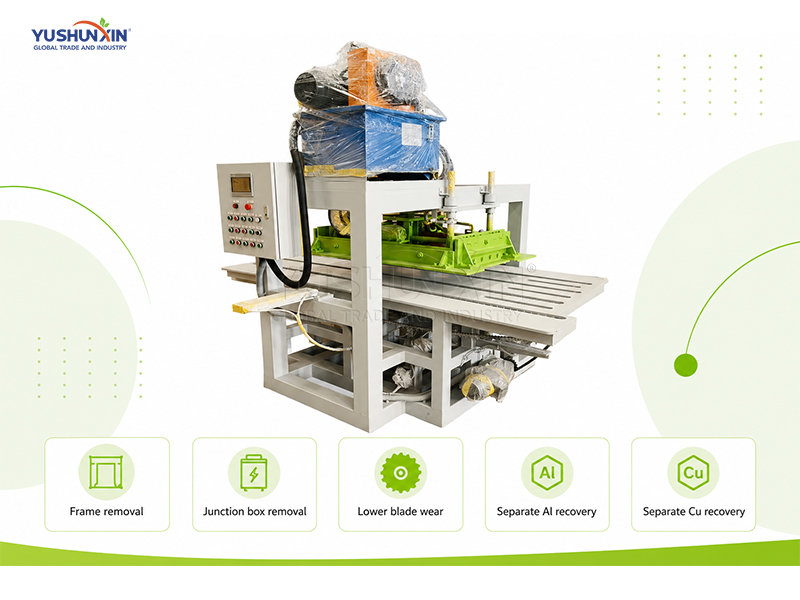
Алюминиевые рамы, junction boxes and copper ribbons should leave before deep processing. В противном случае, they increase blade wear and sorting pressure. The front-end route should include снятие рамы and junction box removal. Затем, aluminum and copper can enter separate recovery channels.
How Can PV Scrap Recycling Fit Factory Production Flow?
03 · Production Flow
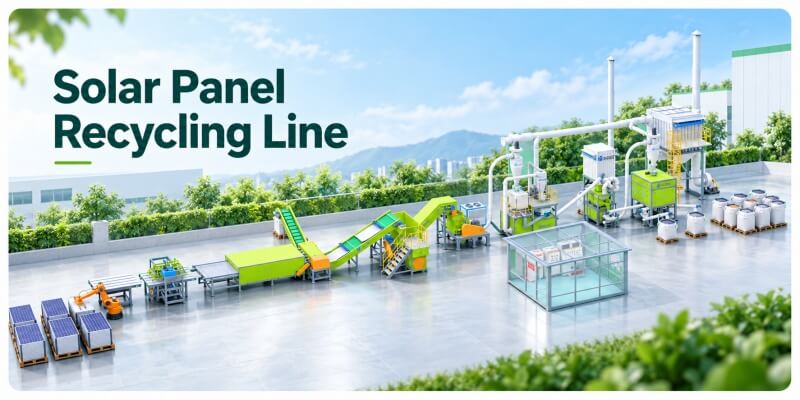
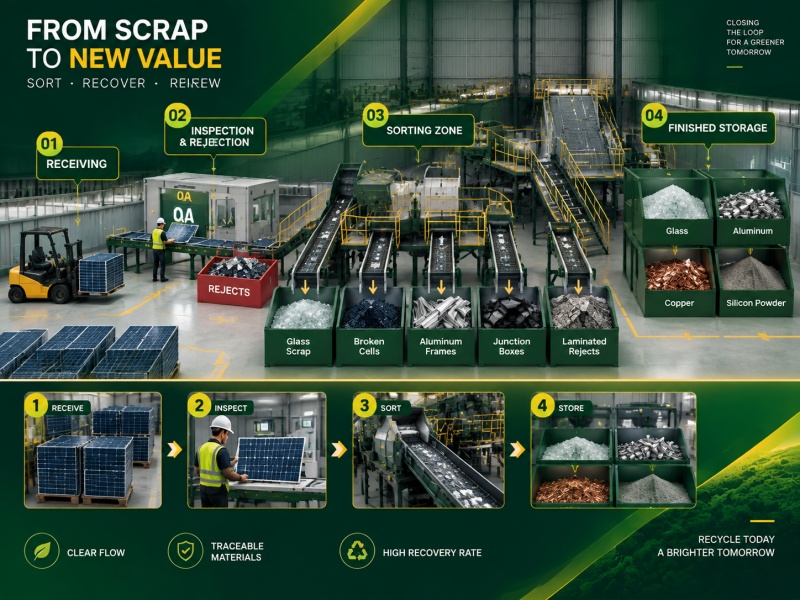
PV factories need a recycling line that follows daily production flow. Scrap usually comes from lamination, trimming, framing, testing and quality rejection. Поэтому, the layout should include scrap buffering, сортировка, recycling and finished material storage. This arrangement reduces handling distance, keeps workshops cleaner and avoids production interruption.
Scrap Receiving Near
Rejection Points
The scrap buffer zone should stay close to inspection and rejection areas. Затем, workers can move defective panels quickly. Следующий, the sorting zone separates glass scrap, broken cells, aluminum frames, junction boxes and laminated rejects. This step helps each material enter the right recovery route. Окончательно, восстановленное стекло, алюминий, copper and silicon powder should move to finished storage. This keeps material flow clear and traceable.
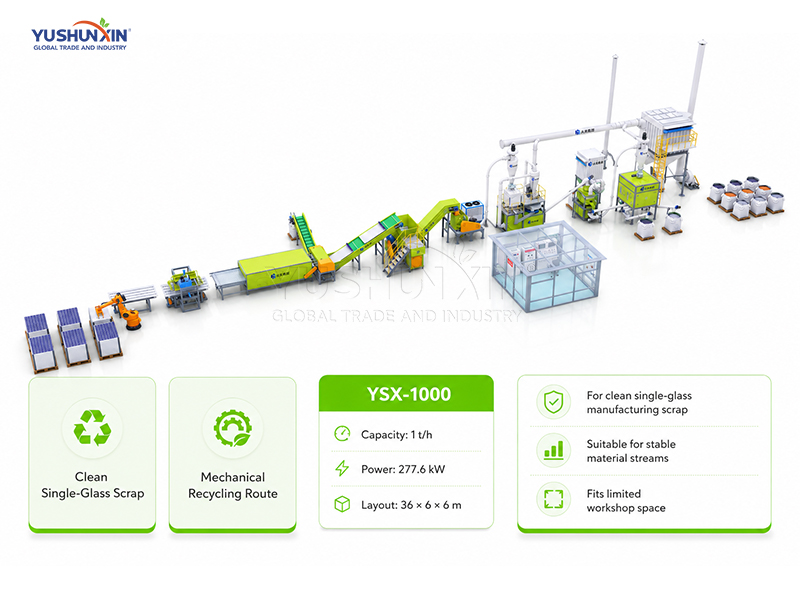
Mechanical Line For Clean
Single-Glass Scrap
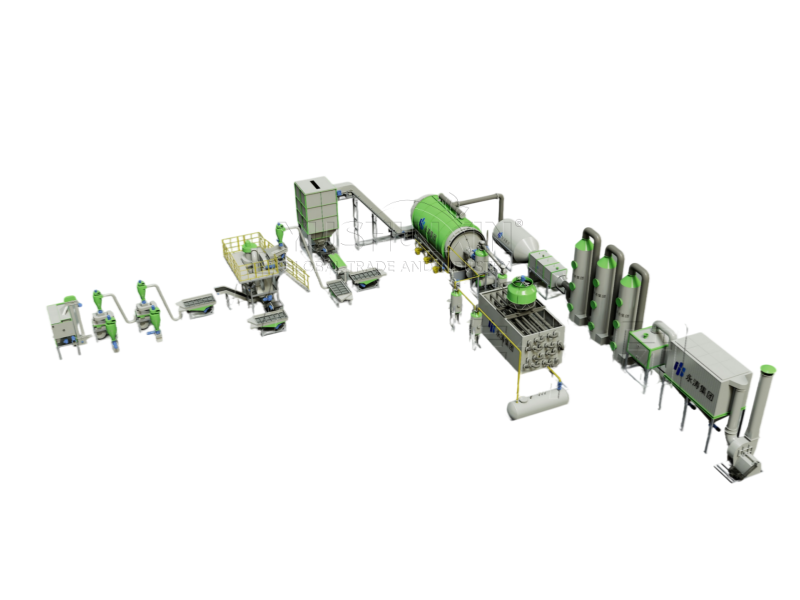
For clean single-glass manufacturing scrap, YSX-1000 is a suitable mechanical recycling option. It supports 1 t/h capacity, с 277.6 kW power and about 36×6×6 m layout space. This line suits factories with stable single-glass scrap, cleaner material streams and limited workshop space.
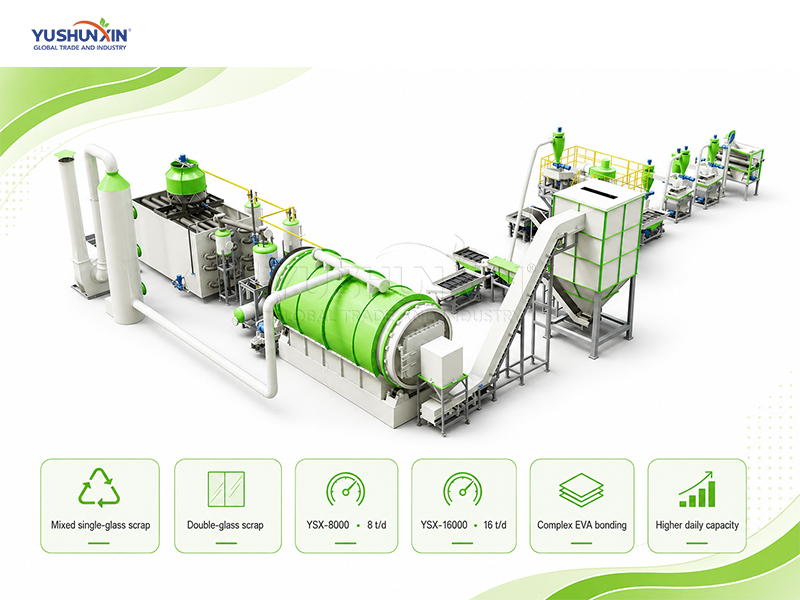
Pyrolysis Line For
Mixed Laminated Scrap
For mixed single-glass and double-glass laminated scrap, YSX-8000 and YSX-16000 are better options. YSX-8000 supports 8 т/д, while YSX-16000 supports 16 т/д. These lines suit factories with multi-type scrap, complex EVA bonding and higher daily processing demand.
How Does Pyrolysis Method Improve Factory Scrap Separation?
04 · Pyrolysis Method
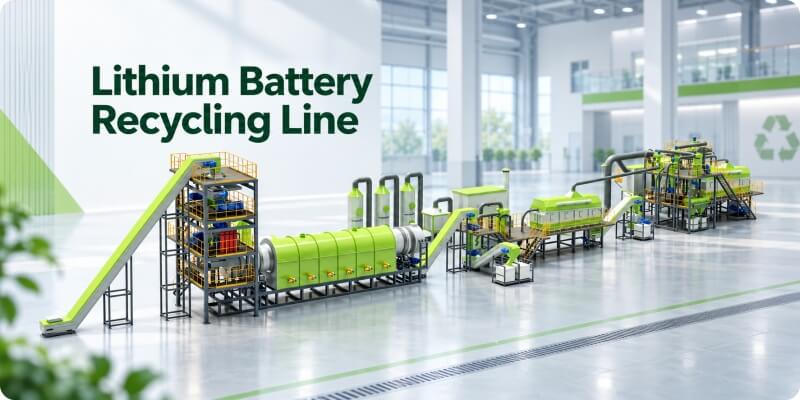
PV factory scrap often includes laminated rejects. Поэтому, factories need more than direct crushing before sorting. Thermal delamination gives solar panel factories a controlled separation route. It weakens EVA or POE bonding under low-oxygen heat. Затем, стекло, кремний, tabbing ribbons and fine powder can enter cleaner downstream sorting.
Low-Oxygen Pyrolysis Separates Materials Before Fine Sorting
Pyrolysis does not burn factory scrap as waste. Вместо, the system uses low-oxygen pyrolysis to remove EVA and POE bonding. Тем временем, the laminated structure gradually loses adhesion during controlled heating. Затем, glass pieces separate more easily from silicon cells and metal ribbons. Поэтому, the sorting system can reduce mixed material contamination. For factories, this means better glass recovery and cleaner silicon-rich material. It also reduces the pressure on vibrating screens, air separators and electrostatic separators.
Heat Recovery Lowers Operating Pressure
Pyrolysis method also creates combustible pyrolysis gas. Поэтому, the system can send gas back to the burner. This gas reuse helps reduce external fuel demand. Тем временем, electric heating can support startup and low-load operation. Так, the furnace keeps a stable temperature during different factory shifts. Однако, gas reuse must work with emission control. A complete line should include flue gas treatment, dust collection and gas cleaning. Например, the system can use quenching, alkaline spraying and activated carbon adsorption. Затем, pulse bag dust collection can control fine particles before discharge. This solution helps factories combine recovery value, cleaner production and compliance review.
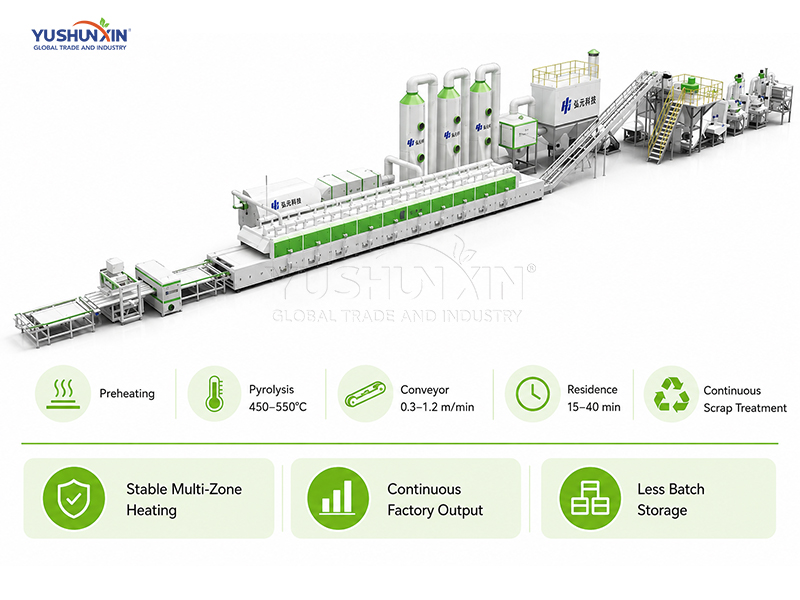
Continuous Tunnel Furnace Stabilizes Factory Scrap Treatment
А continuous tunnel furnace suits factories with daily scrap output. The furnace can use several temperature zones for stable treatment. Например, the process may include preheating, main pyrolysis and cooling zones. The main pyrolysis zone usually runs around 450–550℃ for EVA carbonization. Тем временем, the conveyor speed can match scrap volume and residence time. Some designs use 0.3–1.2 m/min conveyor speed. This can support about 15–40 minutes of thermal residence time. Поэтому, the factory can process scrap continuously. It also avoids unstable batch handling and scattered workshop storage.
Получите свое решение!How Can Recovered Materials Support Factory Payback?
05 · МатериалыSolar panel factories should focus on materials with clear resale value. Поэтому, the recycling solution should separate bulk glass, high-value silicon powder, silver-bearing fractions, медь и алюминий.
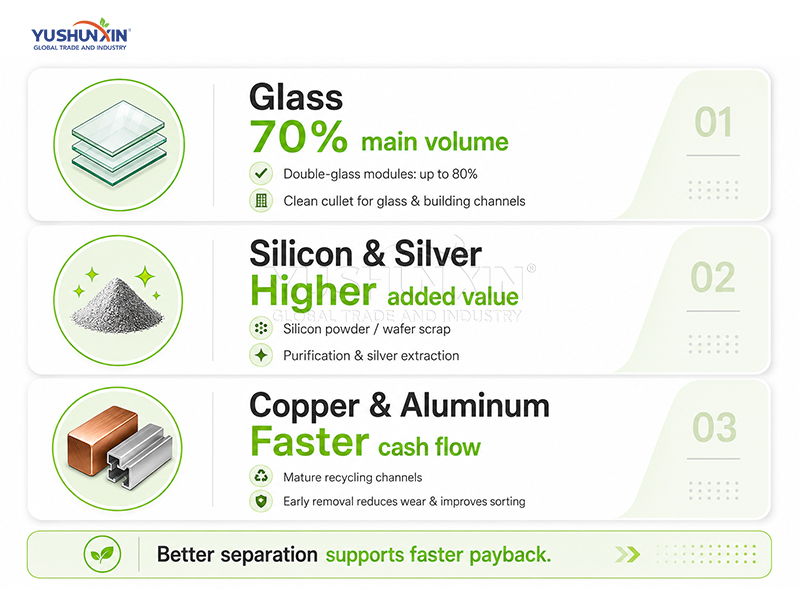
Glass Builds The Main Recovery Volume
Glass is the largest recovered material. In common modules, glass can account for about 70%. Более того, double-glass modules may reach about 80%. Поэтому, clean glass separation matters. High-purity glass cullet can enter glass factories, building material plants or reprocessing channels.
Silicon And Silver Fractions Increase Added Value
Silicon wafers, silicon powder and silver-bearing powder support higher-value recovery. Однако, they should enter further purification, silver extraction or metallurgical recovery. Поэтому, fine crushing, screening and separation should improve material concentration first.
Copper And Aluminum Improve Cash Flow
How Can A PV Scrap Recycling Project Pass Technical And Financial Review?
06 · Review
Industrial PV factories need a reviewable project package before purchase. Поэтому, the solution should show compliance, безопасность, layout and ROI together. Procurement teams need more than machine photos. They need documents, process logic and measurable recovery value for internal approval.
Compliance Package Defines Project Readiness
A complete PV scrap recycling solution should include CE documents, electrical safety design and mechanical safety details. Также, the supplier should provide a process flowchart, чертеж макета, equipment list and emission control plan. These documents help EHS, production and finance teams review the project together. For European, Middle Eastern and Southeast Asian factories, this package can reduce approval uncertainty.
Integrated Safety System Controls Gas, Dust And Heat
PV laminated scrap may involve EVA, ПОЕ, backsheet material and fine dust. Поэтому, the recycling line should control oxygen, температура, pressure and exhaust gas. A pyrolysis recycling system can use low-oxygen operation and slight negative pressure. Тем временем, oxygen monitoring and temperature monitoring help stabilize the furnace process. For exhaust treatment, the line can use quenching, alkali spraying, конденсация, activated carbon and pulse dust collection.
ROI Model Links Disposal Savings With Material Recovery
A strong ROI model should not only calculate silver recovery. Вместо, it should combine waste handling savings and recovered material value. Standard PV modules may contain about 70% стекло. Более того, double-glass modules may contain about 80% стекло. Так, восстановленное стекло, алюминий, медь, silicon and silver-bearing powder all affect payback. Labor reduction, cleaner workshops and ESG reporting also support long-term factory value.
Краткое содержание
We can provide a complete PV manufacturing scrap recycling solution for solar panel factories. Our solution starts from scrap classification and factory layout planning. Затем, we match mechanical separation, pyrolysis method, тонкая сортировка, emission treatment and optional silver recovery. For clean single-glass scrap, we can provide a mechanical solar panel recycling line. For mixed laminated modules, we can design a PV module pyrolysis recycling line for better delamination and material separation. Также, we can support equipment configuration, process flow design, layout drawings, compliance documents and ROI evaluation. Поэтому, your factory can turn production scrap into recoverable glass, алюминий, медь, silicon and silver-bearing materials.
Из ваших потребностей
к реальному воздействию


